

Spain Convenes Security Council Nearly a Month After Ceuta Border Crisis
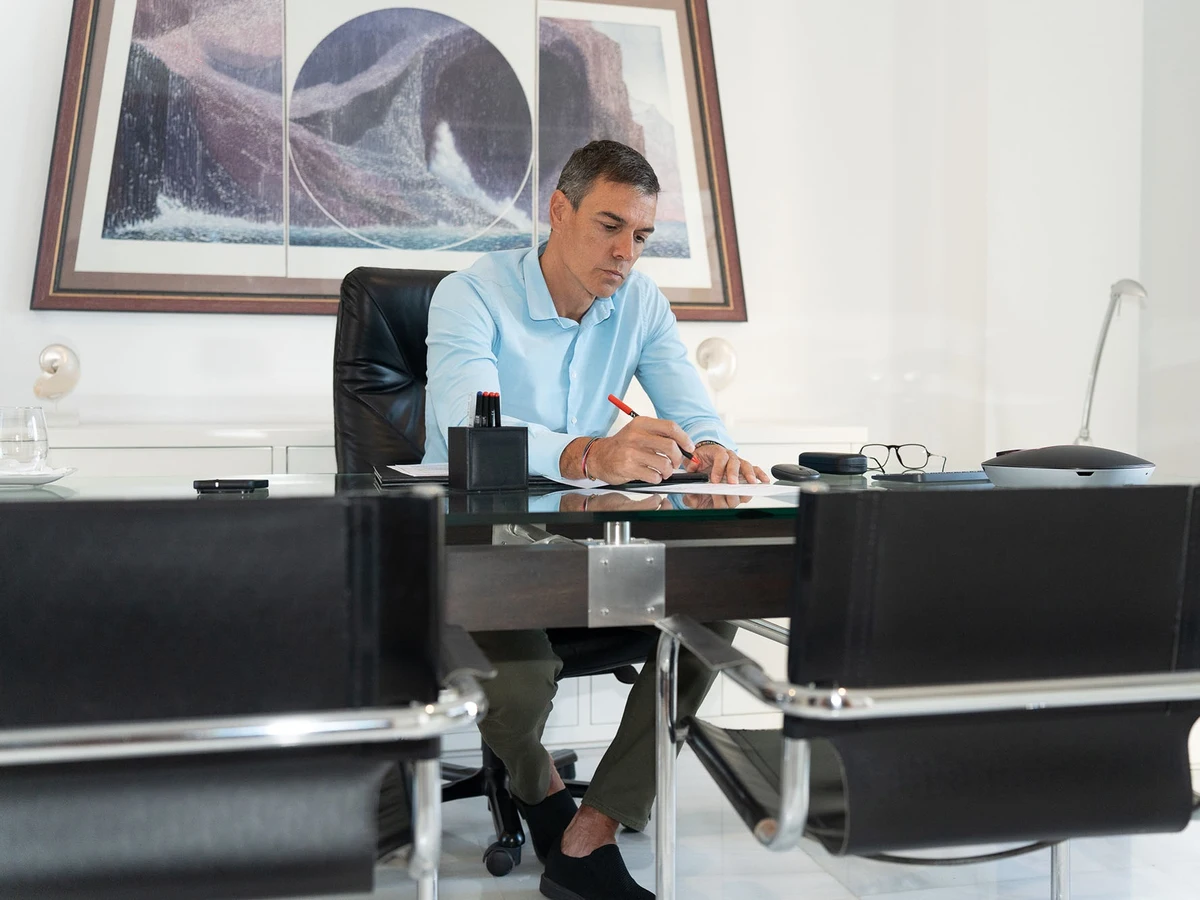
Marrakech – Spain’s Prime Minister Pedro Sánchez has convened the country’s National Security Council for Tuesday to address the migration crisis in the occupied city of Ceuta, nearly a month after tens of thousands of people crossed the border on July 30 and 31.
The session will take place at the Moncloa Palace, hours before the first Council of Ministers following the summer recess. El País reported an 8:30 a.m. start, while 20minutos placed it at 9:00 a.m. ABC, which broke the news, described the meeting as an extraordinary one.
The so-called “autonomous city’s government” put the number of migrants who crossed at up to 80,000. Weeks on, the situation remains unresolved. El País counted more than 5,000 people still in the streets, among them 2,500 minors, while 20minutos reported more than 8,000.
The Council is the top body advising the government on national security. Its statutes call for bimonthly meetings, though the prime minister may convene it whenever he considers it necessary. According to El País, it has met 31 times since Sánchez took office in 2018, but only once this year, on April 24.
That April session approved the 2025 Annual Security Report, which flagged rising migratory pressure on Ceuta and Melilla. The document tied the trend mainly to swimmers trying to bypass the border perimeter by sea, and it recorded a roughly 43% drop in arrivals to the two occupied cities compared with 2024. It also warned of hoaxes about immigration spread to provoke “intercommunity tensions.”
Ceuta’s president, Juan Jesús Vivas, was called to Tuesday’s meeting and will join remotely. Also attending are the three vice presidents, the ministers of Defense, Interior, and Foreign Affairs, CNI director Esperanza Casteleiro, National Security director General Loreto Gutiérrez, and Chief of Defense Staff Admiral Teodoro Esteban López Calderón.
The convocation follows weeks of controversy over intelligence warnings. Interior Minister Fernando Grande-Marlaska denied that the CNI had flagged a possible mass entry, a stance that pushed Defense Minister Margarita Robles to defend her agents. On August 4, he tried to close the matter: there are many things that happen, he argued, and there does not necessarily have to be responsibility.
The Department of National Security also drew scrutiny after dismissing an official who published a note on July 31 stating that 49,000 irregular migrants had crossed. The figure was removed shortly after its release.
ABC reported that the government had allegedly ignored warnings from experts and military officials about Morocco’s claimed use of the border as a form of pressure.
The response to the crisis unfolded slowly through August. On July 30, the first day of the mass entry, Ceuta asked the government to declare a national emergency, then a “situation of interest for national security,” but Sánchez declined both.
During the month, he held only two videoconference coordination meetings on the situation, on August 7 and 17, each joined by several ministers. He returned Monday from a 27-day vacation in Lanzarote, interrupted only for a 105-minute visit to Ceuta on July 31.
Comparisons with past crises have sharpened the criticism. During the May 2021 Ceuta episode, when more than 10,000 people entered, the Council was convened within 48 hours. Its extraordinary sessions have also covered the April 2025 blackout, the 2020 pandemic, Russia’s 2022 invasion of Ukraine, and ransomware attacks on state infrastructure.
Days earlier, he named Ángel Víctor Torres to coordinate the ministries involved, though Torres is not a Council member. The government also intended to transfer 500 girls who arrived from Morocco to the mainland.
The opposition Popular Party (PP) called the return of migrants unquestionable, while its leader, Alberto Núñez Feijóo, urged their confinement – a proposal experts dismissed as the worst idea. Experts further warned of a collapse of health and public services in the city.
The meeting also precedes congressional hearings. Robles testifies first on Tuesday, followed Thursday by Justice Minister Félix Bolaños and Health Minister Mónica García. On Friday come Grande-Marlaska, Foreign Minister José Manuel Albares, and Inclusion Minister Elma Saiz, with Youth Minister Sira Rego closing the round on Monday, August 31.
Credit: Source link