

US Firm Lyntris Embeds Cyber Defense and Command Systems in Morocco’s Military
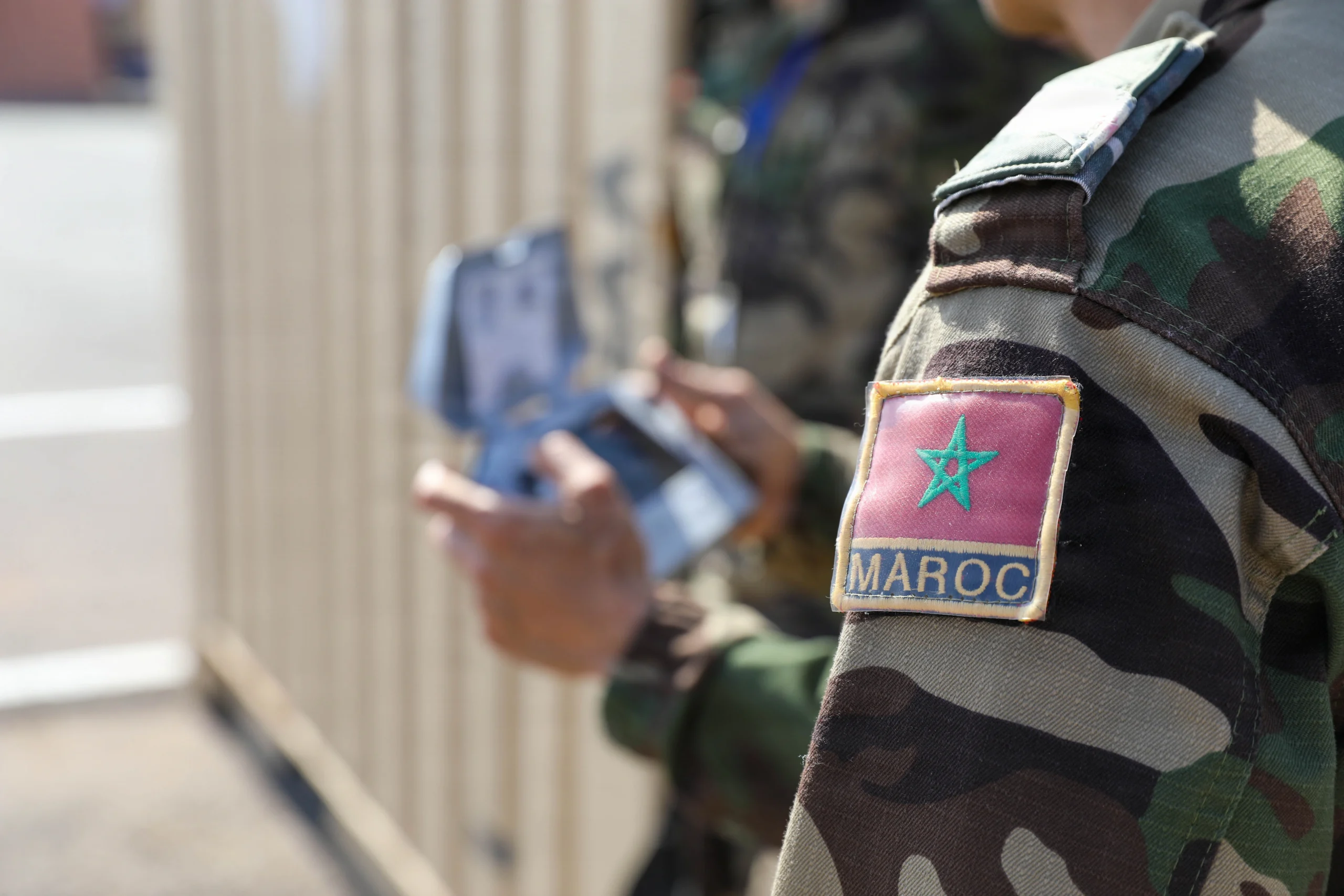
Marrakech – Morocco’s armed forces are running an American-built cyber defense platform across their networks, according to disclosures from Lyntris, a US defense technology company that specializes in command-and-control systems.
The platform, called Garda Cyber Command Suite, is deployed in Morocco alongside Taiwan and Armenia, spanning more than 100 monitored sites.
According to Lyntris, the system is not a pilot or a work in progress. It has entered operational use, covering real-time threat detection, automated incident response, and on-demand digital forensics. The company adds that the platform draws on artificial intelligence to analyze threats and identify likely attack patterns.
The context traces to a shift in US policy. In 2017, Washington reinforced the terms of coalition interoperability through guidance from the NSA, the Defense Security Cooperation Agency, and US Cyber Command.
The message was direct: partner nations that cannot safeguard their networks will not connect to US systems to share classified military information. For recipients of Foreign Military Sales, that requirement exposed fragmented tools, manual processes, and the absence of a unified cybersecurity platform.
Garda Cyber was built to close that gap. It combines security information and event management (SIEM), endpoint detection and response (EDR), intrusion detection and prevention (IDS/IPS), threat intelligence, vulnerability scanning, and incident response inside one operating environment.
The platform is also designed to function in conditions of weak or interrupted communications, a feature that carries weight in military settings built on geographically distributed networks.
Daniel Gelyana, the company’s executive vice president for global command and control, tied the deployments to that policy shift. “When US policy made cybersecurity a prerequisite for coalition interoperability, partner nations needed a solution fast – not a multi-year implementation, not a custom build from scratch,” he explained.
“In Morocco, Armenia and Taiwan, we deployed Garda Cyber and Quasar across more than 100 monitored sites and had operators running real defensive cyber missions in days.”
Lyntris disclosed neither the contract’s financial value in Morocco nor a precise date for when the armed forces began operating the platform.
The company places the Garda Cyber deployment window between 2017 and the present, which makes the current information difficult to read as a new arms deal. The more accurate reading is that the capability has already entered Morocco’s operational structure.
The cyber work sits within a wider relationship. Lyntris also confirms that Morocco operates Garda C2, its command-and-control platform, which fuses data from multiple sensors into a single operational picture.
According to the company, Morocco’s footprint includes 65 sensor sites, three regional operations centers, one main command center, three mobile command nodes, and six ships, with 150 to 200 operational users.
The platform pulls in radar, automatic vessel identification systems, and electro-optical sensors, merging them into a shared view for coastal surveillance.
Gelyana framed that maritime capability the same way: “Garda C2 transforms those disconnected feeds into a single operational picture that scales from the watch floor to national headquarters, enabling faster decisions and stronger coordination across the force.”
Training reinforces the deployment. In April, Royal Moroccan Armed Forces (FAR) operators completed a two-week certification course on Garda C2 at the company’s San Diego facility, working across two tracks: system administration and operations.
Over roughly the past 15 years, Lyntris reports running this US-based training 40 to 50 times, certifying hundreds of international operators.
Morocco ranks among the company’s most engaged international partners, and its feedback has shaped the platform. Requirements drawn from field use – lighter map layers, integrated logistics data, and workflow adjustments – have been folded into the system, with some capabilities now extending into US Navy command environments.
Lyntris describes itself as a defense technology company that connects sensing to action across the connected battlespace, serving US and allied forces across more than 200 defense programs.
Its US work includes JERIC2O, an operator interface developed under a three-year, $61 million contract with the Department of the Air Force for the service’s Cloud-Based Command and Control program.
Read also: Madrid’s Perennial Panic: Morocco-US Militarization Rattles Spain Over the Canaries
Credit: Source link