

Samuels, regional heads of judiciary bemoan leak of internal CCJ emails
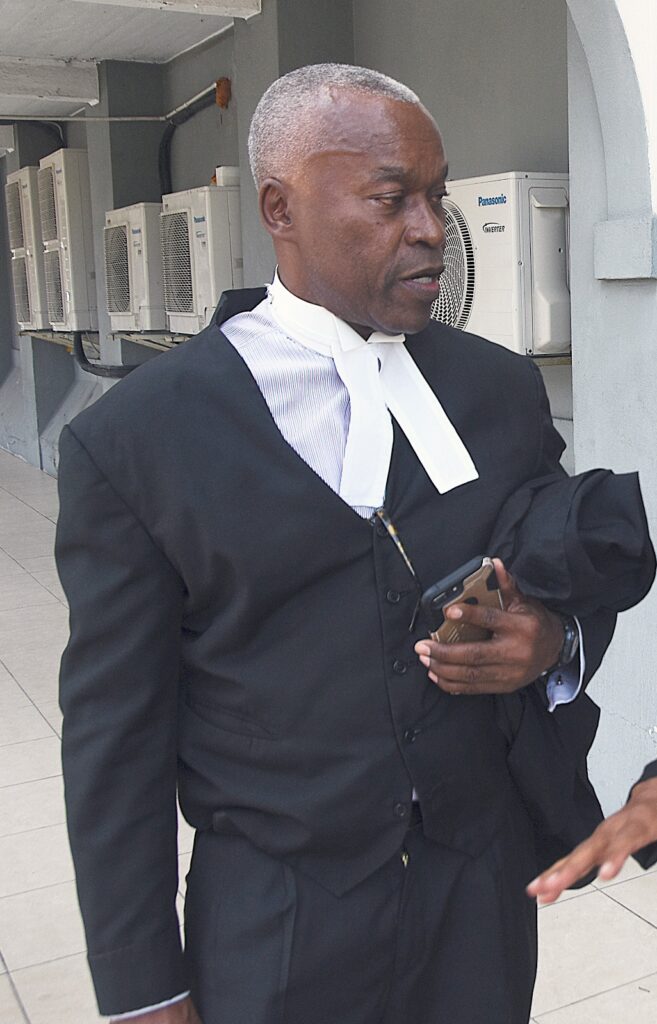
Veteran attorney-at-law Bert Samuels on Tuesday doubled down on his call for the Caribbean Court of Justice (CCJ) to be Jamaica’s final appellate court despite the controversy now engulfing it with the publication of leaked emails by the Sunday Express in Trinidad.
Addressing a media briefing he staged on Tuesday, Samuels condemned the leak of the emails and argued that integrity by judges must be maintained at the highest standard.
“I go to the recent comment of Member of Parliament Marlene Malahoo-Forte in her post on X, formerly Twitter….Mrs Forte, a former attorney general and former minister of constitutional affairs, took a position to which I agree. She — regarding the leaked emails of a number of CCJ judges, which has led to all of this — said, ‘What a poor display of judgement’. The leak of internal emails among judges, internal issues, is a bigger problem than those issues on the discussion.
“Of the issues on the discussion was the dress and the clothes that judges should wear at the CCJ. Can you imagine the clean linen of the court became the concern of the public? The person who leaked that must have been so mischievous minded to find that was important for public discourse. She then went on to say, ‘Do you realise how this impacts those of us looking on the CCJ?’ It was a discussion about the CCJ, which had nothing whatsoever to do with the delivery of judgement or with the integrity of the president and the judges. It had to do with leadership style,” said Samuels.
The Express reported that CCJ president Justice Winston Anderson was being accused, by a majority of fellow judges, of governing the regional court in an “authoritarian” and “dictatorial” manner.
According to the report, the judges’ complaints ranged from the unilateral imposition of a judicial dress code, to allegations of panel fixing and attempts to influence the outcome of cases.
Samuels — who has made no secret of his desire for Jamaica to ditch the London-based Privy Council and make the CCJ its final court — also referenced comments from former government minister AJ Nicholson to bolster his position.
“AJ Nicholson, a former minister of legal affairs…and minister of justice, has consistently argued that Jamaica should replace the Privy Council with the Caribbean Court of Justice, mainly because he sees the CCJ as more accessible to the ordinary Caribbean people. Many of my clients have been wronged, have appealed to the Jamaican Court of Appeal, feel that they have a good case, an opinion I share with many of my clients, but no money to go to England, let alone to get a visa from the British [High Commission] which can be refused. Even the lawyer’s visa can be refused to go to the British Privy Council,” argued Samuels.
He noted that Nicholson had underscored that Jamaica does not need a referendum to adopt the CCJ.
“We well know that Barbados has left it without a referendum. Sir Dennis Byron, former president, made a statement, one of the strongest statements supporting the CCJ… He described the CCJ as the guardian of the revised Treaty of Chaguaramas and the Caricom single market, calling it essential for regional unity, a position Norman Manley, our national hero, took.
“He [Byron] also argued that the CCJ is well placed to address judicial leadership that impacts economic development and social stability. He portrayed the court not as a privy council replacement, but an independent Caribbean institution designed to strengthen the rule of law and support integration,” added Samuels.
Meanwhile the heads of judiciary of Barbados, The Bahamas, Belize, Guyana, The Eastern Caribbean Supreme Court, Jamaica and Trinidad and Tobago — which subscribe to the original and or appellate jurisdictions of the CCJ — in a media release on Wednesday said they have taken note of recent public reports concerning internal correspondence and matters relating to the administration and functioning of the court.
“We do not consider it appropriate to comment upon the merits of statements or allegations attributed to individual judges, nor upon matters arising within the internal deliberative or administrative processes of the Court. However, we express grave concern about the breach of confidentiality which resulted in the disclosure of what appear to be internal communications.
“We remain confident in the Caribbean Court of Justice as a vital regional judicial institution and in the commitment of its judges to the principles which underpin the administration of justice throughout the Caribbean,” said the heads of judiciary.
The release added that the heads of judiciary reaffirm their commitment to the independence of all regional judiciaries, the institutional integrity of the Caribbean Court of Justice, and the enduring importance of maintaining public trust and confidence in the courts of the region.