

Trump’s Approval Rating on Iran War Compared to Libya, Iraq and Afghanistan
Nearly five months into the war with Iran, President Donald Trump is presiding over a conflict that polls worse than any modern American war did at a comparable stage, according to a review of decades of survey data.
The pattern is not the familiar one. Public support for the wars in Afghanistan and Iraq started high and fell over years. Support for the Iran war started low and has stayed there.
Gallup found in a survey conducted June 1 to 15, about 93 days into the conflict, that 34 percent of Americans approved of the U.S. military action against Iran.
At a nearly identical point in the 2011 Libya campaign, 95 days in, Gallup found 39 percent approval. At 260 days into the Iraq war, Gallup found 60 percent.
The gap at the outset is wider still. Gallup recorded 90 percent approval of military action in Afghanistan on the day the strikes began in October 2001, and 76 percent approval of the decision to go to war in Iraq the day after the invasion started in March 2003.
A Quinnipiac University poll in early March 2026 found 40 percent of registered voters supported the action against Iran, with 53 percent opposed.
An analysis by The New York Times in the war’s opening days found the 41 percent initial support recorded in a CNN poll was the lowest on record for the start of an American military action.
Gallup, reviewing more than a dozen military engagements since the 1980s, found only two that failed to draw majority support at the outset before Iran. One was the Libya campaign launched by President Barack Obama, at 47 percent. The other was the strikes on Syria in 2017 and 2018, at 50 percent each.
The numbers have not improved since. A Washington Post-Ipsos poll conducted July 8 to 13 found 29 percent approved of Trump’s handling of the Iran war, and that 68 percent said the war was not worth fighting, against 28 percent who said it was.
That 40-point gap is as wide as the worst reading Washington Post-ABC News polls recorded for Afghanistan, in 2013, nearly 12 years into that war, when 67 percent called it not worth fighting against 28 percent who said it was.
Why Didn’t Trump Get a Wartime Approval Bump?
The most striking difference is the absence of the effect political scientists call rallying round the flag.
George W. Bush’s job approval rating stood at 51 percent on September 10, 2001. It reached 90 percent within two weeks and was still at 87 percent in late November, seven weeks into the Afghanistan campaign, according to Gallup.
Bush entered the Iraq invasion at 58 percent approval and rose to 71 percent in the days after it began.
Trump’s approval was 40 percent in a Reuters/Ipsos poll taken at the end of February 2026, before the strikes. It fell to 36 percent by late March, then a low for his second term.
“We are clearly not seeing a traditional rally-around-the-flag effect,” said Mark Jones, a political science fellow at Rice University’s Baker Institute for Public Policy, in March.
Karl Rove, the former senior adviser to Bush, reached the same conclusion in a Wall Street Journal column reviewing survey averages, writing that there was no rally effect to be found.
“A bigger part of the president’s appeal has been his determination to make the U.S. military the greatest force for good on the planet and to project American strength,” he wrote.
Morning Consult, polling on the day of the first strikes, reported that neither Trump’s overall approval nor his foreign policy approval had moved from their pre-strike levels.
Obama did not get a rally from Libya either. His Gallup approval averaged 46 percent in June 2011, roughly where it had been that spring. The one bump he recorded that year, to 52 percent, followed the killing of Osama bin Laden in May, not the Libya intervention.
Why Is the Iran War So Unpopular?
Analysts point to several factors that separate 2026 from 2003 and 2001.
The first is that the Iran war was a war of choice with no domestic trigger. There was no attack on American soil, and the administration launched coordinated strikes with Israel after negotiations collapsed.
The second is the economy. Gasoline prices rose about a dollar a gallon in the first month of the conflict, and oil moved back above $100 a barrel this month after fighting resumed. Reuters/Ipsos found 25 percent approval for Trump’s handling of the cost of living in March.
“The longer the war continues with no end in sight and no Iranian concessions, the greater the consequences will be for the midterm elections,” said Alexander Downes, a professor of political science and international affairs at George Washington University. He described Republican support for the war as relatively soft.
The third is polarization. Gallup found approval of the Iran action at 79 percent among Republicans, 26 percent among independents and 8 percent among Democrats.
“It’s unusual to have such a negative response when American troops are still fighting,” pollster Scott Rasmussen, founder of Rasmussen Reports, told the Daily Caller News Foundation, attributing it to polarization.
Nate Silver, whose Silver Bulletin site launched a dedicated Iran war polling average, wrote in April that opinion on the war was moving unusually fast for the Trump era.
Stephen Semler, who analyzed 153 surveys across seven conflicts, concluded the Iran war is the only American war to begin with net support underwater.
Where the Iraq and Vietnam Comparisons Break Down
The comparison has limits. CNN reported this week that while the Iran war is unusually unpopular, it does not dominate public attention the way earlier wars did.
Gallup found as many as 55 percent of Americans named Vietnam the country’s most important problem in 1967. The figure reached 36 percent for Iraq in 2007. The Iran war has not approached those levels, with cost of living dominating instead.
Afghanistan and Iraq also cost far more in American lives. Roughly 2,400 U.S. troops died in Afghanistan over two decades. Three U.S. service members were killed in Iran strikes this month, bringing the reported total to at least 13 since February.
Defense Secretary Pete Hegseth told the Senate Armed Services Committee on April 30 that the administration had public backing.
“I believe we do have the support of the American people,” Hegseth said.
What’s Next
There is little indication that the fighting will subside in the coming days. With the June memorandum of understanding now weeks in the past and no replacement diplomatic framework in place, attention is centered on whether Washington maintains its current military tempo and how Tehran chooses to respond.
The U.S. military this week completed a 13th consecutive night of strikes, suggesting the campaign remains firmly in its operational phase. In the immediate future, observers will be watching for signs of either an expansion of targeting, renewed Iranian retaliation, or fresh efforts by international mediators to bring the sides back to the negotiating table.
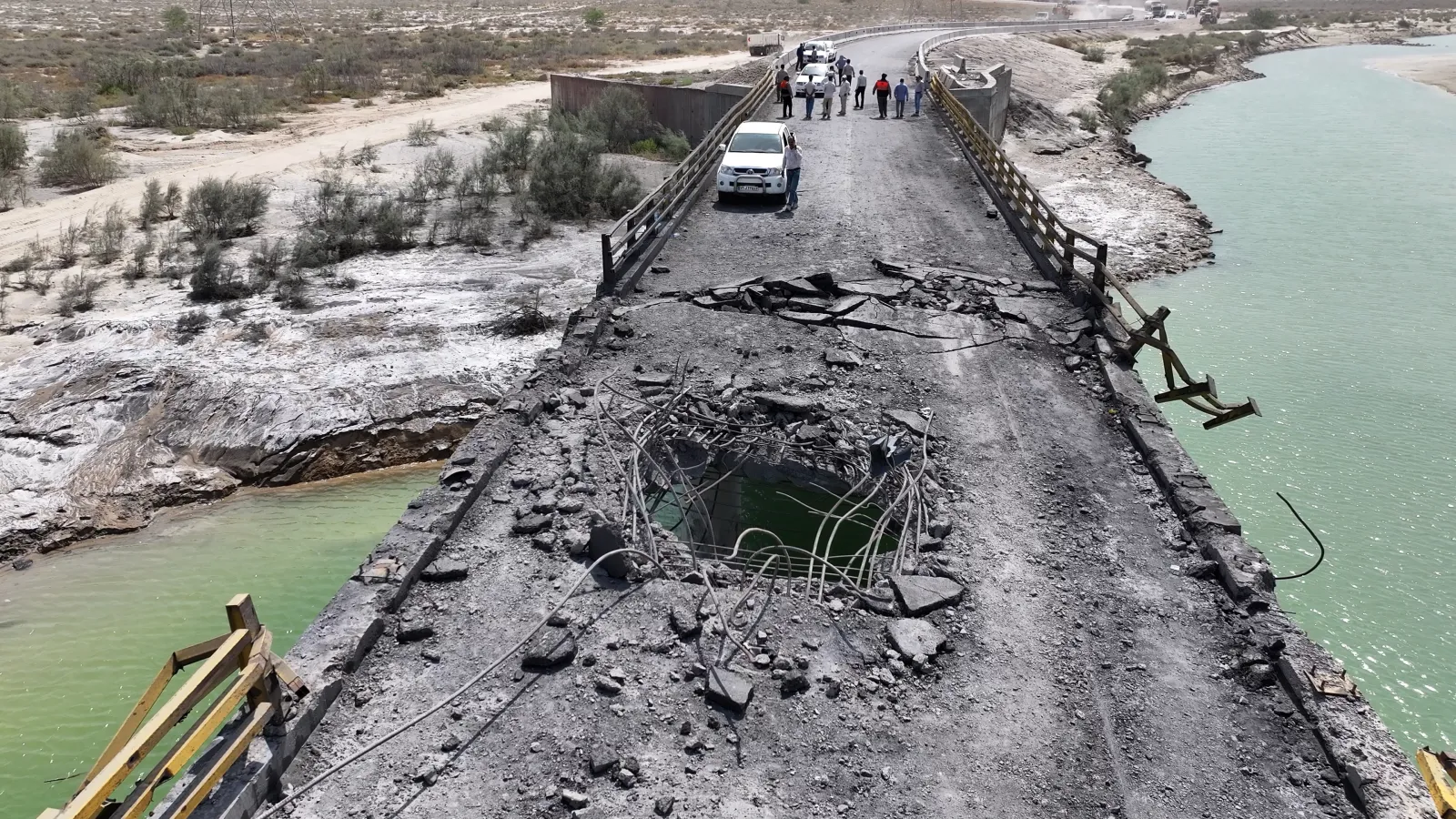
The next several days could prove pivotal. Any shift in the pace of U.S. operations, changes in Iran’s military posture, or new diplomatic proposals from regional and international partners may determine whether the conflict moves toward de-escalation or enters a more sustained and unpredictable phase.
Contact Newsweek editors on this story: Jason Lemon and Gray R. Thomas