

El País Interview Exposes How a Distorted Ceuta Migrant’s Story Was Used Against Morocco
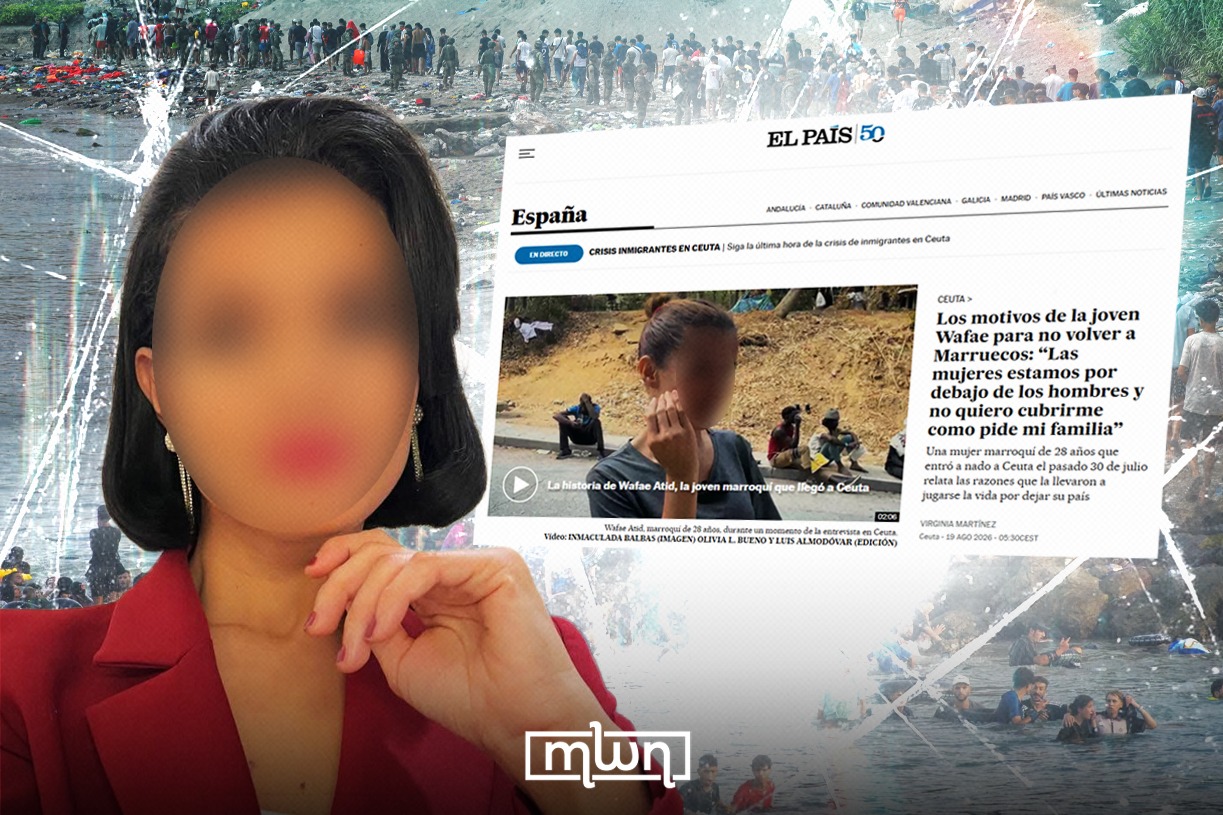
Rabat – El País’ interview with a Moroccan woman who crossed into Ceuta by swimming on July 30 has come under growing scrutiny after her own social-media history and subsequent statements raised serious questions about the picture of life in Morocco presented by the Spanish newspaper.
The case has exposed how a personal migrant story, whose accuracy has been seriously questioned, can be stripped of context and turned into a broader narrative portraying Morocco as a country from which women and young people have little choice but to flee.
A., 28, told El País in an interview published on August 19 that she left Morocco because of severe restrictions imposed by her family, particularly because she is a woman and does not share her family’s religious beliefs. “In Morocco, women are always down, and men are high,” she said. “They kill your dream.”
Atid said her parents took her out of school after five years of primary education and rejected her wish to continue studying away from home. She also said her family tried to prevent her from traveling and wanted her to remain at home.
“I prefer to go away from them,” she said, explaining that she did not want to return to Morocco because she no longer believed in Islam while her family expected her to wear the hijab or niqab.
The interview presented Atid as a young Moroccan woman who had been denied education, prevented from traveling, and pushed to leave her country because of family and social restrictions.
Her own history tells a different story
However, publicly available material places W. A. in several countries before her arrival in Ceuta, including Qatar, the United Arab Emirates, and Turkiye. Her social-media history also shows her working abroad, traveling, and appearing in modeling-related content.
Videos from Qatar remained available on her social-media accounts, including a December 2025 video in which she introduced herself in English. Other photographs and videos circulated online showed her traveling abroad and taking part in social and professional activities.
This history directly clashes with the image the El País interview created of a woman whose family had effectively prevented her from pursuing opportunities outside Morocco.
Rather than presenting a woman who had been unable to travel or build a life outside Morocco, the material shows someone who had already traveled internationally and worked abroad.
That does not simply add a minor detail to the story. It changes the context in which readers understand her claims about being prevented from exercising her freedom and being forced to remain at home.
It also raises a basic question for El País. Why was this background not properly established before publishing an emotionally powerful account about why she had fled Morocco?
The issue is not whether family pressure or discrimination against women can exist in Morocco. The issue is whether a newspaper can present one person’s account as evidence of a wider reality while leaving out information from that person’s own public history that materially changes the picture.
Her response raises more questions
A. later responded to the criticism on social media. In a story shared on social media, she reaffirmed that her parents had taken her out of school during the fifth year of primary school. She also said the photographs circulating from other countries were taken while she was working there.
She further said that the media does not always publish everything said during an interview, suggesting that parts of what she told El País were left out.
But that explanation does not address the central issue surrounding the newspaper’s coverage. The extensive evidence of her previous travels and work abroad was publicly available, yet the published interview created a far more limited picture of her circumstances.
The controversy then took another turn when W. A. responded to criticism about her apparent financial situation.
She shared another story on social media saying she was actually the poorest among the Moroccan migrants who had entered Ceuta. She claimed that some of the migrants owned restaurants, while others had rented expensive apartments in Ceuta for themselves and their families and were using taxis, shopping at expensive supermarkets.
Her remarks are significant because they challenge another narrative that has accompanied Spanish coverage of the mass crossing, suggesting the migrants were uniformly fleeing extreme poverty.
If some migrants were able to rent expensive accommodation, operate businesses or maintain relatively comfortable lifestyles, then the mass crossing cannot simply be explained through a single story of economic desperation.
The El País interview sparked widespread criticism among Moroccans, many of whom accused the newspaper of promoting a distorted picture of Morocco by giving prominence to a story that appeared increasingly inconsistent with the woman’s own public record.
The backlash also drew attention from Moroccan political analysts and commentators. Among them was author and political analyst Samir Bennis, who sharply criticized El País and other Spanish media outlets for building a narrative around W. A.’s account.
La estrella del periódico @el_pais ha salido ahora a hablar para defenderse de lo indefendible. Independientemente del comportamiento vituperable y reprochable de esta mujer, parece que a El País, y a otros medios que querían sacar provecho de una historia tan falsa como… https://t.co/YfNZHWAUZo
— Samir Bennis (@SamirBennis) August 20, 2026
Bennis argued that the newspaper had built a narrative around a story that was now collapsing under scrutiny. “Regardless of this woman’s reprehensible and condemnable behavior, it seems that El País, and other media that wanted to take advantage of a story as false as it was fictitious, have shot themselves in the foot,” Bennis said.
He also highlighted W. A.’s comments about the financial circumstances of other migrants. “The star of El País is now saying that she is the poorest of all those who supposedly, according to the ramblings of some Spanish media, fled the country because they lived in absolute poverty or had nothing to eat,” Bennis said.
Bennis pointed to the young woman’s claim that many migrants who crossed into Ceuta had rented apartments costing more than €1,000 (MAD 10,808) a month, used taxis, went to supermarkets and were living normal lives.
A broader pattern in Spanish media
The controversy surrounding W. A. comes amid growing criticism in Morocco of Spanish media coverage of the Ceuta crisis. Moroccan commentators have accused some outlets of repeatedly presenting Morocco as a country from which people are desperate to escape while giving little context to the circumstances behind the mass crossings.
The El País interview has added to those concerns. Earlier this month, El Confidencial also faced criticism after using a photograph of an injured Palestinian in Gaza in its coverage of the crisis, despite the image having no connection to the migrants who crossed into Ceuta.
The two cases point to a broader pattern of Spanish media outlets not simply covering the migration crisis but helping shape a negative narrative about Morocco.
El País’ follow-up article on August 21, which described W. A. as driven primarily by ideological and cultural differences rather than economic hardship, did little to address the central issue raised by the controversy, which is why the full context of her background was missing from the original interview.
For Moroccan critics, the episode is therefore another example of a broader media campaign that selectively presents distorted individual cases to reinforce a damaging image of Morocco, particularly amid heightened tensions over migration, Ceuta, and bilateral relations.
Credit: Source link