

Ceuta: 67.7% of Spaniards Think External Interference Aimed to Create Spain-Morocco Tensions
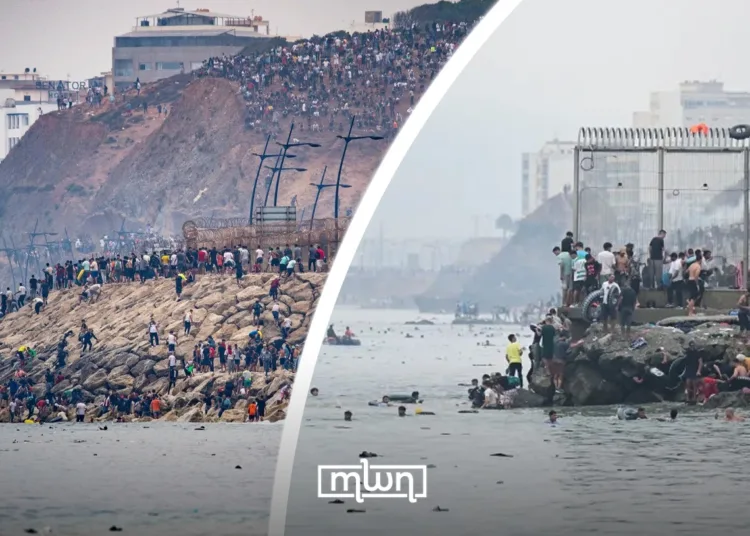
Rabat – Remarks, allegations, debate and accusations continue to shape the discourse over the Ceuta migration crisis, with many reports suggesting external interference triggered the mass crossing of July 30-31.
A new survey from Spain’s Center for Sociological Research (CIS), based on 4,042 interviews, examined public perceptions of the mass crossing into the Spanish enclave of Ceuta on July 30-31.
Spanish reports have estimated that between 70,000 and 80,000 people attempted to enter Ceuta during the episode, which triggered one of the largest border crises in Morocco-Spain’s history.
The crisis also prompted criticism and a smear campaign targeting Morocco, especially from far-right politicians who accused Rabat of using migration as a form of “blackmail” and described the episode as a “hybrid attack.”
Many reports, however, linked the mass crossing to a social media campaign, with people receiving messages from Algerian phone numbers to incite irregular migration.
About 67% of respondents answered yes to a question asking whether external interference caused the influx of migrants to create tensions between Spain and Morocco.
The CIS survey also shows how the majority of respondents believe reaching an understanding with Morocco is of “great or considerable” importance to ensure their country’s border security.
The government of Prime Minister Pedro Sanchez has long backed cooperation with Morocco, emphasizing the importance of the North African country as a key pillar in tackling the migration crisis.
In a recent interview with El Intermedia, Sanchez again rejected claims that Morocco exerted pressure on Spain through the Ceuta crisis.
He also dismissed allegations surrounding the use of Pegasus spyware and other claims direct at Rabat, stating: “These rumors that are spreading about mobile phones or other issues, well, maybe they’re fine for a Netflix series, but reality has to be built on facts and not rumors.”
Sanchez reiterated that Spain had found no evidence of Morocco’s involvement in the mass crossing.
Morocco has also been key in dismantling human trafficking networks, with international regions lauding Rabat’s efforts in the area.
Recent Moroccan official data show that authorities thwarted 73,640 irregular migration attempts last year and dismantled more than 300 human trafficking networks.
Credit: Source link