

Why a Nat Geo Photographer Spent 3 Years With Elusive Giant Anteaters
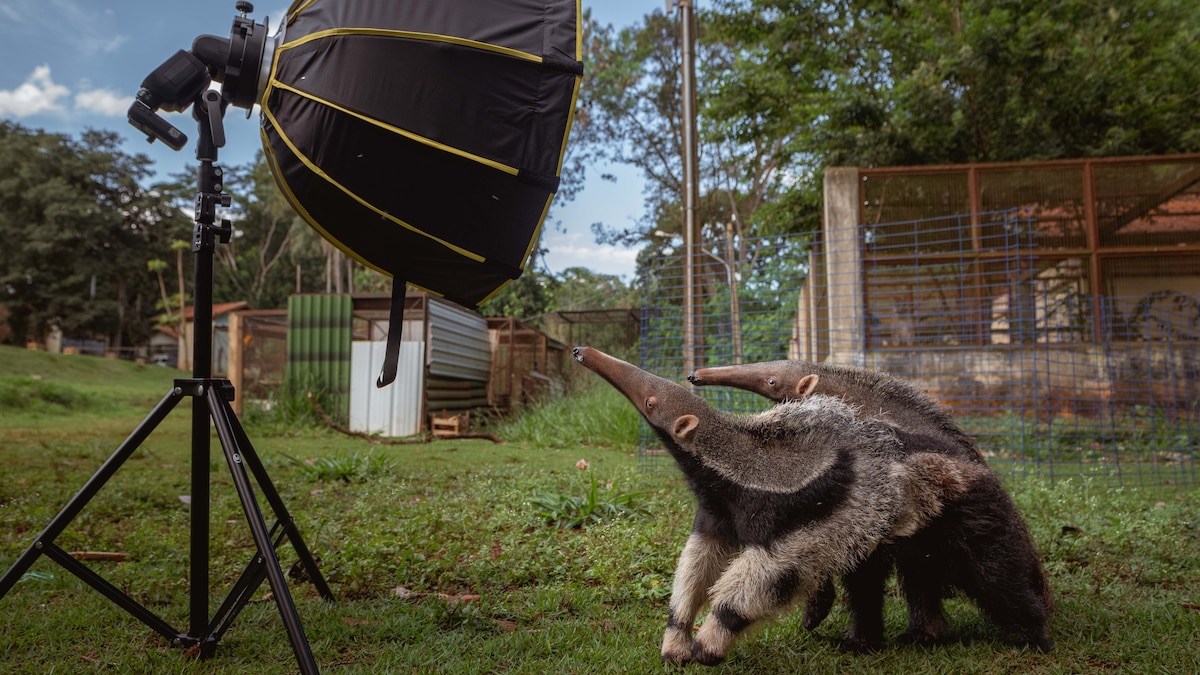
From then on, I began focusing more directly on road collisions, joining active searches along highways . At the same time, I visited rehabilitation centers across Brazil. There, my attention was drawn mostly to the young anteaters: fragile animals being bottle-fed, cared for around the clock, exercising, and slowly building the strength they would need for a possible return to the wild.
But another essential part of the story was simply being with anteaters in their natural habitat. I traveled through different regions of the Cerrado and Pantanal, including areas along Brazilian highway BR-262.
While photographing at Barranco Alto Farm in the Pantanal, my friend and guide was Lydia Möcklinghoff, a German researcher who had been studying giant anteater behavior in the Pantanal for more than 14 years. Lydia had an incredible ability to find these animals. I spent unforgettable days with her, lying on our bellies photographing anteaters, walking through the Pantanal, and watching what felt like endless sunrises and sunsets. Sadly, in July 2026, Lydia died in a plane crash while once again on her way to the Pantanal. Lydia, you will be remembered as an extraordinary researcher and, to me, a great friend.
What were some of the technical challenges you encountered on this assignment?
One of the challenges of photographing giant anteaters is that people don’t really understand their body shape. Some people [look at the species and say] “oh, is that a panda with two heads?” Sometimes I take close up shots so people can properly see their eyes and ears and understand the proportions.