

Veteran who served 3 tours in Iraq War facing possible deportation – NBC 7 San Diego
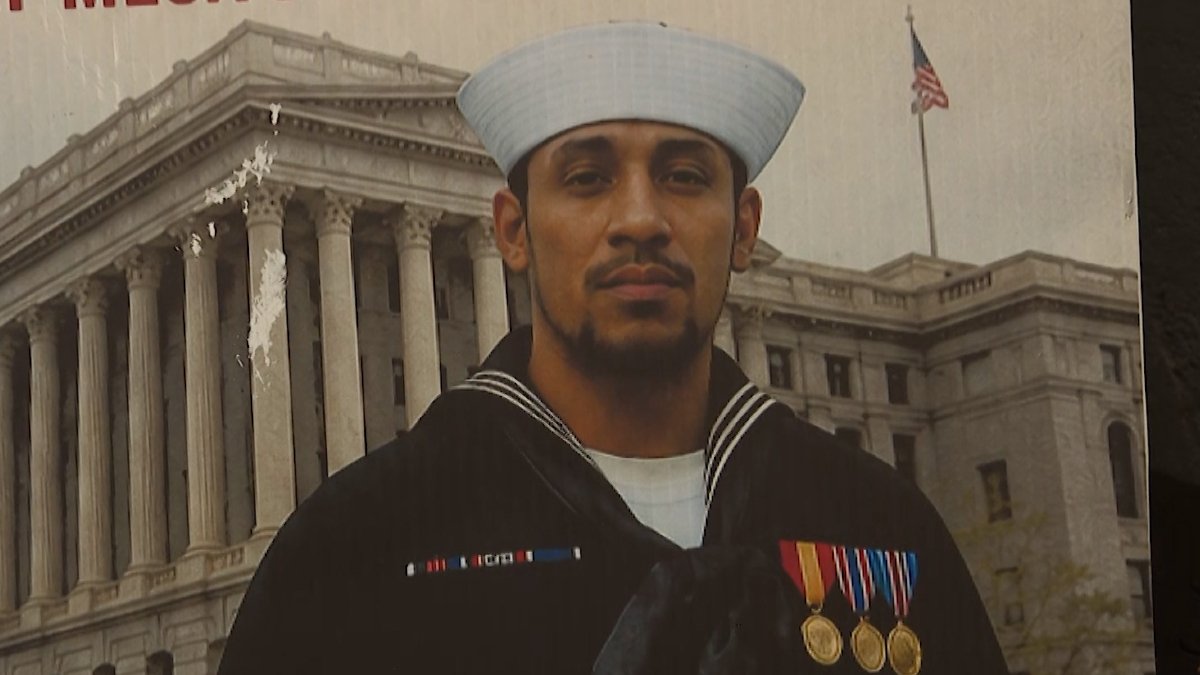
A Navy veteran who served during the Iraq War is now at the Otay Mesa Detention Center, facing possible deportation. He has an extensive criminal history, as his mother and advocates contend he was a shell of himself after returning from his deployments, pointing to systemic failures in caring for those who have served.
Benito Miranda Hernandez and his mother Maria Miranda came to the U.S. from Mexico as green card holders when he was a young child, she said. He later joined the Navy and served three tours of duty during the Iraq War.
“When he came back, that’s when I said, ‘This isn’t my son anymore,’” Miranda said in Spanish. “He wasn’t even a shadow of the little boy who left.”
A search of court records turned up an extensive criminal history. Hernandez has spent years in prison on various felony drug and weapons convictions, as well as violations of probation, in Virginia and California.
“All they taught him there was to shoot,” Miranda said in Spanish. “They took him to Iraq and taught him that. I don’t justify it. I know that what he did was wrong. But he had to survive.”
“He does have PTSD, he served during wartime and that’s something that he struggles [with],” said Hector Barajas, an Army veteran who was deported himself years ago. Barajas was later allowed to return and became a U.S. citizen, now advocating for servicemembers who have been removed or are facing removal.
“We have homeless veterans. We have veterans that take their lives,” Barajas said. “Having a mental health issue and issues with the law – it does happen, and we have to learn how to take care of them, not deport them and throw them away, you know?”
ICE did not respond to request for comment on Hernandez’s case.
The Council on Criminal Justice said in a 2023 report that about a third of military veterans have a history of arrest – compared to one in five civilians.
“Partially, I believe, because we’re not reconditioned to come into civilian society,” said James L. Smith II, an Army veteran who started the Black Deported Veterans of America support group.
“You’ve got to take care of us,” Smith added, “and that’s not what’s happening.”
Hernandez was released from a California state prison into a reentry program in 2025, spending the final year of his most recent sentence living in a halfway house in Barrio Logan, which allowed him to work and take classes while wearing an ankle monitor as he prepared to exit the criminal justice system, the advocates said.
In November, Barajas and Smith said they celebrated with Hernandez as his green card was reinstated.
But as he was leaving that reentry program in June, federal immigration agents took him into custody. When his mother came to pick him up, she found that he was already gone.
“All my dreams of being with my son have ended,” Miranda said in Spanish, through tears.
In a letter to members of Congress earlier this year, ICE said the agency arrested 125 former service members in the first year after President Donald Trump returned to office. About a third of those had active criminal warrants, the letter said.
Barajas and James said they were upset by Hernandez’s detention in part because they believe he was trying to turn his life around, but also because of what James saw as hypocrisy.
“The people that are responsible for fixing this, the Congress, stand up in front of cameras all the time saying that they love the military, they support the military, but you never hear them saying only for the people that were born here,” Smith said.
“The jobs and the lives that you’re living, and that they’re living, that’s because of us,” he continued. “We’re the pit bulls in the front yard in the global neighborhood.”
“They’re being hypocrites when they’re standing up there saying, ‘Yes, we love our military,’ but you have no problem with getting rid of somebody that made sure that you could stand there and say, ‘I love our military,’” Smith said.
Miranda said she’s concerned about Hernandez’s mental health in detention and when she visited him, she saw his anger and resentment.
“I don’t have anything against the government,” Miranda said in Spanish, “but I would say to mothers: don’t let your children go, because you give them a healthy, whole child. What comes back is nothing like what you gave them.”