

US establishes weapons systems testing centre in Morocco
Morocco has taken a major qualitative leap in its strategic defence alliance with the United States by activating the Africa Multidomain Training and Experimentation Center (AMTEC) on the country’s south-western coast, just over 250 kilometres from the Canary Island of Fuerteventura.
The creation and launch of AMTEC near the coastal city of Tan-Tan, in a desert area close to the former Spanish Sahara, is one of the first tangible results of the 2026-2036 defence agreement signed in Washington in mid-April. The pact replaces the October 2020 agreement, which was due to run until 2030, and takes Morocco into a new phase, while enabling the United States to reposition itself strategically on the African continent.
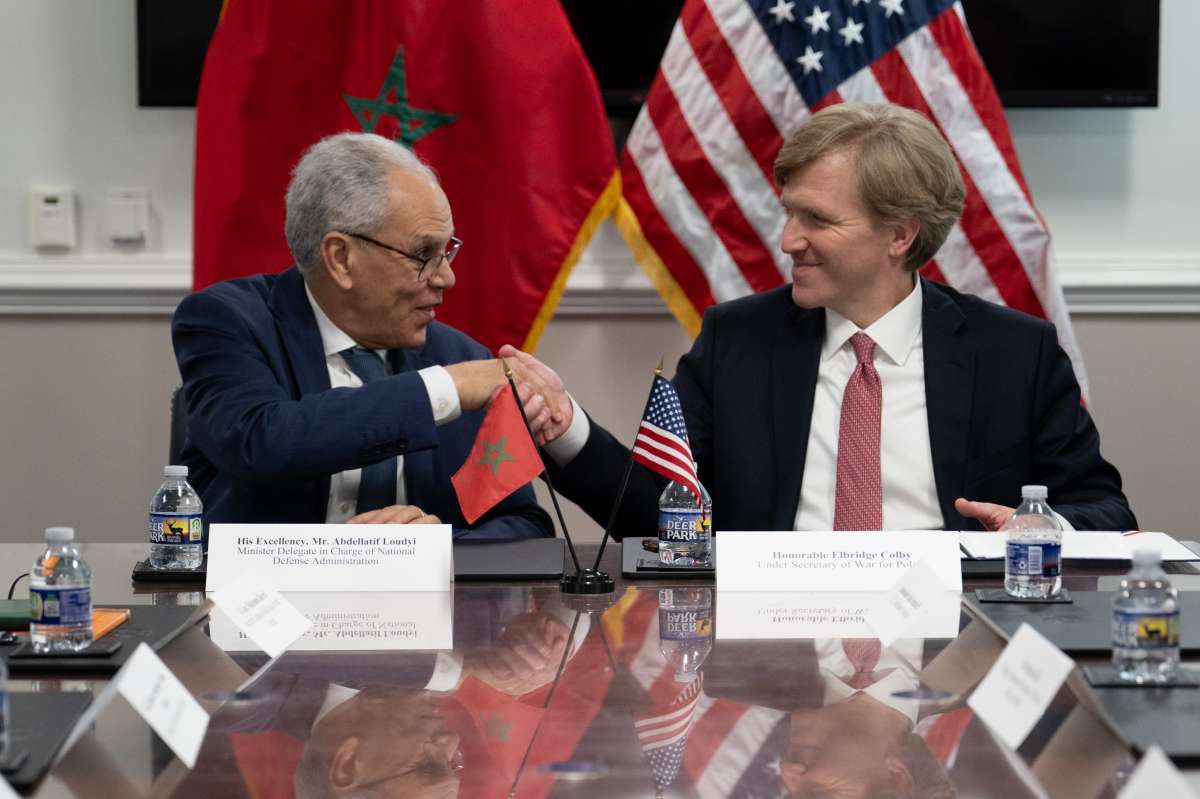
The agreement, which is already in force, was signed by US Under Secretary of War for Policy Elbridge Colby, 46, and Morocco’s Minister Delegate to the Head of Government in charge of the National Defence Administration, Abdellatif Loudyi. The latter, a 77-year-old economist, has in practice headed the defence portfolio since December 2010 and enjoys the full confidence of King Mohammed VI, who is Supreme Commander of the Armed Forces and Chief of the General Staff of Morocco.
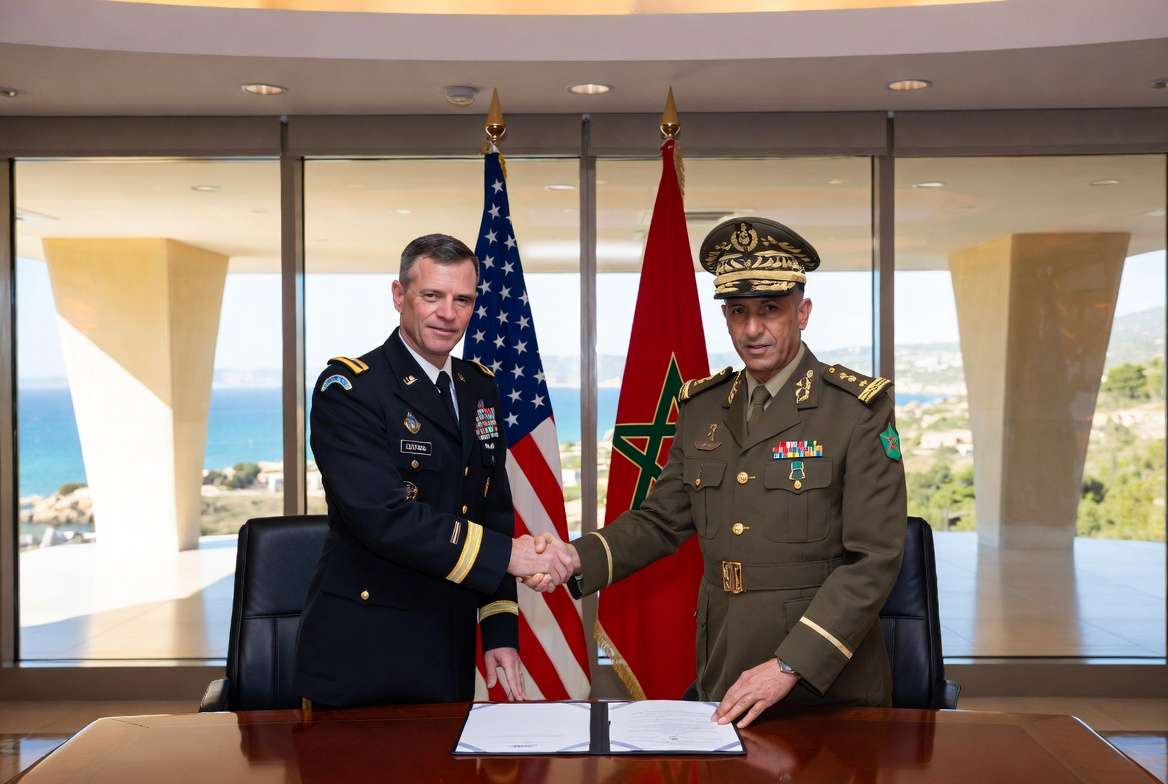
The terms of the alliance that bring AMTEC into operation were finalised on 13 July in Stuttgart, Germany, home to the headquarters of United States Africa Command (AFRICOM). The document was signed by AFRICOM commander Lieutenant General Dagvin Anderson, who has held the post for exactly one year, and the Inspector General of the Moroccan Armed Forces, Lieutenant General Mohamed Berrid, who has been in office since April 2023 and serves as the effective head of the General Staff.
AMTEC falls within the remit of the US Army Test and Evaluation Command (ATEC). This would suggest that it is not a jointly operated facility like Spain’s Rota naval and air base, although no definitive information is currently available either way.
A low-cost testing ground for US industry
The weapons testing and trial centre made available to the US Army by Morocco is close to logistics infrastructure that can facilitate the arrival of equipment from across the Atlantic. AMTEC is located near Tan-Tan’s civilian and military airport, around 270 kilometres from Puerto del Rosario, the capital of Fuerteventura. Tan-Tan also has port facilities which, like the airport, maintain commercial sea and air links with the Canary Island and can be expanded.
AMTEC is described as an “international military testing ground” designed to provide low-cost services to private industry in research, development and rapid experimentation. ATEC’s planners have configured the Tan-Tan facilities to give US companies access to segregated firing and manoeuvre areas where they can test and evaluate drones, counter-drone technologies, cruise missiles, aerial targets, new munitions, long-range artillery systems and low-cost interceptors for potential use on future battlefields.
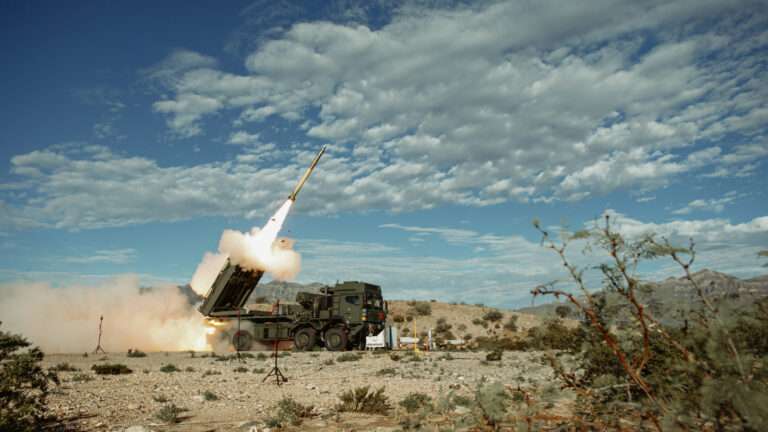
- The Tan-Tan firing range is used to test munitions and long-range artillery systems
- US Army
To gain access to the land or airspace at the new Moroccan testing complex, US private companies and start-ups must submit a request to ATEC, which then assigns available dates. The novel aspect of the process is that applicants do not need a Pentagon contract or any previous formal relationship with the federal government.
General Patrick Gaydon, who has headed ATEC since July 2024, has introduced an approach intended to bring potentially disruptive emerging weapons systems to the fore: aligning slow military testing processes with the high speed of commercial innovation. Under this philosophy, companies and their engineers will travel to Morocco to test prototypes and refine them rapidly using a “shoot or fly, fail, modify and try again” model.
What is known so far is that the newly created Tan-Tan centre comprises three main facilities: a Multidomain Training Area (MDTA), an Innovation and Experimentation Centre and a Drone Academy, the latter serving as a concession to the Moroccan Armed Forces.
A multipurpose facility for Morocco’s main arms supplier
The MDTA includes a large area for exercises, tests and trials involving both live firing and crewed or uncrewed aircraft. It is equipped to operate across the electromagnetic spectrum and simulate combat environments as realistically as possible.
The second component is the Innovation and Experimentation Centre, where civilian and military specialists and experts contribute their knowledge and best practices to test and evaluate emerging, scalable and low-cost capabilities as quickly as possible. It is geared particularly towards the development of future wireless and detection technologies.
The third component is the Drone Academy. Its purpose is to train Moroccan officers, non-commissioned officers and enlisted personnel, as well as military personnel from other African countries, to operate different types of US-made drones. These will include both intelligence, surveillance and reconnaissance (ISR) unmanned aerial systems and strike platforms, a capability needed to confront the terrorist threat in West Africa.
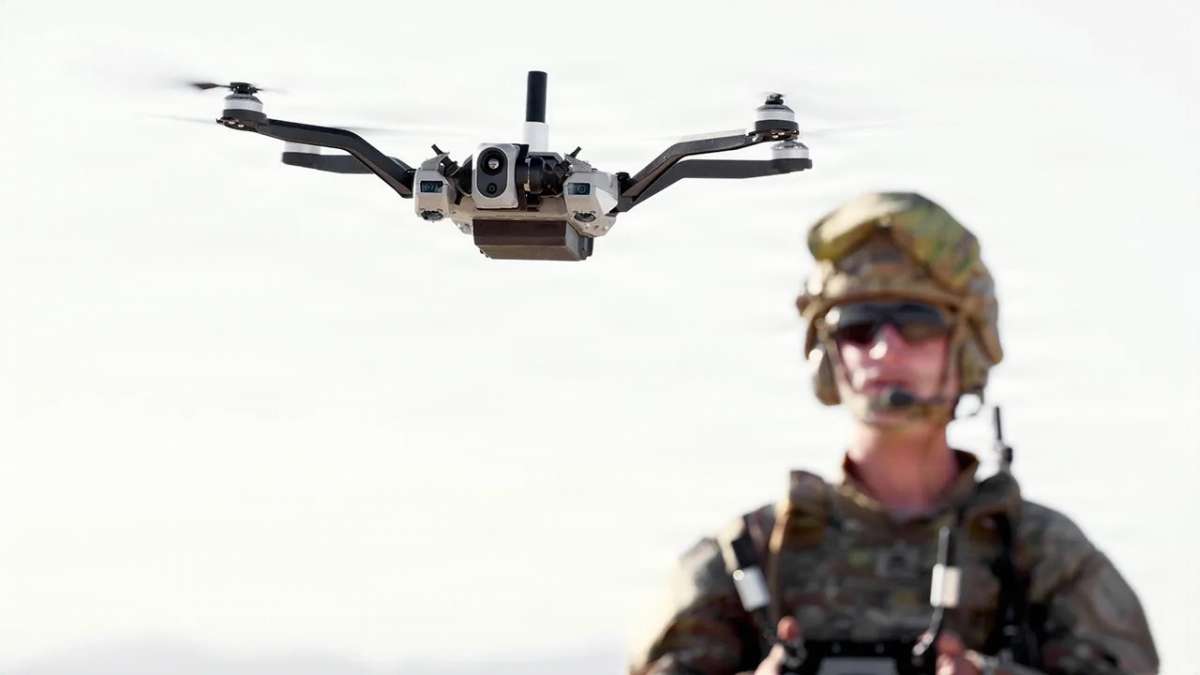
- The AMTEC Drone Academy will train military personnel from Morocco and other African countries
- Photo: ATEC
Although the United States accounts for around 60% of Morocco’s purchases of military systems and equipment, the kingdom has not neglected its ties with France and Israel, its two other major arms suppliers. Relations with Benjamin Netanyahu’s government are excellent, while ties with Paris, which deteriorated at the beginning of this decade, have improved markedly over the past two years.
Seeking to smooth over any remaining differences, the Inspector General of the Moroccan Armed Forces travelled to Paris in mid-June to meet General Fabien Mandon, Chief of the French Defence Staff. Berrid told him that Mohammed VI wanted to establish a “new stage in the strategic defence partnership between the two countries”, reaffirmed that bilateral military cooperation “remains one of the pillars of relations between Paris and Rabat” and officially informed him of the imminent creation of AMTEC with US funding.
Lieutenant General Berrid’s trip to Paris was followed by a visit at the highest level in the opposite direction. In mid-July, French Prime Minister Sébastien Lecornu travelled to Rabat on an official visit accompanied by a dozen ministers. The trip was intended to open a new chapter in security and defence. Above all, however, the senior French delegation sought to secure business deals of mutual interest and avoid falling behind as the United States makes major investments across a range of sectors in the North African country.
Morocco has taken a major qualitative leap in its strategic defence alliance with the United States by activating the Africa Multidomain Training and Experimentation Center (AMTEC) on the country’s south-western coast, just over 250 kilometres from the Canary Island of Fuerteventura.
The creation and launch of AMTEC near the coastal city of Tan-Tan, in a desert area close to the former Spanish Sahara, is one of the first tangible results of the 2026-2036 defence agreement signed in Washington in mid-April. The pact replaces the October 2020 agreement, which was due to run until 2030, and takes Morocco into a new phase, while enabling the United States to reposition itself strategically on the African continent.
The agreement, which is already in force, was signed by US Under Secretary of War for Policy Elbridge Colby, 46, and Morocco’s Minister Delegate to the Head of Government in charge of the National Defence Administration, Abdellatif Loudyi. The latter, a 77-year-old economist, has in practice headed the defence portfolio since December 2010 and enjoys the full confidence of King Mohammed VI, who is Supreme Commander of the Armed Forces and Chief of the General Staff of Morocco.
The terms of the alliance that bring AMTEC into operation were finalised on 13 July in Stuttgart, Germany, home to the headquarters of United States Africa Command (AFRICOM). The document was signed by AFRICOM commander Lieutenant General Dagvin Anderson, who has held the post for exactly one year, and the Inspector General of the Moroccan Armed Forces, Lieutenant General Mohamed Berrid, who has been in office since April 2023 and serves as the effective head of the General Staff.
AMTEC falls within the remit of the US Army Test and Evaluation Command (ATEC). This would suggest that it is not a jointly operated facility like Spain’s Rota naval and air base, although no definitive information is currently available either way.
A low-cost testing ground for US industry
The weapons testing and trial centre made available to the US Army by Morocco is close to logistics infrastructure that can facilitate the arrival of equipment from across the Atlantic. AMTEC is located near Tan-Tan’s civilian and military airport, around 270 kilometres from Puerto del Rosario, the capital of Fuerteventura. Tan-Tan also has port facilities which, like the airport, maintain commercial sea and air links with the Canary Island and can be expanded.
AMTEC is described as an “international military testing ground” designed to provide low-cost services to private industry in research, development and rapid experimentation. ATEC’s planners have configured the Tan-Tan facilities to give US companies access to segregated firing and manoeuvre areas where they can test and evaluate drones, counter-drone technologies, cruise missiles, aerial targets, new munitions, long-range artillery systems and low-cost interceptors for potential use on future battlefields.
- The Tan-Tan firing range is used to test munitions and long-range artillery systems
- US Army
To gain access to the land or airspace at the new Moroccan testing complex, US private companies and start-ups must submit a request to ATEC, which then assigns available dates. The novel aspect of the process is that applicants do not need a Pentagon contract or any previous formal relationship with the federal government.
General Patrick Gaydon, who has headed ATEC since July 2024, has introduced an approach intended to bring potentially disruptive emerging weapons systems to the fore: aligning slow military testing processes with the high speed of commercial innovation. Under this philosophy, companies and their engineers will travel to Morocco to test prototypes and refine them rapidly using a “shoot or fly, fail, modify and try again” model.
What is known so far is that the newly created Tan-Tan centre comprises three main facilities: a Multidomain Training Area (MDTA), an Innovation and Experimentation Centre and a Drone Academy, the latter serving as a concession to the Moroccan Armed Forces.
A multipurpose facility for Morocco’s main arms supplier
The MDTA includes a large area for exercises, tests and trials involving both live firing and crewed or uncrewed aircraft. It is equipped to operate across the electromagnetic spectrum and simulate combat environments as realistically as possible.
The second component is the Innovation and Experimentation Centre, where civilian and military specialists and experts contribute their knowledge and best practices to test and evaluate emerging, scalable and low-cost capabilities as quickly as possible. It is geared particularly towards the development of future wireless and detection technologies.
The third component is the Drone Academy. Its purpose is to train Moroccan officers, non-commissioned officers and enlisted personnel, as well as military personnel from other African countries, to operate different types of US-made drones. These will include both intelligence, surveillance and reconnaissance (ISR) unmanned aerial systems and strike platforms, a capability needed to confront the terrorist threat in West Africa.
- The AMTEC Drone Academy will train military personnel from Morocco and other African countries
- Photo: ATEC
Although the United States accounts for around 60% of Morocco’s purchases of military systems and equipment, the kingdom has not neglected its ties with France and Israel, its two other major arms suppliers. Relations with Benjamin Netanyahu’s government are excellent, while ties with Paris, which deteriorated at the beginning of this decade, have improved markedly over the past two years.
Seeking to smooth over any remaining differences, the Inspector General of the Moroccan Armed Forces travelled to Paris in mid-June to meet General Fabien Mandon, Chief of the French Defence Staff. Berrid told him that Mohammed VI wanted to establish a “new stage in the strategic defence partnership between the two countries”, reaffirmed that bilateral military cooperation “remains one of the pillars of relations between Paris and Rabat” and officially informed him of the imminent creation of AMTEC with US funding.
Lieutenant General Berrid’s trip to Paris was followed by a visit at the highest level in the opposite direction. In mid-July, French Prime Minister Sébastien Lecornu travelled to Rabat on an official visit accompanied by a dozen ministers. The trip was intended to open a new chapter in security and defence. Above all, however, the senior French delegation sought to secure business deals of mutual interest and avoid falling behind as the United States makes major investments across a range of sectors in the North African country.
Credit: Source link