

U.S. Blockade Has Caused Extreme Hardship in Cuba: FM Rodriguez
-
-
-
-
-
-
PDF
🔗 Comparte este artículo
The economic warfare in 2026 has worsened shortages of fuel, medicine and other essential goods.
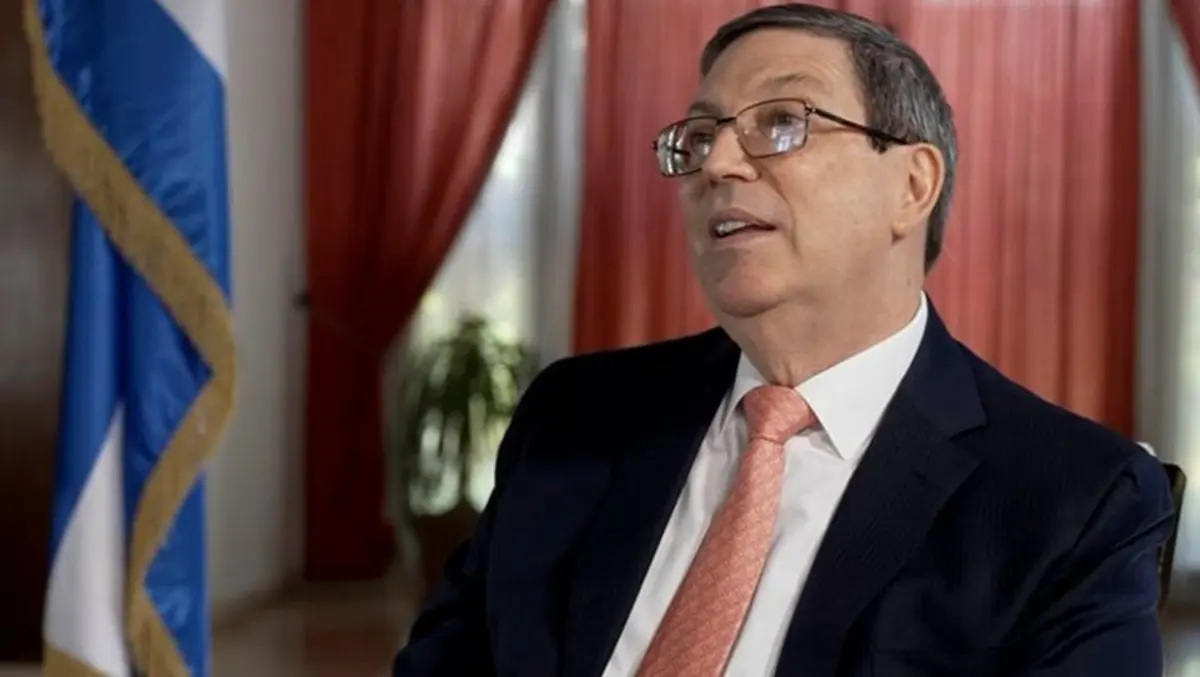
On Wednesday, Cuba Analysis podcast released an interview in which Cuban Foreign Affairs Minister Bruno Rodriguez spoke with journalist Hellen Yaffe about the consequences of the U.S. blockade on the daily lives of his compatriots.
RELATED:
Silvio Rodriguez Reflects On Culture and the Challenges Facing Cuba
The Cuban diplomat highlighted the impact of the “maximum pressure” strategy that U.S. President Donald Trump began during his first administration and continued through a sharp escalation of U.S. economic warfare in 2026. The following is the full interview with Cuba’s foreign minister.
YAFFE: You have spent nearly two decades leading Cuban diplomacy and have represented Cuba during one of the most complex periods in its recent history. What has it meant for you to represent your country for so many years?
RODRIGUEZ: It has been too long. It has been many years. In reality, unfortunately, there have been certain circumstances — not only from my personal point of view: I was appointed to this position and have continued to hold it ever since.
Fortunately, the principles of the Cuban foreign policy, its tradition and its founding elements coincide with the guidance issued by the Cuban Parliament, the president of the Republic and the Government to put them into practice; and they also coincide with my deepest convictions.
When one feels that the instructions one receives coincide with one’s personal convictions, everything becomes easier. That is a characteristic of Cuban revolutionary diplomacy.
YAFFE: If you could set aside, for a moment, diplomatic language and simply speak as a Cuban citizen, how would you explain, in the simplest possible way, what it means to live under an economic blockade for more than 60 years?
RODRIGUEZ: I can do so very easily, because in Cuban diplomacy you will find very deep roots in the people. The families of Cuban diplomats live under the same conditions as our people, and I, too, have lived under the effects of the blockade.
My son, who is 36, was born under the blockade; we are talking about different generations. The country has suffered extraordinary impacts as a consequence of the blockade, for example during the 1990s, which you know very well. But there is no doubt that since 2019 — and particularly after the executive orders adopted in January and May — there has been a qualitative change in its impact, causing suffering and hardship for every single Cuban. The deprivation is extreme and is part of this coercive mechanism, which constitutes collective punishment.
YAFFE: What do you say to those who claim that Cuba’s difficulties are the result of its political system and the inefficiency of its leaders?
RODRIGUEZ: They are lying. They systematically lie. Over these six decades, various pretexts have been put forward to try to justify an act described as genocide by international conventions and international law.
But it is extremely cynical to try to attribute to the Government or the constitutional order — freely chosen by the Cuban people through several referendums — the consequences of an extreme blockade that includes acts characteristic of a period of war or equivalent to a naval blockade.
Such is the case, at this time, of the fuel siege, which runs counter to international rules and international trade, and of the intimidation of shipping companies that transport goods to Cuba.
Right now there are more than 7,000 containers, mainly containing medicines and medical devices, that cannot reach Cuba because of this intimidating effect. There are containers stranded in nearby ports in the region that cannot reach the country.
But the worst are the extremely serious humanitarian consequences. Perhaps the most painful figure is the doubling of the infant mortality rate per 1,000 live births as a result of the impact of the blockade, despite the fact that we have a recognized health care system.
However, the U.S. government and the State Department do not even address this issue, as if it were “collateral damage,” an unacceptable and criminal concept, because the humanitarian consequences caused by these blockade measures are part of a deliberate and coldly calculated design.
The Secretary of State, who has lied on numerous occasions by claiming that the blockade or the fuel siege do not exist, recently said that the Cuban government could find some way out of the suffocation caused by the extreme conditions of the blockade.
It is therefore notoriously perverse to create these circumstances and then try to hold our government and our people responsible for their terrible humanitarian consequences.
YAFFE: Every year, at the United Nations General Assembly, almost every country in the world votes against the U.S. blockade of Cuba. After each vote, we have seen dozens of diplomats approach Cuban representatives to greet them. What do they talk about with them away from the microphones? Why does those countries’ opposition to the U.S. blockade not allow them to ignore unilateral U.S. sanctions?
RODRIGUEZ: There is a well-established international view, expressed not only in the annual vote on the resolution calling on the United States to unconditionally end the application of the blockade. Around the planet — and within the United States itself — there are numerous expressions of rejection of this policy of hostility and blockade.
It is significant that the majority of U.S. citizens oppose the application of the blockade. According to studies conducted in July on digital networks, only a minority supports the energy siege. At the United Nations, and not only regarding the blockade, the Cuban delegation sometimes has to assume the enormous responsibility of becoming, in some way, a spokesperson for the Global South.
Cuba can speak with absolute freedom, pursue a completely independent foreign policy and, frequently, is recognized for directly expressing issues that also concern the majority of U.N. members.
That is what happens at moments like this, or as occurred last July, when the issue was examined outside the ordinary calendar. There is a consolidated worldwide recognition that the blockade policy is illegal and criminal; that it has a genocidal impact on the Cuban people; that it constitutes an act of collective punishment; that it violates international law, including international humanitarian law; that it is obsolete and anchored in the logic of the Cold War; and that it runs counter to the will of public opinion, U.S. taxpayers and Cubans residing in the United States.
Moreover, it has a marked extraterritorial reach and harms the sovereignty and independence of all states, without exception. It affects not only the genuine national interests of the United States, but also the interests of all nations and companies.
Very early on, the European Union adopted a set of rules that would require its governments to protect the interests of their companies against the unilateral application of U.S. laws or the extension of U.S. court jurisdiction beyond its borders.
However, those rules are not applied with sufficient determination. European governments — which make up a community of international weight — weakly enforce the blocking or “antidote” laws they approved and timidly defend their interests against their competitors. In my view, the most serious thing is that Cuba is not merely the custodian of a symbolic value: It stands at an international crossroads related to the world order itself.
If a superpower is allowed to blockade and try to destroy a small sovereign nation to change its political system, the conditions would be created for the same thing to happen to any state in the world.
YAFFE: Since early 2026 Trump has issued two executive orders designating Cuba as a threat to the national security of the United States and has imposed, de facto, an oil blockade. How do you explain this increase in aggression against Cuba since 2026?
RODRIGUEZ: That should be asked of the U.S. government, which uses pretexts and lies to try to justify that action. But, considering the enormous severity of the economic impact, it would not be serious to believe that an island of this size could pose a threat to the world’s greatest military power.
The truth is that Cuba does not threaten the national security or economy of the United States, nor does it wish to do so. There are very deep cultural and diverse ties between the Cuban and U.S. peoples. Nevertheless, this administration desperately needs to justify the atrocious policy it applies against our country. The accusation that Cuba supposedly sponsors terrorism actually reveals the lack of seriousness of the U.S. government.
One president makes a decision, the next president reverses it and removes that designation. Then another president, in his first days in the White House, imposes it again. Therefore, it is not the result of interagency consultations or an examination of any solid evidence.
It is not merely a deceptive pretext: It has very serious consequences for Cuba’s policy and national security, as well as a serious humanitarian impact. The entire world has recognized the falsity of that accusation, which does not contribute to the national interest of the United States either. We aspire to a normal relationship, based on good neighborliness and trade with the neighboring country.
As for the economic and social impact of these measures — for example, on international trade and the health care system — it is not a single measure, but a set of offensive and coercive actions.
Added to this is a historical accumulation that has caused enormous damage to an economy the size of Cuba’s. Since the second half of 2019, we have seen an extreme tightening of these actions, although many had already been adopted previously.
Even during the COVID-19 pandemic, when the U.S. government eased several sanctions with regard to virtually every country, it imposed additional measures against Cuba. These included obstructing the acquisition of ventilators and medical oxygen. We saw this as an opportunistic action aimed at tightening that policy.
The year 2026 marks another turning point. An oil siege equivalent to a naval blockade has been imposed, with the objective of preventing oil from reaching Cuba; at one point, it was even accompanied by the presence of military vessels and a military deployment in the Caribbean.
If Cuba could receive a minimum amount of oil, power outages could be reduced to one or two hours a day and water supplies would improve enormously. I have seen photographs — and I have shown them at the U.N. — of a surgical operation performed by the light of doctors’ cellphones.
The food situation would be completely different. They have systematically lied, particularly the secretary of state, by saying that Cuba received oil for free. That is completely false. Cuba receives oil under normal international trade conditions: in some cases based on the export of medical services and, in others, by purchasing it, even under less favorable conditions as a consequence of U.S. hostility.
The truth is that the oil siege has extremely serious consequences for our people and our economy. Added to this are direct measures to prevent merchant ships bound for Cuba from arriving with not only fuel but also other products. Many of those products were purchased and paid for by small and medium-sized private Cuban companies.
The shipping companies that were supposed to transport them flagrantly breach the contracts and commitments they assumed after receiving the corresponding payment. The failure of those containers to arrive naturally has direct consequences for the country’s humanitarian situation.
YAFFE: The U.S. government has threatened to attack Cuba militarily. Is this a symbolic war, or do you believe they are actually preparing a military aggression?
RODRIGUEZ: It is a threat that we take very seriously, very seriously. One has to ask what would happen to the current international order if a superpower — a nuclear power — were allowed to attack a small island to change its political system.
Second, it is not only rhetoric. U.S. leaders, the secretary of state and other administration figures have spoken publicly and consistently about military action against Cuba. They say that a military attack is among the options, that it is “on the table,” awaiting a decision. Although there is an element of propaganda and psychological warfare, it is public and well known that real preparations are being made to carry out a military attack against Cuba.
Our people would undoubtedly defend, to the ultimate consequences, the independence, sovereignty and territorial integrity of the homeland. It would be a tragic action that would cause the loss of Cuban lives and the lives of young Americans sent to a war that has nothing to do with them. It would be a bloodbath and, at the same time, would generate regional instability.
The United States would never achieve the objective of occupying and “pacifying” our country — an impossible goal, as many analysts and academics have acknowledged — but it would cause instability throughout the Caribbean region, in trade routes, air corridors and Cuba’s neighboring countries, which are not limited to the United States.
The U.S. government would then assume a criminal and genocidal responsibility. It would suffer enormous discredit and deepen the international isolation it already faces as a consequence of its blockade policy and its criminal policy against our country. With great realism, we are preparing to defend the nation, as our tradition dictates, and we hope this never happens.
We are working intensely and doing everything possible to avoid any pretext or excuse and not create conditions that lead to a bilateral escalation with the United States. But, at the same time, we have said that we will firmly defend our self-determination and independence.
That is also of interest to the United Nations, its Security Council and the General Assembly, which met July 7. Representatives from all regions delivered numerous speeches and statements against a military adventure in Cuba and demanded an end to the energy siege and the persecution of shipping companies linked to the country.
I am convinced that humanity needs a broad consensus of wills — of political forces, governments and nations — to stop the deterioration of the international order, which is leading the world toward a situation that humanity believed it had overcome many years ago: conquest, plunder and the proliferation of extremely lethal weapons; as well as the development of the arms race at the expense of the interests of all peoples.
Added to this is the project to extend that arms race into outer space and the danger of a nuclear winter, which could be triggered by the explosion of just 100 warheads. I am convinced that international organizations, political forces, governments and parliaments, popular movements and civil society organizations will come together to stop this path, which threatens the very existence of human life on the planet.
Cuba has become, despite being a small island, a kind of symbol. History turned it into an international symbol of independence, rebellion against oppression and injustice, and solidarity as well. Dozens and dozens of countries received Cuban solidarity during the COVID-19 pandemic, including Italy and Angola.
We believe that Cuba is not alone, that the Cuban cause awakens great international solidarity. We trust that the international community will prevent any military adventure against Cuba and force an end to policies that also cause death — policies that also kill, even though they are not bombs — such as the brutal energy siege or the prohibition against essential goods reaching the country.
YAFFE: The U.S. Secretary of State, Marco Rubio, has recently been one of the main promoters of a tougher policy toward Cuba and, according to Axios, has discussed mechanisms to worsen the situation. At the same time, it is said that the U.S. government has provided US$100 million in humanitarian assistance to the Cuban people, while Cuba estimates that the blockade costs between US$7 billion and US$8 billion a year. Could you comment on these contradictory positions?
RODRIGUEZ: The blockade against Cuba represents more than US$900 million a day. If you review the recent statements of the Secretary of State, you will see that he has also said that the fuel siege does not exist. It is curious, because he has even maintained the opposite of what the U.S. president and other officials have stated. Who could benefit from the destruction of the Cuban economy, from the destruction of our country? No one, except a small group of corrupt politicians based mainly in South Florida, driven by a desire for revenge against the Cuban Revolution.
They inherited the ideas and grievances of those who served Batista’s bloody dictatorship, looted public funds and benefited from the corruption of that era; an emigration made up of numerous war criminals who invoke revenge to return our country to the reality that existed before 1959. They represent the most radical and extreme positions; they are the ones applying the greatest pressure in favor of a military adventure against Cuba, without thinking about its terrible consequences.
There are U.S. politicians who want to eradicate the alternative character represented by Cuba’s historical example in the face of savage capitalism, the most orthodox neoliberalism and the fascist and neofascist trends that have taken hold in these times. They oppose an alternative model. That is the policy they have followed with other countries, because Cuba defends the plurality of cultures, ideas and political models, according to historical circumstances and the right of peoples to self-determination.
But only that small clique could benefit from the current policy of the U.S. government, an escalation or the worsening of the bilateral conflict. What truly serves the interests of the U.S. people, taxpayers and those who elect governments is to move toward normalization of relations, based on the elimination of the blockade and threats against our country.
Cuba has made an important international humanitarian contribution and continues to offer medical cooperation in different regions of the world. We are probably the country that provides the most international medical cooperation under South-South cooperation conditions. That cooperation has also been atrociously persecuted. Cuba, in turn, has accepted international cooperation and assistance, which our people greatly need under the extremely difficult circumstances they face.
As for the announcement of US$100 million in assistance, when that aid was first mentioned at the Holy See, it did not exist. Neither the Cuban churches nor the Government had been contacted about it, although it was stated at the Holy See that Cuba had received it.
Previously, US$3 million in aid had been offered, which was delivered, but it was only enough to alleviate the situation of a very limited number of Cuban families, because we are talking about a large population. Then US$9 million was offered; later it was said that it would be US$6 million, and that amount has barely been implemented. Only a small portion has materialized.
Of the US$100 million announced, what has been received has barely reached about 700 families. It is a small amount of aid, limited to that small number of households. Humanitarian issues — and much less humanitarian assistance — should not be used for political purposes or to create manipulation. However, our Government, together with the Cuban churches, remains willing to facilitate the receipt of that assistance for the benefit of the Cuban people.
YAFFE: If Marco Rubio traveled to Cuba, would you be willing to sit down and talk with him?
RODRIGUEZ: That is a hypothetical question. It is a hypothetical question, and it is difficult to answer hypothetical questions.
YAFFE: The State Department recently published a report titled “Cuba, the Capital of 21st-Century Communism,” in which it describes the country as a global subversive force that for decades has guided the left in the United States and around the world. The report appears in the context of the revival of the Monroe Doctrine and the election of numerous right-wing governments in Latin America; several of them have broken diplomatic relations with Cuba. What impact does this shift to the right have on Cuba and the region? How do you respond to the State Department report?
RODRIGUEZ: It is difficult to give a serious response to a document that lacks seriousness. I would love to know what artificial intelligence application was used to write it.
I read almost all 100 pages, and it took an enormous effort to reach the end because it combines lies, false statements and manipulation, all with an extraordinary lack of rigor. I am convinced that serious and professional diplomats at the State Department will feel ashamed to see such a libel published.
Many international organizations would be astonished by the falsehoods contained in the report, amid the official statements of the U.S. government and in the context of the international order and the guidelines of its national security and defense strategy regarding its competitors or strategic adversaries.
They present Cuba as the source of all evils and, moreover, as a nation capable of causing them. That does not allow for a serious conversation. However, during McCarthyism, in the processes that led to World War II and in the rise of fascism, similar absurdities were said, and there were people who believed them.
At the beginning of the 1960s, a CIA operation spread the lie that the Cuban state would eliminate parents’ custody over their children. As a result, about 14,000 children were sent to the United States, to foster homes and orphanages, based on an absurd falsehood. But there were people who believed it.
That is why we cannot underestimate the belligerent approach of the U.S. government, which relies on its control of enormous technological platforms. Today those platforms have an extraordinary influence not only on information, but also on people’s behavior and their ability to think critically around the world. I have said that if young people and U.S. citizens received more information themselves and more accurate information, they would oppose the atrocious policies their government applies against Cuba.
I completely reject the report’s assertions. Behind it lies a very serious purpose: to justify military aggression against Cuba; to try to legitimize collective punishment and the crime of genocide; and to resort to repression against U.S. civil society organizations, some of which have expressed solidarity with Cuba and others that have organized trips to our country.
It is therefore an essentially repressive policy against civil liberties and human rights. The U.S. government not only prevents its citizens from traveling to Cuba, but also tramples on their freedom to travel, not to mention the recent repression against universities and against certain ideas held by enlightened sectors.
It is a mendacious and ridiculous report. Nevertheless, we must take the objectives it pursues very seriously, including the deepest racism and xenophobia; the persecution of immigrants and young people by far-right forces; and the offensive against progressive tendencies and against the U.S. people themselves, as part of a regressive and McCarthyist policy.
It is true that history advances and retreats in a kind of spiral, and that we must analyze these events with a historical sense and a dialectical approach. But we can never underestimate the accumulation favorable to progressive and social movements, opposed to neoliberal globalization and in favor of transforming forms of production and consumption that today are unsustainable and irrational and endanger existence itself on the planet.
These shifts to the right occur at certain moments, but I am optimistic: I believe there is a favorable historical accumulation. Under any circumstances, Cuba has maintained very deep — essentially cultural and emotional — relations with all the peoples of Latin America and the Caribbean. No political circumstance or government — all governments are temporary — will be able to break those ties. The peoples will soon understand that extreme right-wing neoliberal governments have abolished social gains achieved previously and that they will have to be recovered.
We trust that our ties with all the countries of Latin America and the Caribbean, and also with the majority of their governments, will continue to develop. There are countries with which Cuba has historically maintained very close relations. Likewise, Cuba has deep cultural ties with the U.S. people, and that cannot be ignored either.
Some right-wing governments that have acted in subordination to the current U.S. administration and against their own traditions and history, as well as the aspirations and sentiments of their peoples, will go down in history and no one will remember them.
YAFFE: When we talk about the blockade, we tend to think about the costs for Cuba. However, there are also measures against the U.S. people and losses for the United States. Could you address them?
RODRIGUEZ: As I mentioned before, the blockade against Cuba affects everyone’s interests because it violates the sovereign equality of states and harms the independence of U.S. citizens. The national interests of all countries, without exception, are at stake: their businesspeople and their various cultural and scientific sectors are harmed, and they also suffer economic damage.
The U.S. government frequently resorts to coercive measures against other states, while preserving for itself the possibility of developing economic exchanges with the country it supposedly seeks to prevent from maintaining relations with third parties. It is very revealing.
In the case of Europe — for example, regarding gas, fuel and other areas — the United States has sought to take advantage of and exploit geopolitical circumstances to impose truly onerous conditions on European governments and peoples. The same has happened with tariffs and other matters.
I would say that the blockade causes each nation political and ethical harm, in addition to causing damage from the perspective of international law and domestic law. Seeking to impose on other countries decisions by U.S. courts that have no jurisdiction over them, or subjecting companies and people from third countries to U.S. laws with extraterritorial reach, causes real harm to those nations.
Second, both in the United States and in many other countries, people are deprived of certain scientific advances that, with all modesty, we say are unique to Cuba. This is the case, for example, with therapeutic cancer vaccines, new medicines and therapies for diabetic foot ulcers, and treatments for neurodegenerative diseases such as Alzheimer’s.
Why can U.S. citizens not benefit from those therapies, which would be much less expensive than those applied in the United States? The persecution of Cuban international medical cooperation seeks to deprive both developed countries and countries of the Global South of that assistance, even in remote places where the only medical services available are those provided by Cuban professionals.
Cuba has one of the most modern and competitive industries in the world in biomedical and pharmaceutical technologies. How many countries were able to produce their own COVID-19 vaccines? Cuba, in record time and with minimal resources, managed to develop as many as five vaccines.
However, today subsidiaries of U.S. companies are being harassed, in this and other sectors, whose products are registered in Europe. After more than 50 years of applying a failed policy, anyone would think it would be necessary to seek another one, because the reality is that the policy of hostility and blockade has not allowed the United States to advance a single inch toward its stated objectives regarding Cuba. However extreme the measures may be, they will not work.
They will not bring the current U.S. administration or any future government closer to its goals: restoring domination over Cuba; returning it to the worst years of neocolonialism; handing the country over to U.S. corporations, as happened for half a century; or allowing the return of the Batistian hordes and the corrupt figures based in South Florida.
The U.S. government will never achieve those objectives, no matter how hard it tries, although it has the capacity to cause immense damage, as it is doing today in our country. Some U.S. administrations have tried to introduce changes in bilateral relations with Cuba.
I would not like to mention any particular president, but those experiences demonstrated, first, that progress is possible; that it is possible to ease some of the cruelest blockade measures; and that we can sit down to talk and find negotiated solutions to certain bilateral problems.
They also demonstrated that Cuba and its Government are a serious and recognized interlocutor, that honors its commitments and keeps its word, and that the country is a responsible international actor. They also proved that there is broad consensus among both the Cuban and U.S. peoples in favor of eliminating the blockade policy and prioritizing dialogue, trade and cooperation, which would benefit both nations.
We have reiterated — and I reiterate now — Cuba’s willingness to continue or resume talks with the U.S. government on the basic principles established by international law: sovereign equality and equality between the parties; mutual respect; reciprocal benefit for both peoples; absence of interference in the internal affairs of either of our states; and no preconditions.
The experiences of previous decades also showed that this approach brought significant benefits to the U.S. government itself and to its people. In 2018, for example, 400,000 U.S. citizens and a similar number of Cubans residing in the United States visited Cuba. They were able to learn firsthand accurate information about the reality of Cuba. This generated significant support among the U.S. people and among Cubans living in that country, including those in South Florida.
I am convinced that this historical momentum will have an effect. We will gain time if it happens under the current administration; otherwise, it will happen with any other administration that advocates a civilized and respectful relationship between the two peoples.
YAFFE: Well, before we conclude, is there anything else you would like to add?
RODRIGUEZ: Well, I have talked a lot, and you will have to edit, because it has been a long conversation.
YAFFE: It has been an honor. Thank you very much.
RODRIGUEZ: I am the honored one. I greatly appreciate your visit and that you have also shared our hardships during these days; that you have shown such a deep interest not only in learning about Cuba, but in ensuring that citizens around the world — particularly in Europe and the United States — receive accurate information about our country, at a time when disinformation is gaining ground and beginning to deprive people of their ability to think. I thank you very much, and I ask you to forgive me.
teleSUR/ JF
Sources: MINREX – Cuba Analysis podcast