

Cuba Says “There Are No Negotiations” With Trump — And Its Birth Rate Is Collapsing
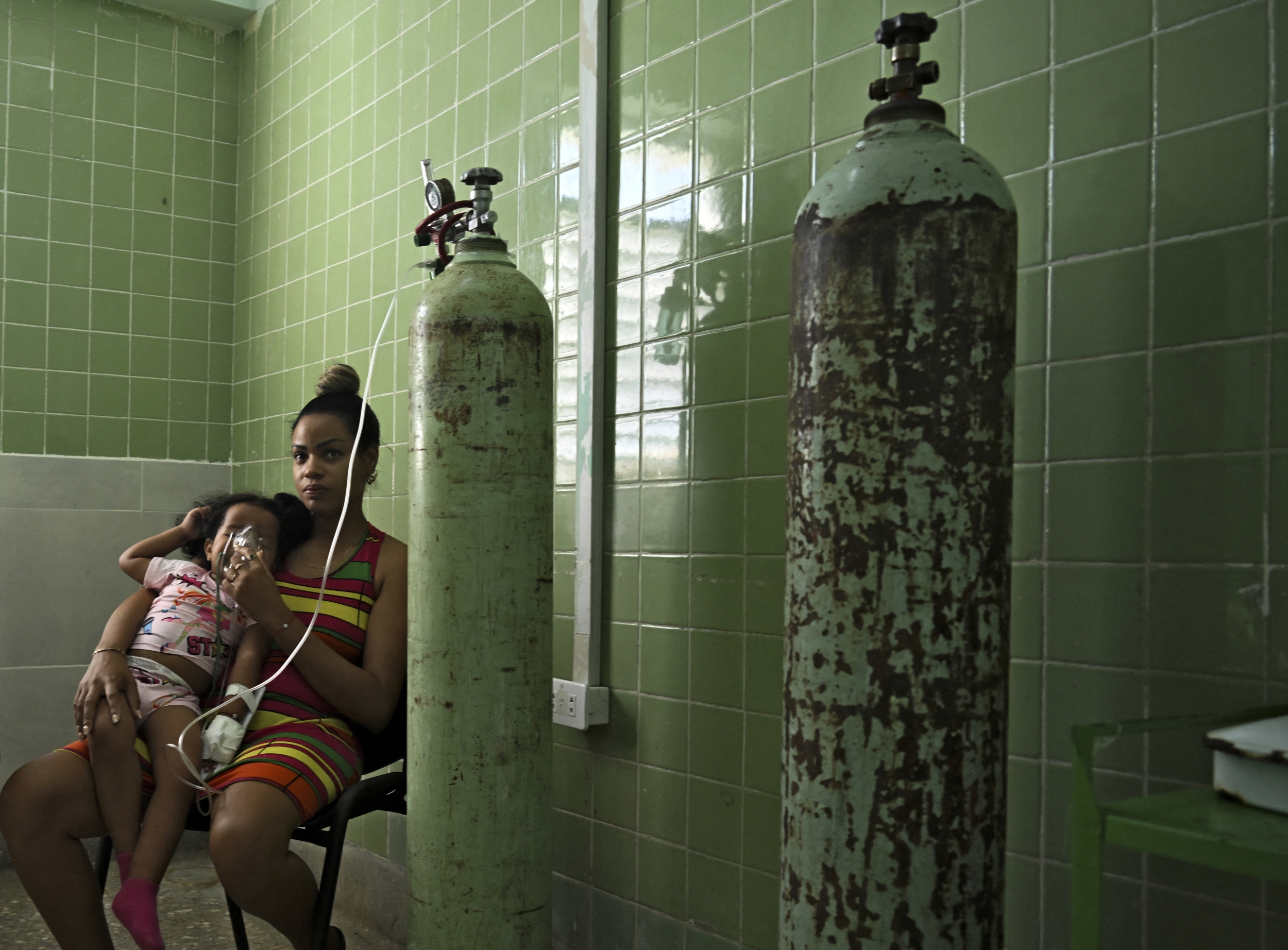
Photo by YAMIL LAGE / AFP via Getty Images
Cuba’s top representative in Washington says the two governments have stopped talking altogether, and she is not describing an ordinary diplomatic chill. In an interview with Bloomberg published Sept. 1, chargé d’affaires Lianys Torres Rivera said Havana and the Trump White House cannot even settle on what a negotiating agenda would look like, adding flatly that no talks are underway. That admission lands at a moment when the dispute between the two countries has moved well beyond the usual back-and-forth over the six-decade embargo.
A Freeze That Comes With Talk of Invasion
What is missing from most accounts of the standoff is the military backdrop against which it is unfolding. Cuban officials say Washington’s posture is no longer just economic. In a May sit-down with The Hill, Torres Rivera said Havana was running defensive drills to prepare for a possible U.S. attack, days after CIA Director John Ratcliffe traveled to the island and warned that the window for a negotiated outcome would not stay open forever. Reporting tied to her Bloomberg interview notes that U.S. intelligence agencies have since built up their footprint on the island in a pattern that mirrored the run-up to Washington’s raid on Venezuela, and that Secretary of State Marco Rubio, who oversees Cuba policy, has publicly ruled out any “peaceful agreement” with Havana’s government.
The Venezuela Trigger
The current chapter traces back to a single night. On Jan. 3, U.S. forces struck multiple sites inside Venezuela and extracted President Nicolás Maduro along with Cilia Flores, his spouse, flying the pair to New York to face charges including narco-terrorism, according to an account from the Atlantic Council. Trump described the operation as a reassertion of American power and said U.S. forces would effectively run Venezuela until a transition could be arranged. Eight days later, he turned his attention to Havana, declaring on Truth Social that Cuba’s supply of Venezuelan crude and cash was finished entirely and warning the island’s government to strike a deal “before it is too late,” a threat Díaz-Canel rejected within hours, insisting no outside power dictates Cuban policy.
Within three weeks, the rhetoric became policy. Appearing before the Senate’s foreign relations panel on Jan. 28, Rubio disavowed any formal plan to topple Havana’s government, then added, “I think we would like to see the regime there change.” The next day, Trump signed an order declaring a national emergency over Cuba and setting up a system of tariffs on any country caught supplying the island with oil, a mechanism aimed squarely at Mexico, one of Cuba’s last remaining fuel sources. Rubio later went further, telling lawmakers in June, according to NPR, that the 1996 Helms-Burton law makes a change of government in Havana a legal precondition for lifting the wider embargo, not simply a policy preference the administration could soften.
Squeezing the Military-Run Economy
Washington’s next move targeted the conglomerate that runs much of Cuba’s commerce. In May, the Treasury Department froze U.S.-linked assets belonging to GAESA, the armed-forces-controlled holding company that reportedly accounts for roughly 40% of the island’s economy, prompting shipping giants Hapag-Lloyd and CMA CGM to halt bookings to and from Cuba rather than risk exposure. Weeks later, on June 4, OFAC took the unusual step of adding President Miguel Díaz-Canel himself to its sanctions list, alongside his wife, his stepson and two members of the Castro family, cutting the Cuban leader’s inner circle out of the U.S. financial system entirely. Trump has separately renewed, for a third consecutive year, the Trading With the Enemy Act authority that forms one of the embargo’s legal foundations, extending it to Sept. 14, 2027.
The pressure campaign also reached into Cuba’s revolutionary history. Federal prosecutors indicted the former president, now 95, on conspiracy and murder charges tied to the 1996 downing of two unarmed planes flown by Brothers to the Rescue, a Miami exile organization. Torres Rivera has framed the case, along with the sanctions on Cuba’s leadership, as a way for the administration to convince Americans that the island poses a threat worth acting on militarily, and she has called Castro a symbol the government will defend without compromise.
Drone Claims and a Warning of “Bloodbath”
Tensions spiked further in mid-May, when the State Department sanctioned 11 Cuban officials alongside three state-run bodies over what Axios described as classified intelligence suggesting Havana had discussed using drones against the U.S. naval base at Guantánamo Bay or targets near Key West. Díaz-Canel dismissed the allegations, writing on X that no Cuban official holds assets under U.S. jurisdiction and calling the sanctions a fabricated pretext for aggression; he warned separately that any U.S. strike “would trigger a bloodbath with incalculable consequences.” U.S. officials were themselves divided on the threat: Florida Republican Rep. Carlos Giménez called Cuba’s military forces “completely dilapidated,” while Defense Secretary Pete Hegseth told lawmakers he viewed the island as a genuine national-security concern.
Hospitals Running on Fumes
The blockade’s toll on daily life is where Torres Rivera’s public statements have been most specific — and hardest to verify independently. She has said the island’s infant mortality rate has more than doubled, that upwards of 100,000 patients are waiting on surgeries hospitals lack the power to perform, that roughly 34,000 women have ultrasounds pending and that some 3,000 dialysis patients are missing treatment sessions during blackouts. “This is a war without bombs,” she said, describing a fuel pipeline so thin that the island has received only one shipment in the past 200 days. Those figures line up with Cuba’s own Health Ministry data reported independently by the Associated Press in July, which found the infant mortality rate had climbed from roughly 4-5 to 9.3 per 1,000 births and that pediatric cancer survival had fallen from 85% to 65% in six months — figures that remain government-sourced rather than confirmed by an outside body such as the Pan American Health Organization.
A Diaspora Divided on the Sidewalks of Little Havana
As of 2021, roughly 2.4 million Americans traced their roots to Cuba, according to Pew Research Center’s analysis of Census Bureau survey data, and no single place holds a larger share of that community than Miami-Dade County. Outside Versailles restaurant, the unofficial town square of Cuban exile politics, opinions split along familiar lines: some longtime exiles view the pressure campaign as overdue accountability for a government they blame for decades of repression, while others worry it is ordinary Cubans, not the island’s leadership, who are absorbing the pain of blackouts and empty pharmacy shelves.
Havana Says It’s Still Willing to Talk
Cuban officials insist the door to dialogue remains open in principle. Foreign Minister Bruno Rodríguez told reporters in Havana on June 30 that talks between the two governments were “showing no progress,” accusing U.S. delegations of pairing correct diplomatic manners with constant threats and coercive measures. He also said Washington lobbied member states to keep Cuba’s sanctions off the agenda at the United Nations — a separate fight from the chamber’s routine annual resolution condemning the embargo, which passed 165-7 last October for a 33rd consecutive year. Cuba requested its own General Assembly debate on the sanctions specifically, and delegates voted 136-9, with 30 abstentions, to hold it on July 8 despite the lobbying Rodríguez described. For now, each government describes the same standoff in opposite terms: Washington calls it maximum pressure aimed at forcing change; Havana calls it a war fought without a single bomb.
© {{Year}} Latin Times. All rights reserved. Do not reproduce without permission.
Comments are closed.