

Turkey to Build $350 Million Space Facility in Somalia, First Satellite Launch Planned for 2027
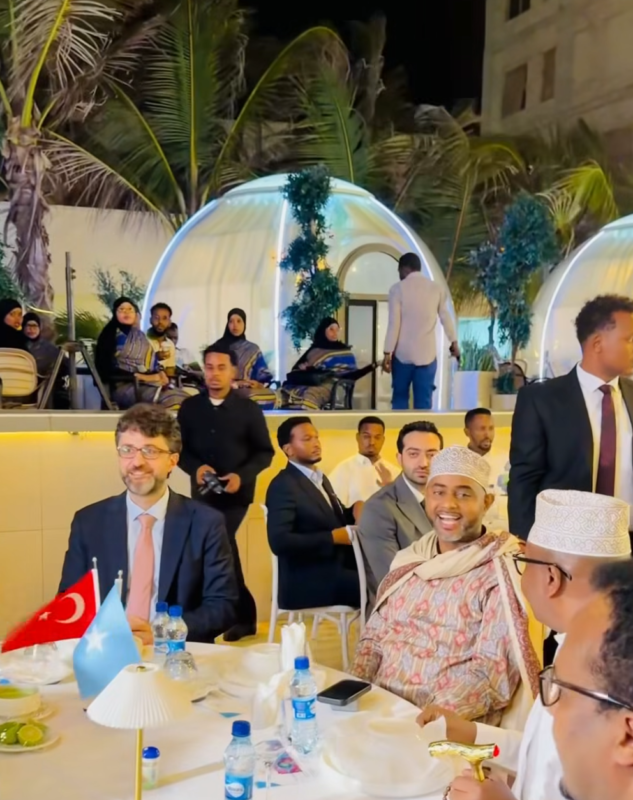
MOGADISHU — Somalia is expected to launch its first satellite in 2027 from a facility being constructed by Turkey in the Warsheekh district of Middle Shabelle region, outgoing Turkish Ambassador to Somalia Alper Aktaş announced during a farewell ceremony in Mogadishu.
The ambassador said Turkey is building a space facility in Warsheekh, northeast of Mogadishu, which is expected to serve as the launch centre for the programme. The first satellite launch from Somali soil is planned for 2027, marking a historic milestone for a country still rebuilding after decades of conflict.
“If I had said five or 10 years ago that one day Somalia would launch a satellite into space, many people might have laughed at us,” Aktaş said. He noted that progress in security and diplomacy reflected wider changes taking place in Somalia, with foreign diplomats now present in Mogadishu, some with children attending schools in the city.
The Spaceport Project
Turkey has announced plans to construct a $350 million spaceport in Somalia as part of its ambitious space exploration programme, with the facility to be built near the equator to support satellite and rocket launches.
The project was officially announced in December 2025 as a technological partnership between Somalia and Turkey, and construction began in late 2025, with the first phase expected to be completed by summer 2027.
Somalia was chosen for its strategic location near the equator, which provides optimal conditions for rocket launches due to Earth’s rotational speed, reducing fuel requirements and improving payload capacity. The designated site along Somalia’s coastline also provides a clear eastward trajectory over the Indian Ocean, ensuring spent rocket stages fall safely away from populated areas.
Turkey has completed the design phase of its next-generation Turksat 7A communications satellite, and reports suggest Somalia could serve as the launch site for the project, marking a major technological milestone for the country.
Dual-Use Facility and Regional Implications
According to reports citing French newspaper Le Monde, the facility is designed as a dual-use installation combining a satellite launch base for Turkey’s space programme with a testing site for long-range ballistic missiles. An investigation by the Middle East Forum found that a missile test facility at this location would place most of Africa and the Middle East within range for ballistic missile strikes.
Although the facility is believed to be designed to accommodate systems with a range of up to 2,000 km, placing Israel outside of reach, this power projection capability would place Somaliland, militarily supported by Israel, within Turkey’s potential range.
Turkish Industry and Technology Minister Mehmet Fatih Kacır said Türkiye plans to launch its lunar spacecraft in the first months of 2027, powered by a domestically developed hybrid propulsion system. He said work was underway to secure independent access to space through the construction of Turkey’s own equatorial spaceport in Somalia.
“We’re reaching the point where these efforts will enable Türkiye to produce rockets capable of launching our own satellites into space entirely through our own means,” Kacır said.
Broader Turkey-Somalia Cooperation
Beyond space cooperation, Ambassador Aktaş said Turkish fishing vessels are expected to begin arriving in Somalia in October as part of efforts to develop the country’s fishing industry and marine economy. He said cooperation between Somalia and Turkey would not be limited to space, oil and fisheries, with plans also under discussion for major projects in mining, agriculture, road infrastructure and urban connectivity.
The farewell meeting comes as relations between Mogadishu and Ankara have reached an unprecedented level of strategic cooperation, spanning security, maritime affairs, energy, aerospace, and economic development.
Turkey has deployed M48 and M60 Patton battle tanks to Mogadishu Port as part of efforts to protect Turkish installations in the Warsheekh district, where the aerospace project is advancing. The tanks will be positioned to defend Turkish installations in the area, which is reportedly being prepared for missile and satellite launch operations.
Somalia and Turkey have also signed a Memorandum of Understanding to strengthen regulatory cooperation in electronic communications, including satellite communications regulation, cybersecurity, spectrum management, and telecommunications network security.
Turkey’s President Recep Tayyip Erdogan has said Turkish drilling operations off the Somali coast are expected to be completed within six to nine months, as part of broader energy cooperation between the two countries.
Critical Note
The announcement of Somalia’s first satellite launch represents a remarkable milestone for a country that has spent three decades rebuilding from state collapse. The spaceport project, described as one of the largest foreign investments in Somalia’s recent history, reflects the deepening strategic ties between Mogadishu and Ankara and positions Somalia as a potential player in the emerging space economy.
However, the project raises significant questions about Somalia’s sovereignty and long-term interests. The facility is dual-use, serving both civilian satellite launches and ballistic missile testing, which places Somalia at the centre of regional military competition. The Middle East Forum’s assessment that the missile range would encompass most of Africa and the Middle East suggests that Somalia is becoming a platform for Turkey’s power projection rather than a genuine partner in space technology development.
The selection of Warsheekh, located just 70 kilometres north of Mogadishu, also raises security concerns. The area has been a flashpoint for Al-Shabaab activity, and Turkey has deployed tanks and F-16 fighter jets to protect the site. The militarisation of the project underscores the reality that Somalia’s space ambitions are inseparable from the broader geopolitical competition in the Horn of Africa, with Turkey, Israel, and Gulf states all vying for influence.
For Somalia, the challenge will be to ensure that its partnership with Turkey serves its own long-term development goals rather than merely providing a forward operating base for Ankara. The satellite launch, if it proceeds, would be a historic achievement, but it must be accompanied by tangible benefits for Somali citizens, including technology transfer, job creation, and the development of local expertise. Without these, the spaceport risks becoming an enclave project that benefits external actors more than the country it is built in.
Recommended Reading On ftlsomalia.com
Credit: Source link