

Somalia’s Electoral Body and Family Ministry Partner to Ensure 30% Women’s Quota and Disability Representation
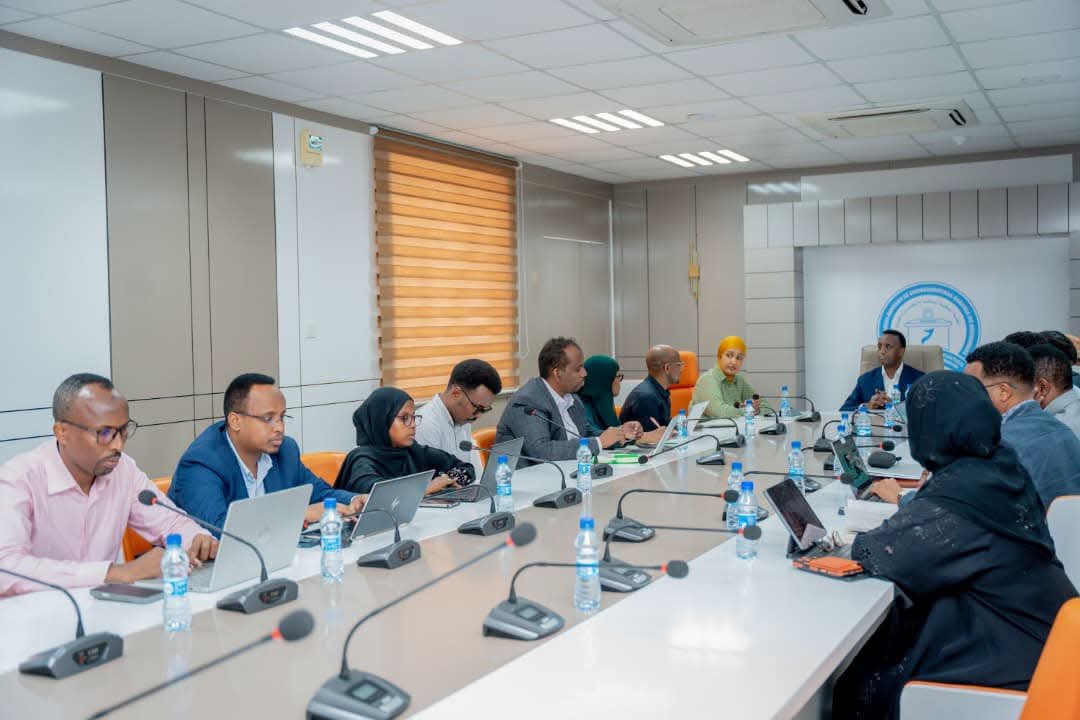
MOGADISHU — The Minister of Family and Human Rights Development, Ambassador Khadija Mohamed Al-Makhzoumi, and the Chairman of the National Independent Electoral and Boundaries Commission (NIEBC), Abdikarim Ahmed, have agreed to strengthen cooperation between their institutions and to work toward ensuring inclusive participation of women and persons with disabilities in the one-person-one-vote elections.
The meeting, attended by the Ministry’s Director General Mohamed Bashir Omar, advisers and several departmental directors, focused specifically on securing the 30 percent quota for women and the quota for persons with disabilities. Both sides reviewed the importance of working jointly to protect and implement the participation of these groups in the electoral process.
Minister Khadija Mohamed Al-Makhzoumi stressed the importance of women and persons with disabilities participating fully in the political process and elections, saying the Ministry is ready to work with the Commission to ensure that their quota and their right to participate in elections are genuinely protected.
In conclusion, the Minister thanked the Chairman of the NIEBC, the Secretary and all members of the Commission for their warm reception and their commitment to cooperation aimed at ensuring the participation of women and persons with disabilities. The meeting also underscored the importance of government institutions working together to achieve inclusive elections in which all segments of society participate equally.
The 30 Percent Quota and Its Implementation Gap
The 30 percent women’s quota has been a recurring theme in Somalia’s electoral preparations, and Minister Al-Makhzoumi has previously issued formal statements calling on political parties to implement the mandatory quota when selecting candidates [citation:2]. The quota is integrated into both the Electoral Law and the Political Parties Law, yet its translation into electoral outcomes has been consistently disappointing.
The NIEBC has set September 30 as the new polling day for the Hirshabelle state elections after postponing an earlier date, citing incomplete voter registration and the need for political organizations to submit candidate lists.
The Commission has also held consultative meetings with political parties on technical preparations for the elections, including the distribution of voter cards, submission of candidate lists, and ensuring transparency and public confidence in the electoral process.
Critical Note
The agreement between the Ministry of Family and Human Rights Development and the NIEBC to cooperate on inclusion is a constructive step, but the gap between commitments and outcomes remains the central challenge for Somalia’s electoral process. The 30 percent women’s quota has been affirmed in multiple forums, yet its practical implementation has consistently fallen short. In the South West State elections, women secured only 17 percent of seats, far below the mandated threshold [citation:1]. Similarly, the inclusion of persons with disabilities in electoral processes has received limited attention in both planning and resource allocation.
The NIEBC faces significant political pressures in managing the upcoming elections, including disputes over candidate selection and allegations of federal interference in regional electoral processes. For cooperation on inclusion to produce results, it must be accompanied by concrete mechanisms, such as enforceable quota provisions, accessible polling stations, targeted voter education for women and persons with disabilities, and funding for inclusion programs. Without these, the agreement risks becoming another statement of intent rather than a driver of change.
Recommended Reading On ftlsomalia.com
Credit: Source link