

The U.S. Ramps Up Its Intelligence Capabilities in Cuba
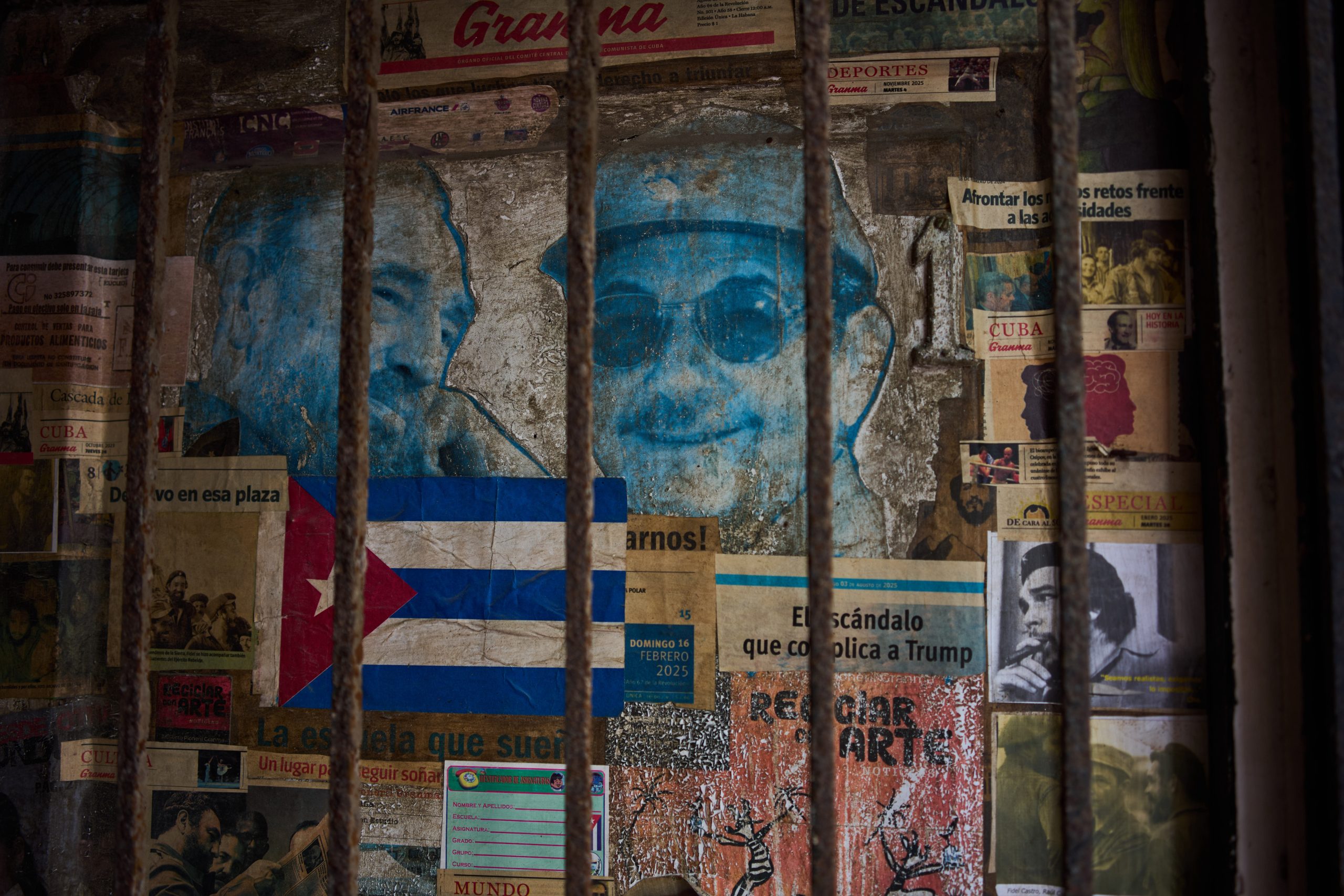
(AP Photo/Ramon Espinosa)
Bottom Line Up Front
- The U.S. Central Intelligence Agency (CIA) has formed a targeted task force on Cuba to gather intelligence, track financial flows affiliated with the Cuban political elite, and apply economic and political pressure, adding to months of buildup and speculation of a potential U.S. intervention in Cuba.
- Since the start of the year, American agencies like the State Department, U.S. Southern Command, and the CIA have scaled up monitoring, training, and engagement surrounding Cuba, pushing for sweeping economic reforms and political change in the island nation.
- Washington’s escalatory strategy via Havana mimics some elements of prior approaches with Caracas and Tehran, though this time it is spearheaded by U.S. intelligence influence operations that aim to promote discord and disempower the ruling Cuban government.
- Building anticipation of a U.S. military or covert intervention in Cuba raises questions about how much the U.S. defense and intelligence apparatus can simultaneously manage, while war continues to rage on in the Middle East.
The U.S. is continuing to build out its pressure campaign against the Cuban government. The CIA has recently established a clandestine task force with the purpose of monitoring the ruling government’s financial activity and laying the groundwork for a U.S. ‘strategy’ in the island nation, following months of speculation about a potential U.S. military intervention against the Cuban government. The change comes after years of challenges related to establishing a clarified intelligence picture in Cuba, hampered by government surveillance and coordination with great-power adversaries like Russia.
The New York Times reported that the task force — staffed by case officers, cyber specialists, intelligence analysts, and covert field officers across the intelligence community — was a mechanism for the Trump administration to expand intelligence and influence operations in Cuba, referencing objectives such as political and leadership “changes.” The task force ultimately allows the Agency to allocate greater resources, such as personnel, finances, and technical assets at a faster pace to address the administration’s objectives in Cuba: to fragment the power base of the ruling government. While the report about a new clandestine task force could have been an unintended leak to the newspaper, some analysts and publications have raised the possibility that this could have been an intentional strategy to send a precautionary message to Cuba’s political leadership and apply further pressure.
The Soufan Center has followed an expanding U.S. campaign against Cuba, comprised of diplomatic, economic, and military pressure tactics, recently encompassing an intelligence-driven approach. Punitive economic actions, such as sanctions and maritime embargoes on oil shipments bound for Cuban markets, have had a profound effect on the Cuban government. The Cuban economy has fallen further into crisis, with scarce access to basic services, medicines, fuel, and foodstuff. This pressure has culminated in a sweeping economic reform package that overturns much of the government’s monopolies on different economic sectors, opening up space for private sector actors and liberalizing the Cuban economy this past July. While the U.S. Secretary of State Marco Rubio has stated that major economic reforms are an objective of the U.S. pressure campaign, it has become clearer with time that economic reform is just one dimension of the Trump administration’s broader intention for Cuba: uprooting Cuba’s political elite and shaping a more pragmatic government in its wake. And as this strategy has evolved, it has become spearheaded by the American intelligence community.
Since the early months of 2026, many of the direct engagements between the U.S. and Cuban officials — particularly with Raúl Castro’s grandson and major economic player, Raúl Guillermo Rodríguez Castro — have shifted from the U.S. State Department to U.S. intelligence agencies. This culminated in a rare, public visit from CIA Director John Ratcliffe to Havana to convey a message from the White House to Cuban military and intelligence officials back in May. This visit was followed by an influx of U.S. drone surveillance and an increase in American intelligence presence on the island. Politico reported last week that the CIA has ramped up local recruitment of foreign officers, with several sources noting that paving the way for political change in Cuba is a top priority for Secretary Rubio. In the same month, the U.S. has raised Cuba’s status on its National Intelligence Priorities Framework, reclassifying the country as a “Priority 1” status. Other countries that share this status with Cuba are Russia, Iran, and China.
The Soufan Center has also taken note of recent efforts by the Trump administration to establish evidentiary justification and shape public support for a more assertive response. Just weeks before reports surfaced of the CIA Task Force on Cuba, the State Department released a 99-page report, “Cuba: The Capital of 21st Century Communism,” detailing decades of Cuban clandestine intelligence and political influence operations inside the U.S. The report drew a direct link between Cuban intelligence officers, nonprofit organizations, and activists in several U.S. “upheavals” and leftist political movements, such as the George Floyd protests, “the rise of Antifa,” and the “pro-terrorist activism on American college campuses.”
It is clear that the U.S. is initiating another step towards more direct action against the Cuban government, seeking to mirror prior steps the Trump administration has initiated in escalatory buildup with Venezuela and Iran. Though it appears that the Trump administration is amending its tactics, swapping escalatory campaigns that featured quick buildup of naval assets and counternarcotics operations in Iran and Venezuela for an intelligence-driven approach in Cuba. After failing to generate genuine political change through American air strikes, surveillance and intelligence collection efforts, and special extraction operations in Iran and Venezuela, it seems the Trump administration is shifting its gears in Cuba. The Trump administration ultimately seeks the same end — regime change — as it did in Iran and Venezuela, but by different means in Cuba: prioritizing influence operations that could create political change not from the outside in, but from the inside out.
Direct military intervention is still not inevitable. The Trump administration will still have to heavily consider the prospect of costly American military operations in both the Middle East and the Caribbean. Already facing a munitions crisis, the U.S.’ defense industrial complex would become strained with adding an additional theater to its list of priorities. While the U.S. greatly outmatches the capacity of the Cuban military forces and an operation on the island nation would be designed as a lightening decapitation mission instead of a conventional, sustained campaign, the U.S. would likely have to factor in the possibility of an asymmetric ground operation against a constellation of Cuban guerilla militias. Ahead of midterm elections, a two-front American military effort would also prove politically costly to the Trump White House, providing further need for pause. As intelligence expert Marc Polymeropoulos has noted, it is clear that the U.S. is preparing the groundwork to disempower the current Cuban government through military or covert operations, but that covert action doesn’t always translate into a coup d’etat: “it can mean influence operations.”
Still, this approach will require careful scenario-building, contingency plans, and a long-term strategy if the U.S. does or does not achieve its end goal of dismantling the Cuban government. The U.S. will have to cautiously consider the economic, security, and political implications of a wayward military campaign or influence-operation-gone-wrong in an island nation just 90 miles away from its coast, all while it balances competing priorities further afield in the Middle East, Europe, and Pacific.