

Spain declares national security crisis in Ceuta. Israel can help Morocco make the en

On August 25, 2026, the Spanish National Security Council crossed a notable threshold. Chaired by Prime Minister Pedro Sanchez, the council formally declared a situation of interest for national security over the escalating crisis in Ceuta. Unified functional command was assigned to Territorial Policy Minister Angel Victor Torres through December 2026. This rare maneuver followed a massive late July border surge. Roughly 50,000 migrants crossed during the initial wave, with later government estimates indicating up to 80,000 total approaches. While Spanish authorities executed rapid returns and most departed within days, several thousand remain trapped inside the city. Current government estimates suggest around 5,000 individuals are still present, though local authorities report higher numbers. This population includes a concentration of unaccompanied minors, placing a severe strain on municipal infrastructure.
The financial toll is compounding steadily. The existing integral plan for socioeconomic development had already mobilized more than 180 million euros for the territory. Now, the government is expanding funding as a targeted response to local administrative strain. Despite this governance friction, Madrid refuses to engage diplomatically. Spanish Defense Minister Margarita Robles insists that Ceuta and Melilla are nonnegotiable Spanish territory. When Moroccan Justice Minister Abdellatif Ouahbi recently reiterated historical claims and proposed a formal dialogue mechanism, Spain categorically rejected the overture. The Sanchez government attempts to frame the issue as a routine municipal policing problem, yet the unprecedented emergency designation reveals underlying structural fragility.
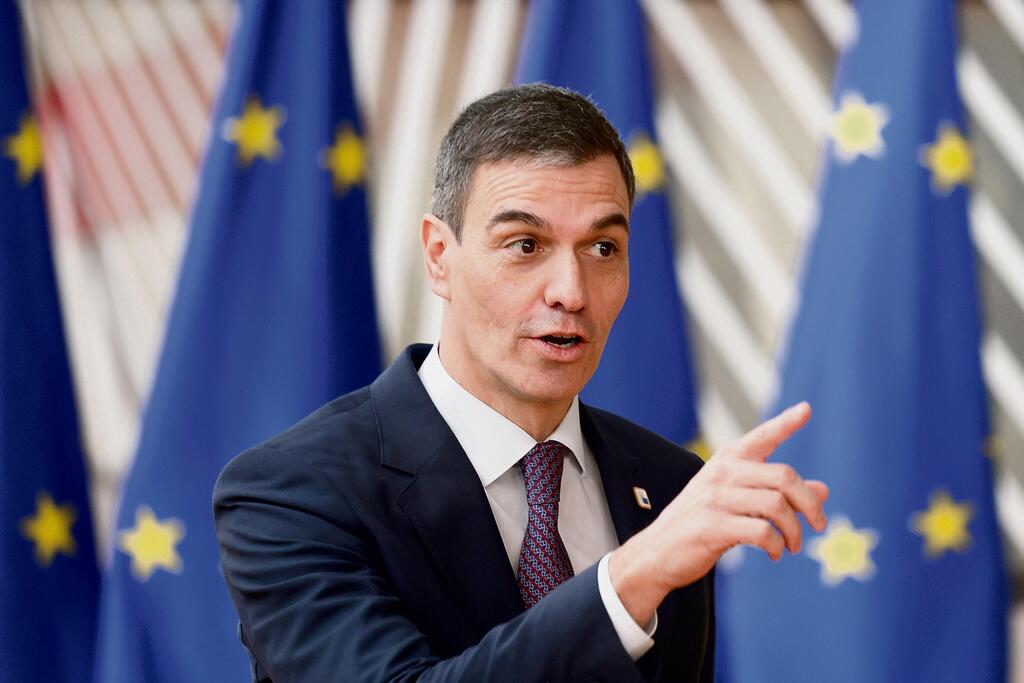
The current Spanish government has positioned itself as one of Europe’s most aggressive critics of Israeli territorial policies, frequently lecturing Jerusalem on international law and territorial compromise. True, Ceuta and Melilla operate under a different legal framework. They are long-held Spanish territories under continuous control, fully integrated as European Union territory and home to European citizens. Conversely, the West Bank and Gaza remain under a distinct historical and legal regime in the eyes of most international bodies. However, the force of the argument rests on selective European outrage. Spain maintains heavily fortified barriers on the African continent to protect outposts that predate modern Israel by centuries. European capitals that reflexively condemn Israeli security architecture remain silent about Spanish fortifications. The rhetorical inconsistency is clear, and passive acceptance is unwarranted.
The vulnerability of Spain presents Jerusalem with a diplomatic opening. Working within the framework of the Abraham Accords, Israel holds realistic leverage to assist Morocco in applying calibrated, nonkinetic pressure. This is not an immediate operational playbook promising sudden sovereignty collapse, but rather a long-term doctrine of structural attrition. By utilizing five specific strategic levers, Jerusalem and Rabat can gradually raise the long-term cost of Ceuta and Melilla for Madrid, strengthen a key partner and subtly shift Mediterranean power dynamics without escalation.
First, Israel and Morocco can compound the economic isolation of the enclaves. Ceuta and Melilla rely heavily on local arbitrage, cross-border trade and European subsidies. The rise of Tanger Med and the accelerating build-out of Nador West Med are already siphoning the economic oxygen from Ceuta and Melilla. Israel can accelerate that process by directing Abraham Accords capital and dual-use technology into Moroccan special economic zones pressed against the Spanish perimeter. High-tech manufacturing, defense-adjacent production and modern logistics hubs on the Moroccan side would steadily pull trade, talent and investment away from the enclaves, turning them into expensive, subsidy-dependent liabilities for Madrid.
Second, Jerusalem can evaluate strategic defense export conditioning. Historically, Spain utilized Israeli-origin sensors, surveillance and perimeter systems to monitor the borders of Ceuta and Melilla. Following 2025 arms and dual-use restrictions imposed by Madrid on Israel, certain contracts were cancelled and direct acquisitions halted. Consequently, any future conditioning of system upgrades represents limited political leverage that requires careful navigation of European Union rules. However, Israel can deepen existing defense cooperation with Morocco. Supplying the Royal Moroccan Armed Forces with advanced drones, artificial intelligence border surveillance and electronic warfare systems creates a technological asymmetry over time. Prioritizing next-generation border technology for Rabat ensures that Morocco operates superior networks along the Mediterranean coastline. As Spanish containment systems age without direct access to prime Israeli upgrades, Madrid will face rising costs to maintain a baseline level of security.
Third, the alliance can deploy financial intelligence to examine the shadow economies sustaining these outposts. For decades, Ceuta and Melilla have functioned as hubs for complex financial flows, tax arbitrage and informal trade networks crossing the Strait of Gibraltar. Israel possesses sophisticated financial intelligence capabilities. By collaborating closely with Moroccan authorities, Jerusalem can map illicit capital flows and tax evasion networks moving through Spanish territory. Feeding verified financial data to European Union oversight bodies and international anti-money laundering watchdogs introduces bureaucratic friction. Undeniable data compels investigations into local administrative loopholes, turning European regulatory frameworks against municipal authorities.
Fourth, Israel should leverage Abraham Accords infrastructure to systematically bypass Spanish maritime hubs. Spain derives geopolitical influence from its maritime facilities, particularly the Port of Algeciras and fuel bunkering operations in Ceuta. Israel, Morocco and the United Arab Emirates possess the capital and logistics networks required to establish preferred maritime routes linking Tanger Med directly with Haifa, Ashdod and Jebel Ali. Shifting global shipping alliances is a complex process constrained by long-term corporate contracts. Nevertheless, deliberate diversions of commercial shipping, bunkering services and naval maintenance contracts impact localized economies. This transition demonstrates to international shipping conglomerates that Morocco serves as a reliable logistics anchor of the western Mediterranean.
Finally, Israel can deploy its lobbying influence in Washington to highlight the strategic leverage Spain holds over the United States. During early 2026 operations related to Iran, Spain placed restrictive conditions on American operational use of the Rota and Moron military bases, frustrating Pentagon planners. Israeli defense advocates can highlight this friction, quietly lobbying for the expansion of American military infrastructure in southern Morocco instead. Cultivating Moroccan alternatives provides the United States with operational options outside of Spanish control. When Madrid realizes that Washington possesses viable alternatives in North Africa, its leverage over both the United States and Morocco diminishes.
 Amine Ayoub
Pursuing this doctrine requires patience and discipline. Each lever faces genuine legal, contractual and political obstacles, yet none is theoretical. They remain practical instruments available to Jerusalem and Rabat if both capitals choose to use them with consistency rather than occasional gestures.
The Israeli response to selective European moralizing can no longer stop at carefully worded statements and temporary outrage. Rhetoric alone has never altered the calculus of states that lecture others while protecting their own territorial holdings. Spain elected to treat the question of borders as a moral performance when it concerns Israel and as a non-negotiable security imperative when it concerns Ceuta and Melilla. That contradiction is now visible in the form of an official national-security designation.
A coordinated strategy of structural attrition does not seek dramatic rupture. It seeks to raise the long-term cost of the status quo until the cost itself becomes the policy. Over time, economic diversion, technological asymmetry, financial scrutiny, maritime realignment and quiet diplomatic pressure in Washington can steadily erode the practical value of the enclaves. Madrid would retain formal sovereignty while watching the underlying utility of those outposts decline.
Such an approach would deliver more than tactical advantage. It would demonstrate that the Abraham Accords are capable of producing concrete strategic outcomes beyond normalization ceremonies. A stronger Morocco, a less isolated Israel and a Mediterranean map gradually rewritten by states willing to act rather than merely complain would constitute a measurable regional victory.
-
Amine Ayoub, a fellow at the Middle East Forum, is a policy analyst and writer based in Morocco. Follow him on X: @amineayoubx
Credit: Source link