

Ibrahim Traoré Would Like to Be Thomas Sankara’s Heir
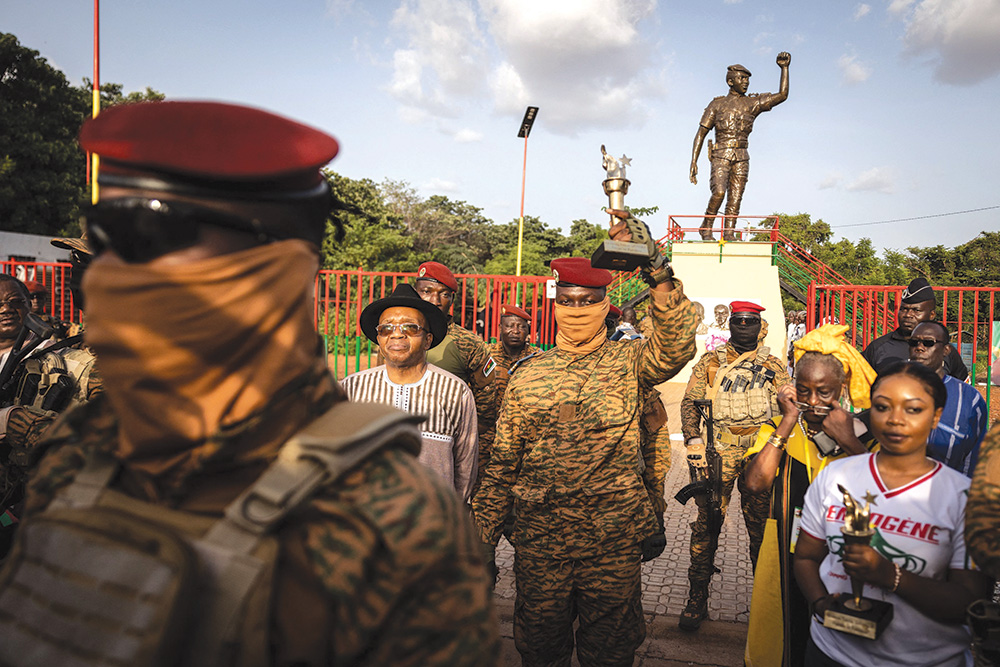
Ibrahim Traoré, president of Burkina Faso since October 2022, polarizes opinion, to say the least. Some hail him as the hope for a new Pan-Africanism, the long-overdue end of French imperialism in West Africa, and resource sovereignty. Others point to the authoritarian traits of the regime and the repression of trade unionists, civil society activists, and journalists.
The scope of Traoré’s political projects, and the pace at which they are being implemented, is striking. This has generated enthusiasm, particularly among a younger generation that vehemently rejects French neocolonial dominance and is deeply frustrated by a gerontocratic political system unable or unwilling to deliver reform. The question remains, though, whether a military government can be the alternative, and whether the ends justify the means.
Traoré and his Patriotic Movement for Safeguard and Restoration (MPSR 2) seized power through a coup d’état on September 30, 2022. He overthrew the previous military government of Lieutenant Colonel Paul-Henri Sandaogo Damiba, which had itself come to power only in January 2022, also through a coup. Damiba’s junta called itself MPSR.
Credit: Source link