

Somalia Celebrates Mawlid: A Display of Faith and Community
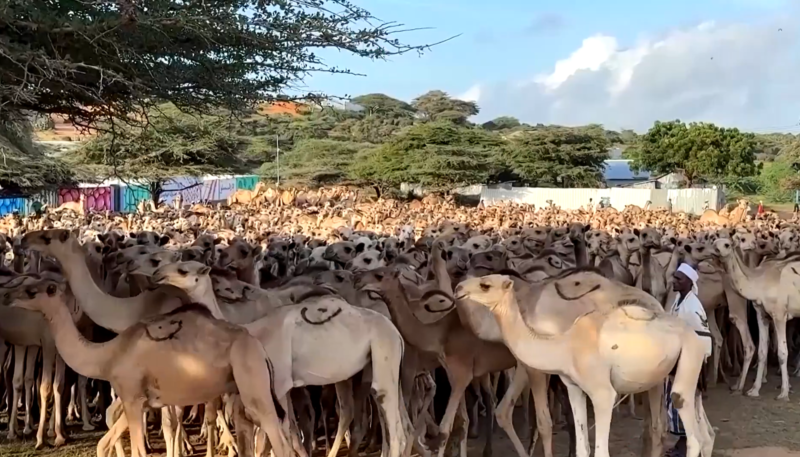
MOGADISHU — Large crowds gathered across Somalia on August 25 to celebrate Mawlid al-Nabi, the birth of the Prophet Muhammad, with religious chants, devotional processions, and charitable acts that brought communities together in a display of faith and resilience.
In the capital, Mogadishu, thousands of worshippers filled main thoroughfares, local mosques, and public squares, participating in vibrant Sufi devotional processions organized primarily by prominent Islamic orders including the Qadiriyya, Ahmadiyya, and Salihiyya. Worshippers carried flags bearing religious inscriptions, recited verses from the Qur’an, and performed traditional religious poetry in public spaces such as Daljirka Dahsoon Square.
Security forces maintained an active presence around major assembly points to safeguard participants and manage traffic flow across the capital throughout the day. While the festive atmosphere prevailed, security remained a concern, recalling the years when Al-Shabaab banned public Mawlid celebrations, forcing them underground until the militants were pushed out of Mogadishu in 2011.
The holiday holds deep cultural and spiritual significance for many Somalis, serving as a focal point for unity and religious reflection. As part of the commemorations, organizers announced that 1,538 camels would be sacrificed and the meat distributed to people in need, intended to commemorate the Prophet, express gratitude for divine blessings, and bring joy to people in difficult circumstances.
Mawlid al-Nabi, observed by many Muslims on the 12th day of Rabi’ al-Awwal, remains one of the most widely celebrated religious occasions in Somalia. Similar celebrations took place in other towns, including Baidoa, where Sufi orders organized gatherings featuring poetry, religious chants, and lectures on the life of the Prophet, often drawing thousands of participants.
However, the celebrations also highlighted a longstanding divide within Somali religious discourse. While Sufi leaders emphasize the role of Mawlid in fostering unity and devotion, reformist scholars question its legitimacy, portraying it as an innovation (bid’ah) that diverts from core Islamic principles. Prominent cleric Sheikh Bashir Ahmed has stated that public gatherings held to mark the Prophet’s birth should not be considered acts of worship, arguing that such practices resemble customs borrowed from non-Muslim traditions.
This debate is not unique to Somalia, as similar discussions are taking place across the wider Muslim world, where celebrations range from state-sponsored parades to grassroots religious gatherings. Despite theological disagreements, Mawlid remains a deeply rooted tradition in Somali society, particularly in rural areas where Sufi influence is strongest.
Sheikh Bashir Ahmed, a prominent Somali cleric, has openly questioned the public Mawlid celebrations, stating that such gatherings should not be considered acts of worship and arguing that they resemble customs borrowed from non-Muslim traditions. His remarks have sparked debate across the country, reflecting the ongoing theological divide between Sufi and reformist interpretations of Islam.
Critical Note
The Mawlid celebrations in Somalia represent a significant display of religious identity and community solidarity, particularly in a context where Al-Shabaab has sought to suppress such practices. The ability of thousands of Somalis to gather openly for religious processions reflects improved security in Mogadishu and other urban centers, a remarkable shift from the years when such gatherings were driven underground.
Yet the theological debate over the legitimacy of Mawlid underscores a deeper struggle over the nature of Somali Islam. The divide between Sufi and reformist interpretations has long shaped religious discourse in the country, and the increasing visibility of Mawlid celebrations may intensify these tensions. While the government has declared Mawlid a public holiday, it has done little to address the underlying theological disputes that divide communities.
The massive charitable initiatives, including the sacrifice of over 1,500 camels, highlight the social importance of the holiday, but they also raise questions about the sustainability of such acts in a country facing severe economic hardship. In a nation where six million people face acute hunger, the distribution of meat to those in need is a welcome gesture, but it cannot substitute for sustained humanitarian and development support.
Recommended Reading On ftlsomalia.com
Credit: Source link