

Phone Movement Data Is Guiding Ebola Response in Congo for the First Time as Cases Top 6,000
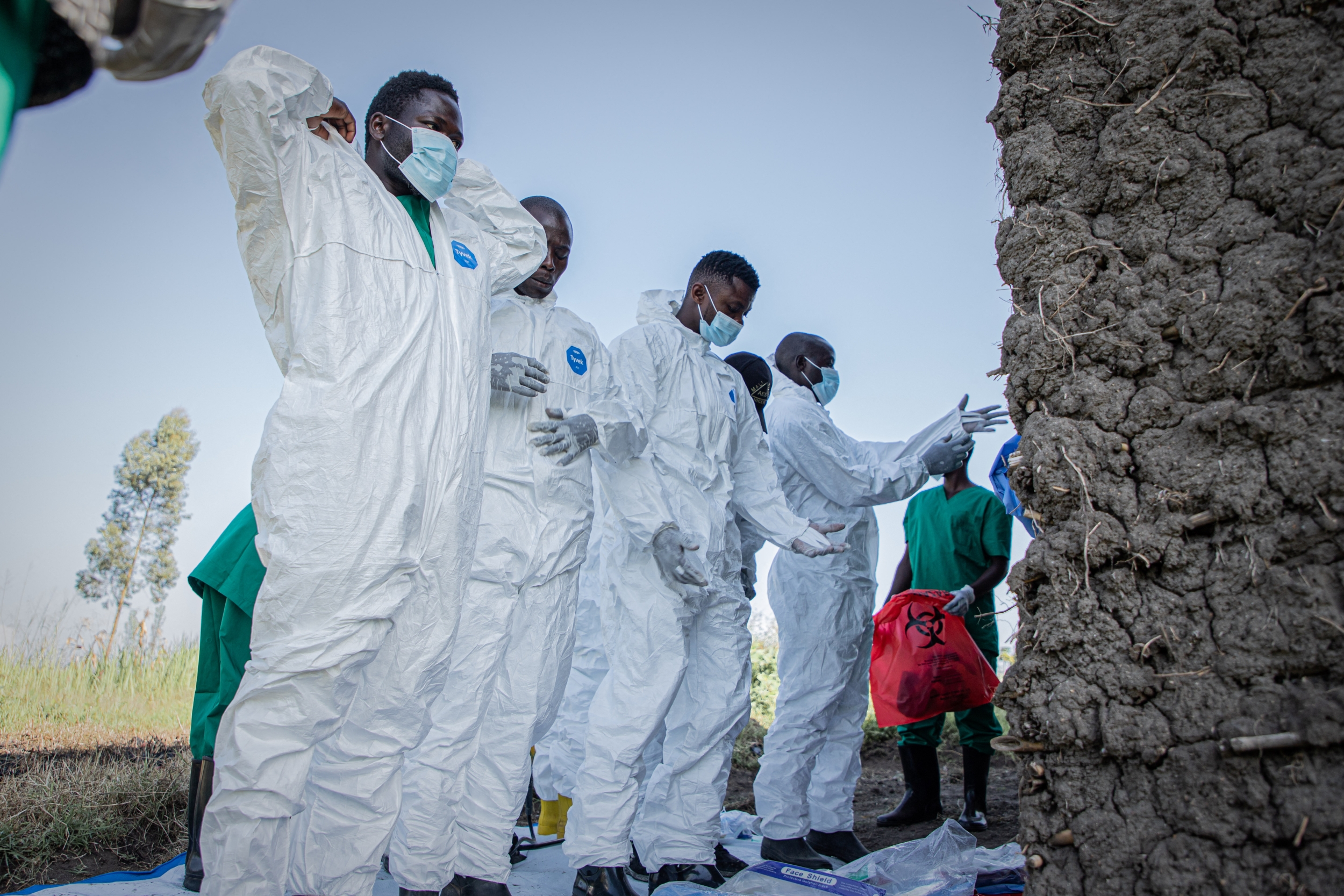
Health officials fighting the Ebola outbreak in eastern Democratic Republic of Congo are using anonymized mobile phone records to map population movements and predict where the virus will surface next, an approach that has never been deployed in an Ebola response before. The World Health Organization and the researchers working with it described the effort on Thursday.
It is being used because conventional methods are not keeping up. The WHO has called this the fastest growing Ebola outbreak on record, and the CDC now describes it as the second largest ever recorded. More than 6,250 people have been infected, and 3,039 have died since the outbreak was declared on May 15, according to the latest Congolese government figures.
For American readers, the relevance is not a direct threat at home. It is that a technique being field tested in Ituri province could reshape how any fast moving outbreak is tracked, and that the outbreak’s trajectory determines whether it reaches an international transport hub.
Reading Risk Through Movement Instead of Distance
Traditional outbreak risk assessment assumes a virus spreads outward from hotspots to neighboring areas. Mobility data breaks that assumption apart by showing which places are actually connected by how people travel.
Olivier Le Polain, head of epidemiology and analytics for response at the WHO Health Emergencies Program, said population movements have always mattered in outbreaks but are particularly important in this one. “It gives us a more nuanced understanding of risk,” he told Reuters, pointing to Ituri, where the virus is believed to have begun circulating and where mining activity and trade drive heavy population movement.
The analysis is produced by Flowminder, a Swedish nonprofit, using records generated when phones connect to network antennas. Vodacom, Congo’s largest operator, provides the data free of charge. Flowminder says it receives aggregated and anonymized records and does not have access to information identifying individual subscribers. Founder Linus Bengtsson described the goal as producing “a predictor of how infectious people move.”
An Early Test the Method Appears to Have Passed
Flowminder’s first analysis, published in early June, tracked where people who had spent time in Bunia, Mongbwalu and Rwampara between April 3 and April 23 subsequently traveled. The largest flows went to nearby areas in Ituri and North Kivu provinces.
By the end of June, all ten destinations receiving the largest traveler flows from the original outbreak areas had reported confirmed Ebola cases.
The clearer operational win came at Kisangani, a major transport hub on the Congo River linking the country’s east and west. Le Polain said the data showed by mid June that the risk there was significant and that the outbreak could reach it faster than initially expected, and that operations were strengthened before the first cases were detected.
More recent analyses have flagged links between Kisangani and Kinshasa, as well as settlements along the Congo River and areas near the borders with the Central African Republic and South Sudan. Fifteen of the fifty areas most connected to Kisangani sit in Kinshasa province, home to Congo’s capital and largest city. In a modeling exercise presented in late June, the WHO estimated a 70 percent probability that a case would be detected in Kinshasa by the end of September.
Response Targets That Remain Unmet
The mobility work is happening against a backdrop of severe operational shortfalls, documented in a CDC report published this week.
The CDC’s Morbidity and Mortality Weekly Report recorded 5,458 confirmed cases and 2,606 confirmed deaths as of August 21, a case fatality rate of 48 percent. That count is lower than the government figure cited above because it covers an earlier reporting period and counts confirmed cases only. The two numbers should not be combined.
Nearly all operational indicators sat below target. Contact tracers identified an average of 10.6 contacts per confirmed case against a target of at least 20, suggesting substantial underreporting. Laboratory testing was performed for 72 percent of validated alerts against a target above 90 percent. Fifty nine percent of confirmed Ebola deaths occurred outside an Ebola treatment unit, where the target is zero, pointing to insufficient treatment capacity, fear of those units and undetected transmission chains. Fewer than half of affected health zones, 49 percent, had at least one safe burial team.
Cases have been reported from six of Congo’s 26 provinces and 57 of 151 health zones in those provinces, with Ituri accounting for 84 percent. The CDC also notes that the rise in cases is unprecedented for an Ebola outbreak, with roughly 5,000 cases in 100 days, and maintains a current situation summary for the response. There is no approved vaccine or treatment for the Bundibugyo species, a critical difference from previous outbreaks driven by the Zaire species, as the WHO’s outbreak update describes. Response work is further complicated by a protracted humanitarian emergency in eastern Congo involving armed conflict, population displacement, and limited health infrastructure.
Coverage Gaps and What Comes Next
The mobility method has real limits that its own practitioners identify. It draws on Congolese networks only, so it captures cross-border movement poorly, exactly where the risk of international spread lies. It relies on a single operator: Vodacom has more than 26 million active subscriptions and a market share of nearly 35 percent, meaning the movements of people on rival networks are invisible to the analysis. Flowminder and United Nations officials say they are working to secure agreements with other operators.
The WHO continues to warn about spread to Kinshasa and neighboring countries. The CDC calls the outbreak’s expansion uncontrolled and says containment requires expanded community-based surveillance, better contact tracing, more treatment and isolation capacity, greater laboratory testing and reliable safe burials.
Whether mobility analysis earns a permanent place in outbreak response will depend partly on how this one ends. The technique has been applied in other disease settings, but never in an Ebola emergency, and its early performance in predicting which destinations would report cases is the kind of result that gets replicated or discarded in the next emergency rather than this one.
Travelers with plans involving the affected region should check current CDC travel health notices before departure.
Key Questions Answered
How does the mobile phone tracking work? Flowminder receives aggregated, anonymized records generated when phones connect to network antennas. Researchers estimate how populations move between areas. The nonprofit says it cannot identify individual subscribers.
Is this a privacy risk for people in Congo? Flowminder states it receives only aggregated and anonymized data with no subscriber identifying information. The records show connection locations in aggregate rather than individual movement histories.
How large is this outbreak? Congolese government data report more than 6,250 infections and 3,039 deaths since May 15. The CDC counted 5,458 confirmed cases and 2,606 confirmed deaths through August 21, an earlier and narrower figure.
Is there a vaccine or treatment? No approved vaccine or treatment exists for the Bundibugyo species causing this outbreak. Existing Ebola countermeasures target the Zaire species, which is a central complication of the response.
Could the outbreak reach Congo’s capital? The WHO estimated in late June a 70 percent probability that a case would be detected in Kinshasa by the end of September. Mobility data show strong connections between Kisangani and Kinshasa province.
What are the main limitations of the mobility analysis? It uses data from a single operator with a market share of nearly 35 percent, and relies on Congolese networks, so it captures international border crossings poorly.
Does this outbreak pose a risk to people in the United States? There is no established risk to United States households at present. Travelers with plans involving the affected region should review current CDC travel health notices before departure.
Credit: Source link