

Morocco’s Dams Reach 67.5% Capacity Despite Summer Heat
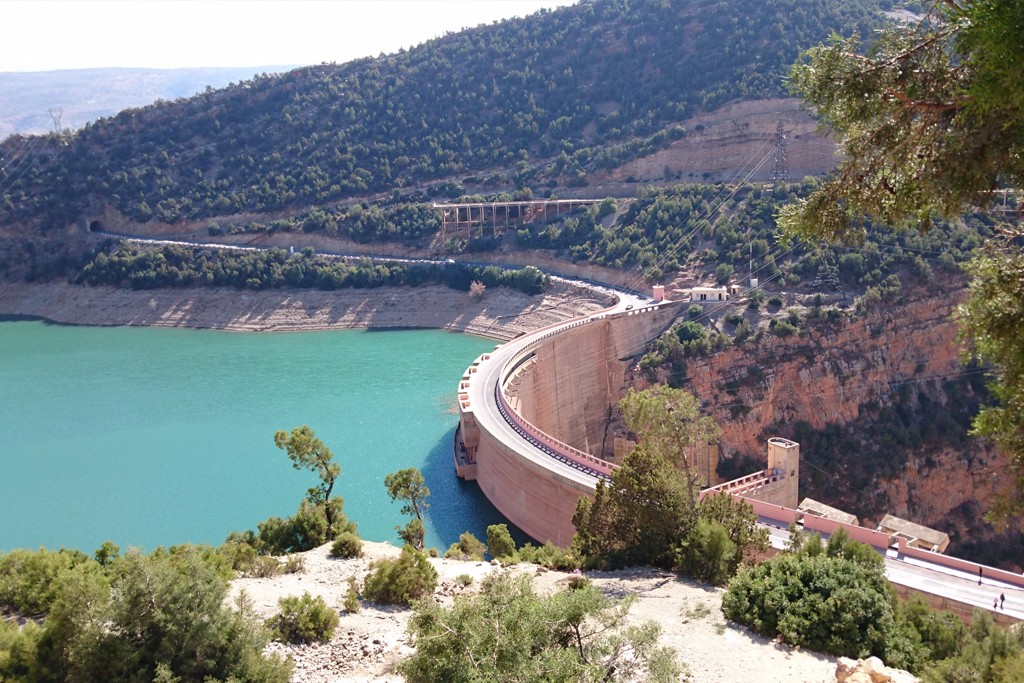
Rabat – Morocco has entered the final days of summer with a far stronger water position than it had a year ago, despite weeks of intense heat across several regions.
The country’s dams held 11.51 billion cubic meters of water as of August 31, according to the latest figures, which put the national filling rate at 67.5%. The stock has more than doubled since the same date in 2025, when reservoirs held 5.67 billion cubic meters.
The year-on-year increase stands at 103%, offering some relief after Morocco faced persistent water stress in recent years. The national figure, however, masks substantial differences from one basin to another.
The Sebou basin remains the strongest contributor to the country’s reserves, with 4.33 billion cubic meters and a filling rate of 80.5%. Its main reservoirs include Al Wahda, which is 84% full and contains around 2.91 billion cubic meters. Sahla stands at 92%, Bab Louta at 91%, Garde Sebou at 90%, and Allal El Fassi at 87%.
The Loukkos and Bouregreg basins also maintain relatively high levels. Loukkos has a filling rate of 79.9%, with 1.56 billion cubic meters in storage. Dar Khrofa is 91% full, Kharroub 90%, while Charif Al Idrissi and Tanger Med both stand at 89%. Oued El Makhazine is 72% full and holds 506.4 million cubic meters.
Bouregreg has reached 79.3%, with 1.17 billion cubic meters in its reservoirs. Tiddas stands at 90%, Tamesna at 80%, and Sidi Mohammed Ben Abdellah at 74%, with the latter holding 647.1 million cubic meters.
The Tensift basin has also retained strong reserves, with a filling rate of 80% and 162.6 million cubic meters in storage. Yacoub El Mansour is 86% full, Abou Abbass El Sabti 85%, and Moulay Abderrahmane 82%. Lalla Takerkoust stands at 68%.
Further east, the Oum Er-Rbia basin presents a more mixed picture. Its reservoirs hold 2.98 billion cubic meters, equivalent to a filling rate of 59.5%. Bin El Ouidane is 82% full, with 1.06 billion cubic meters, while Ahmed El Hanssali stands at 80% with 557.9 million cubic meters. Al Massira, despite holding 1.07 billion cubic meters, remains at only 40% of capacity.
The Moulouya basin has a filling rate of 56.5%, with 396.9 million cubic meters in reserve. Some reservoirs have reached particularly high levels: Oued Za is full, Sfisif stands at 98%, and Rkiza at 88%. Hassan II is 56% full, while Mohammed V remains at 26%.
In Souss-Massa, the filling rate has reached 48.6%, with 351.3 million cubic meters in storage. Moulay Abdallah is among the basin’s strongest reservoirs at 87%, followed by Ahl Souss at 82%. Dkhila stands at 68%, Sidi Abdallah at 67%, and Aoulouz at 64%. Youssef Ben Tachfine is 47% full, with 138.2 million cubic meters.
The situation is less favorable in the country’s southeastern basins. Guir-Ziz-Gheris has a filling rate of 39.6%, with 217.2 million cubic meters in storage. Hassan Addakhil stands at 53% and holds 153.6 million cubic meters.
The Drâa-Oued Noun basin records the lowest overall level, at 32.4%, with 339.8 million cubic meters in reserve. Mansour Eddahbi and Agdez are both 38% full.
The figures provide a notable contrast with the situation a year ago. Morocco now has more than twice as much water stored in its dams as it did at the end of August 2025, giving the country a considerably stronger reserve as summer draws to a close.
Still, the uneven distribution of water remains a concern. While several northern and central basins have reached comfortable levels, some southern and southeastern areas continue to face much tighter water conditions.
Credit: Source link