

Miami Gardens Man’s Deportation Flight Diverted to Equatorial Guinea After Standoff on Liberia Tarmac
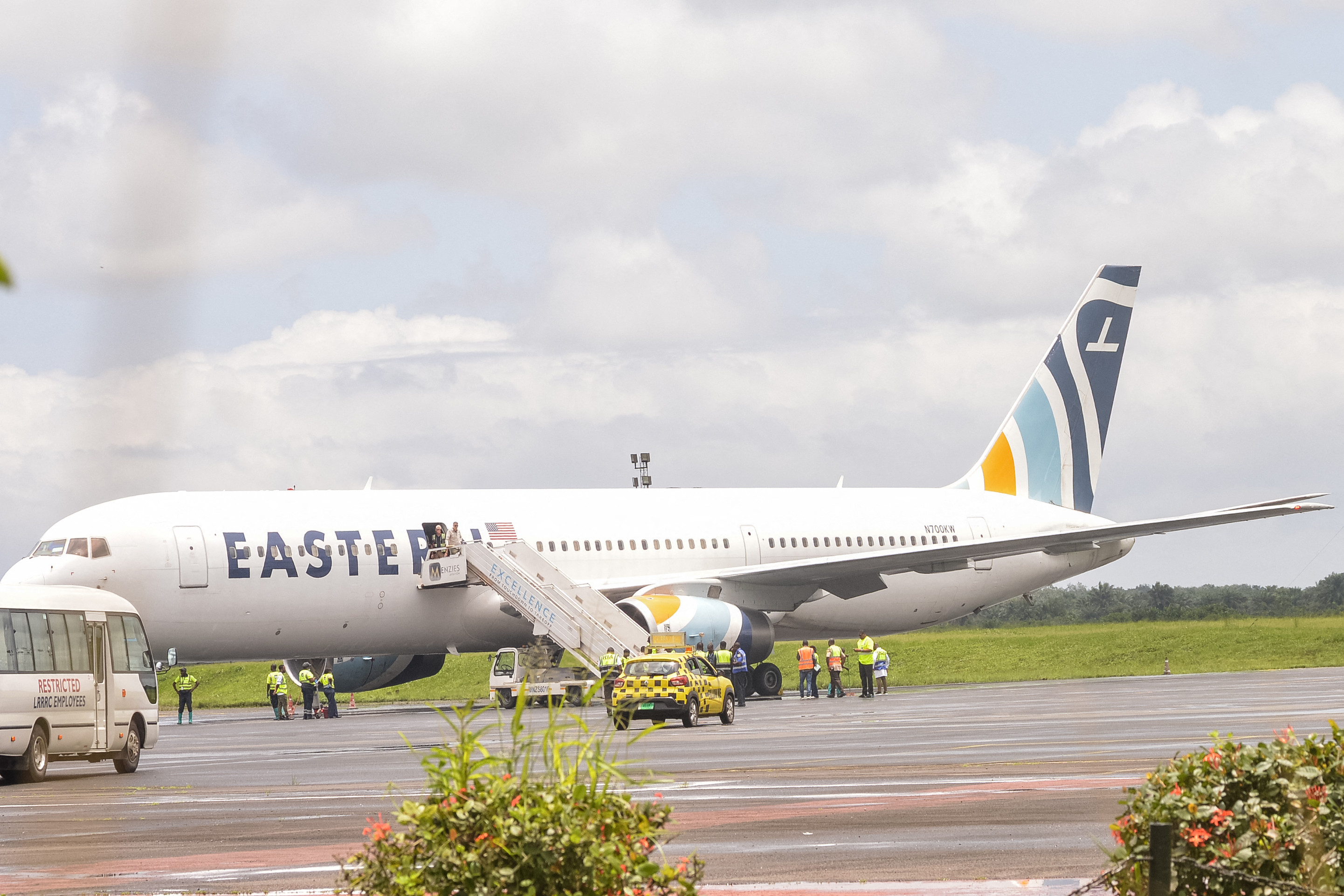
by Matthew Jacobs / AFP via Getty Images
Igrayne Ribot didn’t get an explanation. She got a notification, then a video call that lasted only long enough for her husband to say where he’d ended up. “Me dijo: ‘Mami, estoy en África,'” she later told a Telemundo reporter in Miami — he told her he was in Africa, nothing more. “Me quebré, nadie imagina eso, fue espantoso,” she said, an account also carried in English by NBC News: “I broke down. Nobody imagines something like that — it was terrifying.”
Her husband, Carlos Rodríguez López, 35, had been living with her in Miami Gardens. He’s now one of six deportees the United States flew to Equatorial Guinea last week after they refused to leave a deportation flight in Liberia — an unplanned detour that has pulled a small Central African hotel back into the middle of an immigration crackdown sending people to countries thousands of miles from anywhere they’ve lived. For Cuban and broader Latin American communities across South Florida, the case has sharpened an existing fear: that deportation no longer means a flight home, but a flight to somewhere unfamiliar and unmonitored.
A Standoff Before the Plane Ever Left Liberia
The flight departed the U.S. on Aug. 20, the first under a new agreement that could eventually route as many as 1,200 deportees through Liberia over the coming year. Reuters, citing sources including a Honduran deportee who did get off the plane, put the number at five on Aug. 21: three Cuban men plus one traveler each from Brazil and Cameroon. By Aug. 25, the Associated Press — citing a lawyer in direct contact with the group — had the count at six, adding a fourth Cuban man. Either way, those who stayed argued Liberia wasn’t their country and that being left there would endanger them. Officers separated the group and put them back on the same aircraft, but instead of turning toward American soil as promised, the plane continued on to Malabo, the capital of Equatorial Guinea.
Chains, an Untreated Medical Condition, and No Nurse on Site
What greeted the group in Malabo was chaotic, according to Meredyth Yoon, litigation director at Asian Americans Advancing Justice-Atlanta, who represents several of them. Two arrived still restrained, she said — the lone woman from Cameroon and one of the Cuban men. Yoon described “a really heartbreaking and chaotic scene when they arrived in Malabo” that Thursday. That same Cuban man, she said, has a serious abdominal condition requiring a colostomy bag that needs regular draining — care unavailable at the hotel now holding him, since no medical staff are stationed there. The six joined roughly 40 other deportees already confined at the property, previously identified in AP photo records as the Bamy Hotel, which the family of Equatorial Guinea’s longtime president, Teodoro Obiang Nguema Mbasogo, owns. Conditions there have worsened in recent months, Yoon added, with guards accused of withholding meals and, in some instances, choking or beating detainees. Equatorial Guinea’s government did not respond to the AP’s request for comment on the six.
A Costly, Opaque Arrangement Predating This Flight
Equatorial Guinea’s own third-country deal with Washington — separate from and older than Liberia’s new one — carries a $7.5 million price tag, according to a letter Sen. Jeanne Shaheen of New Hampshire sent to Secretary of State Marco Rubio last November. Shaheen, the Foreign Relations Committee’s ranking Democrat, wrote that the sum exceeds all combined U.S. foreign assistance to the country over the prior eight years and called Equatorial Guinea “one of the most corrupt governments in the world.” The country has no formal asylum framework of its own, though the U.N. refugee agency says it is helping authorities there build one and identify people who may need protection in the meantime.
A Network Bigger Than It Looked a Week Ago
Liberia and Equatorial Guinea are far from the only entries on this list. Liberia’s Aug. 20 flight made it the 12th African nation known to be taking third-country deportees, and Washington has now negotiated similar removal arrangements with at least 35 countries worldwide, according to an analysis by The American Prospect. Immigration attorneys describe the maneuver as a workaround: many people funneled through it had pending asylum claims closed without a hearing, or already held a judge’s order shielding them from return to countries where they said they’d face torture. An estimated 23,000 people have moved through third-country removal since President Trump’s second term began, according to tracking by Refugees International and Human Rights First.
What Rodríguez López’s Case Adds to the Picture
Rodríguez López had a final deportation order and a pending appeal at the time he was placed on the Aug. 20 flight, according to Telemundo51’s reporting on his family. Public records cited by that outlet show a 2016 cocaine-possession case and two additional felony matters; Ribot says he served an 11-month sentence and rebuilt his life afterward. She argues he has already paid for that mistake and shouldn’t have faced this deportation order as a result. Rodríguez López himself told Univision by video call that he considers the diversion to Malabo an illegal deportation, a characterization U.S. authorities have not addressed publicly.
Still Waiting in Miami Gardens
None of that broader context makes the wait any easier back home. Since her husband landed in Malabo, Ribot says she’s managed only a handful of short calls, each leaving her with more questions than answers. She doesn’t know how long he’ll be held at the hotel, whether he’ll eventually be sent on to Cuba, or whether — like some of the roughly 40 others already there — he’ll spend months in limbo with no clear route back to the daughter and the life he built in South Florida.
© {{Year}} Latin Times. All rights reserved. Do not reproduce without permission.
Credit: Source link