

Madison congressman slams U.S. blockade on Cuba: ‘Insanity’
WASHINGTON — Madison, Wisconsin has a sister city in Cuba – Camagüey. In 1994, Ricardo Gonzalez traveled there, and he’s gone yearly ever since.
“I felt there’s got to be a way that we can help without becoming political,” Gonzalez said, reflecting on his 1994 trip.
Gonzalez is Cuban-American and a former Madison city councilman. He founded the Madison-Camagüey Sister City Association.
“Over the past 30 years, we have facilitated the visit to Cuba of over 2,500 Wisconsinites,” he said. “We have a Wisconsin Medical Project – which is a humanitarian project, strictly humanitarian – that is run by Madison retired pediatricians, and they have sent more than 25 containers to Cuba – to Camagüey, a sister city – filled with medical supplies, equipment.”
Gonzalez was last in Cuba in March.
“I spent two weeks there in my hometown – in Camagüey, our sister city,” he said. “I have family there, many friends, although so many of them have left in the course of the last four or five years, but we still have a presence there.”
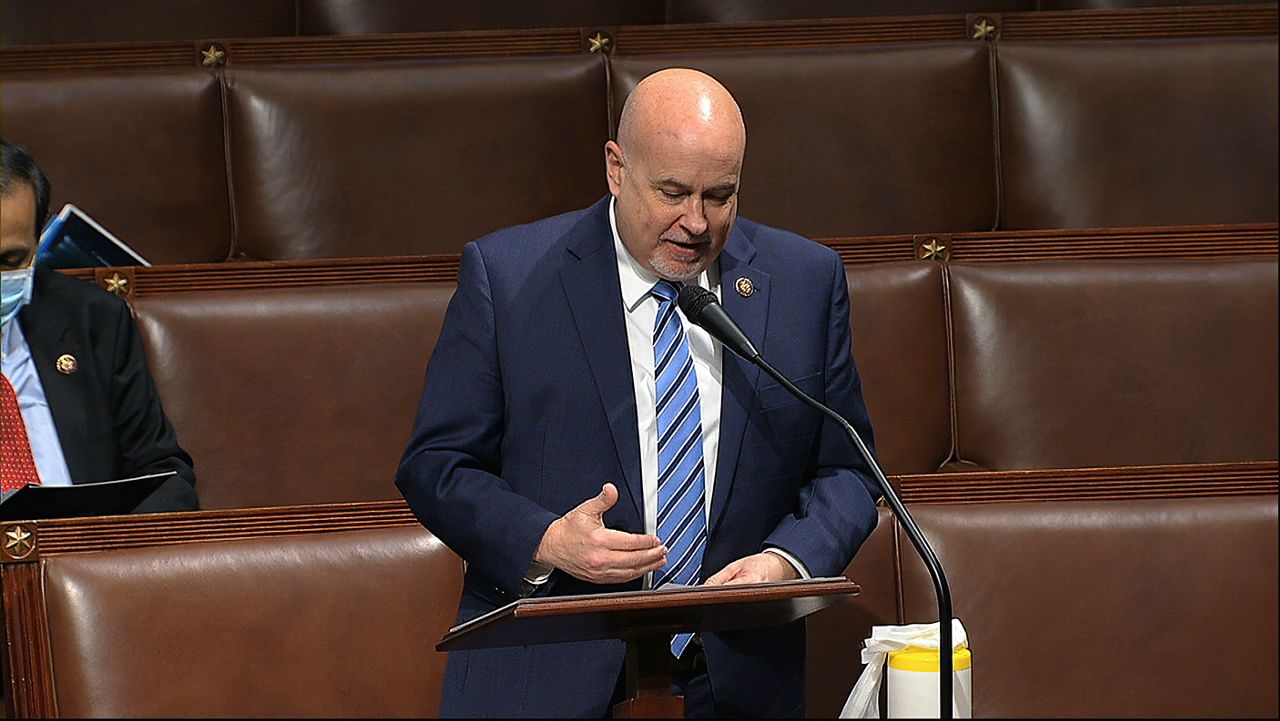
Gonzalez praised Congressman Mark Pocan, D-Madison, for his leadership on Cuba. Pocan sits on the House Foreign Relations Committee and recently traveled there. He blamed the United States’ fuel blockade and decades-old trade embargo for the conditions he saw.
“Their power grid’s going down, and they’ve had at least three nationwide blackouts because of it. We’re not allowing medical supplies or medicine in. We’re not really allowing food in,” Pocan said. “We’ll punish anyone who does business with them. It’s the most strict [blockade] that we’ve ever had, I think, on any other country, including while in war. And it doesn’t make any sense.”
Pocan said the Trump administration and Congress should lift the sanctions and negotiate with Cuba on advancing trade.
“We said we want to help the Cuban people against their government, and instead we’re doing just the opposite,” he said. “So I think this is about setting up an invasion of Cuba.”
A White House official told Spectrum News the United States is ready to open a new chapter in this relationship, and the only thing standing in the way of a better future is those who control Cuba. President Donald Trump has floated the idea of a friendly takeover of Cuba.
“We have some very good plans for Cuba,” President Trump said on June 4.
Ernesto Castañeda, the director of American University’s Center for Latin American and Latino Studies, said the decades-old embargo has failed to take down the regime, and an invasion is unlikely.
“I don’t think we are there yet,” Castañeda said. “Given what’s happening in Iran, it would be crazy for the U.S. to open a new front right now. So yes, that was a goal, but it’s not working, and they are trying different things, but so far it has been unsuccessful.”
Gonzalez said what’s happening in Cuba is a “direct result of this short-sighted, aggressive policy.”
“I like to remind people that it’s not just the embargo now. It’s the cumulative effect of 65 years of sanctions against Cuba. The weight of those sanctions over that long has affected the development of the country in a negative way, and has impeded Cuba’s development in other ways,” Gonzalez said. “So you cannot deny that the embargo is a cause – a cause, I repeat – of much of the misery that is happening there now. But the other problem in Cuba is the inefficiency and the absurdity of some of the bureaucracy in the Cuban system, and that’s where you get into the ideological issue.”
The State Department recently released a report on Cuba, which Castañeda said is “the next step to try to justify a possible invasion, to justify continuing the sanctions and the embargo, and to further blame Cuba for many issues the Trump administration doesn’t like.”
“It’s probably not going to work because the report is very exaggerated. It’s very dramatic,” Castañeda continued. “It’s not probably written by a long-term expert on Cuba within the State Department. It was probably outsourced to one of the anti-Cuba groups that exist in the U.S. or [written] by AI. It is obviously very political, right? Just criticizing leftist movements, supposedly almost financed and completely based out of Cuba, and giving them too much credit and too much power retroactively. And the report reads like a hit piece more than serious research… There’s snippets that are true, but then again, they’re taken out of proportion.”
Pocan called it “the most laughable report I’ve read in 14 years since I’ve been here.”
“It basically talks about things Cuba did in the 60s and 70s, and then they jumped to today, and suddenly they’re behind ICE protests, Black Lives Matter, bad breath — you name it,” Pocan said.
Spectrum News reached out to the State Department and did not hear back.
Gonzalez said the report sets the stage “to make Cuba be such a threat to U.S. national security as to require and warrant an intervention to eliminate such a threat.”
“The American people should know that this is all being orchestrated,” Gonzalez said.
Former President Barack Obama lifted restrictions on Cuba when he was in office, and trade with and tourism to Cuba surged. President Trump rolled back those efforts during his first term.
“The relationship was improved [under Obama]. There [were] no security threats to the U.S. The tourism was good for small businesses,” Castañeda said. “Unfortunately, it was ended by the first Trump administration, and since then, things have deteriorated between the two countries. And again, it hasn’t resulted in the end of the Cuba regime, so that policy has been proven – in any way you want to measure it – as a failure, but we keep insisting on the same thing.”
Pocan said the U.S. has proven that lifting the blockade can work.
“Going back to this 65-year-old policy that hasn’t gotten us anywhere does seem to be the definition of insanity,” he said.
Follow Charlotte Scott on X.