

100th anniversary of Fidel Castro’s birth: Cuba will forever remain in the hearts of generations of Vietnamese people.
Cuban Consul General in Ho Chi Minh City, Mauricio Alejandro Martínez Duque, with former Vietnamese students who studied in Cuba – Photo: THANH HIEP
That continuous flow of knowledge over more than 65 years has become the “red thread” connecting generations of Vietnamese youth with the historical legacy of Cuban President Fidel Castro.
On the occasion of the 100th anniversary of the birth of Cuban leader Fidel Castro (August 13, 1926), Tuoi Tre newspaper , together with the Cuban Consul General in Ho Chi Minh City, Mauricio Duque, and generations of Vietnamese students studying abroad, reminisced about the leader Fidel Castro and the country of Cuba.
Fidel Castro’s shirt was soaked with sweat.
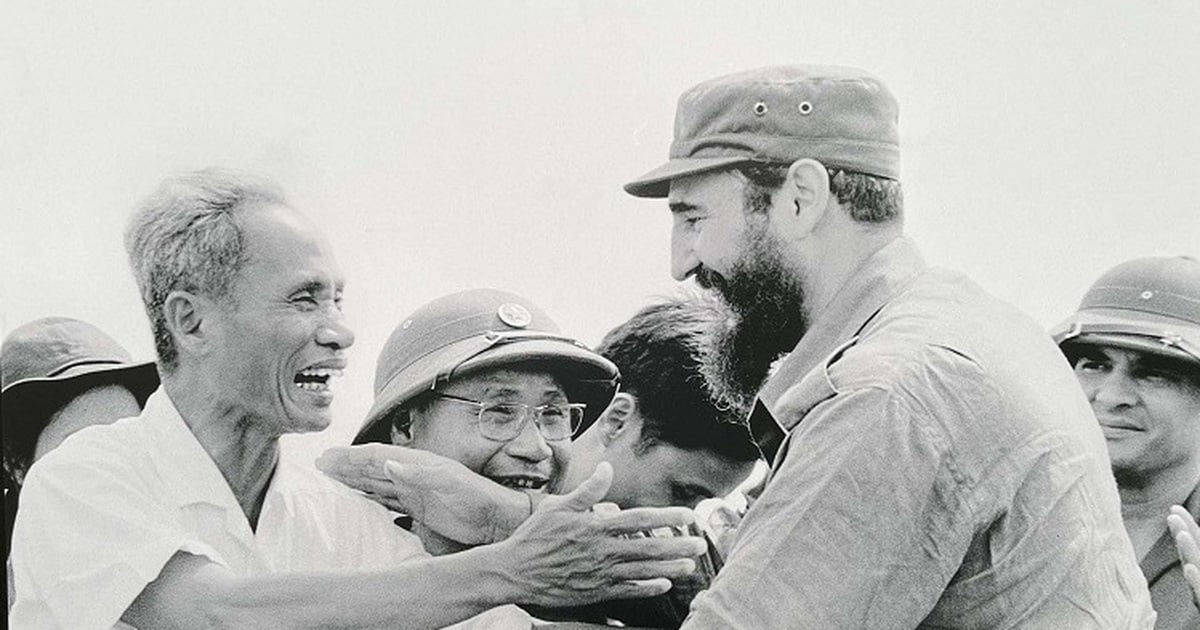
The Vietnamese people will always remember the famous saying: “For Vietnam, Cuba is ready to shed its own blood,” along with the image of the Commander-in-Chief of the Cuban Revolution, who was also the first and only foreign head of state to visit the liberated zone of Quang Tri in September 1973. In the photo: Cuban Prime Minister Fidel Castro and Vietnamese Prime Minister Pham Van Dong at a rally in Quang Tri welcoming the delegation to the liberated zone of South Vietnam, September 15, 1973 – Photo: VNA.
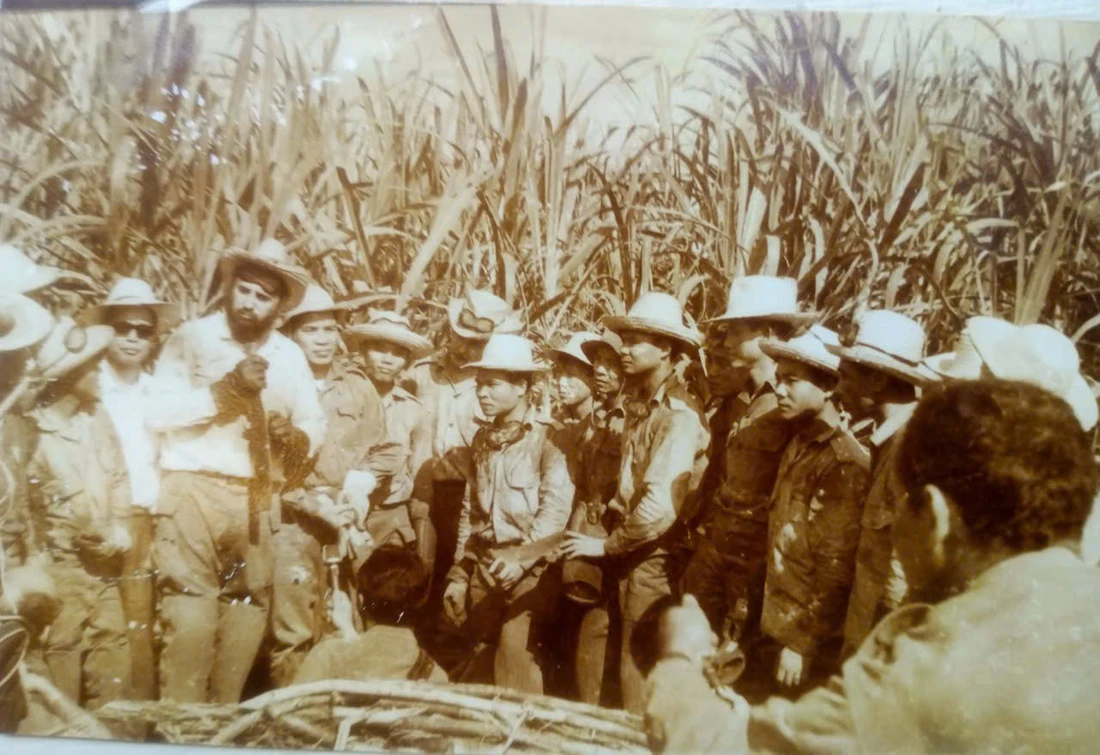
Cuban leader Fidel Castro stands among a group of Vietnamese students in a sugarcane field in 1967, the year Cuba designated as the “Heroic Vietnam Year” – Photo: Archival material.
Even though he is nearly 80 years old, Associate Professor Bui Xuan An, former lecturer at the Ho Chi Minh City University of Agriculture and Forestry, still vividly remembers his days as a teenager studying in the distant country of Cuba.
In his memory, Vietnamese students studying in Cuba were very much loved by the locals. This affection stemmed both from the Cubans’ admiration for the Vietnamese people and was further fueled by Cuban leaders, especially Fidel Castro, who always held Vietnam in his heart.
What he remembers most is the rare opportunity to meet the Cuban revolutionary leader. At that time, the whole of Cuba was carrying out the “10 million tons of sugar” campaign. Every Sunday, people would go out to the fields to cut sugarcane. Not only students but also the country’s leaders participated.
That day, after finishing cutting sugarcane, he and his friends were informed that President Fidel was cutting sugarcane in the field next door and that they were allowed to visit. Immediately, they all dropped their knives and rushed over.
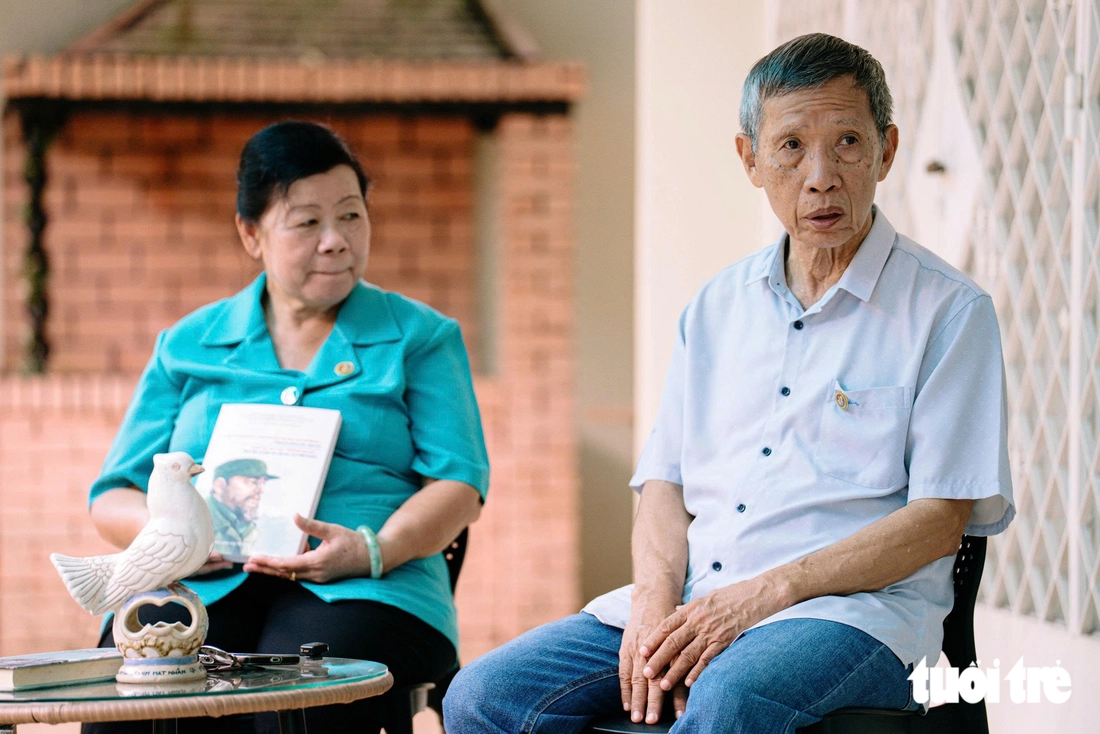
Associate Professor Bui Xuan An (right) fondly recounts the memory of touching the back of President Fidel Castro’s jacket – Photo: THANH HIEP
He recounted emotionally, “The feeling was like the feeling I had for my own father. I ran very fast, probably the first one to arrive. I was the first to touch the back of his shirt, which was drenched in sweat from head to toe. That emotional feeling has stayed with me to this day.”
Mr. An said that the Cuban leader’s work ethic had influenced his own way of life, so the students at that time gave their all in everything they did. “That has stayed with us until now, even after we returned home,” he affirmed.
The Cuban people’s favoritism towards Vietnamese people.
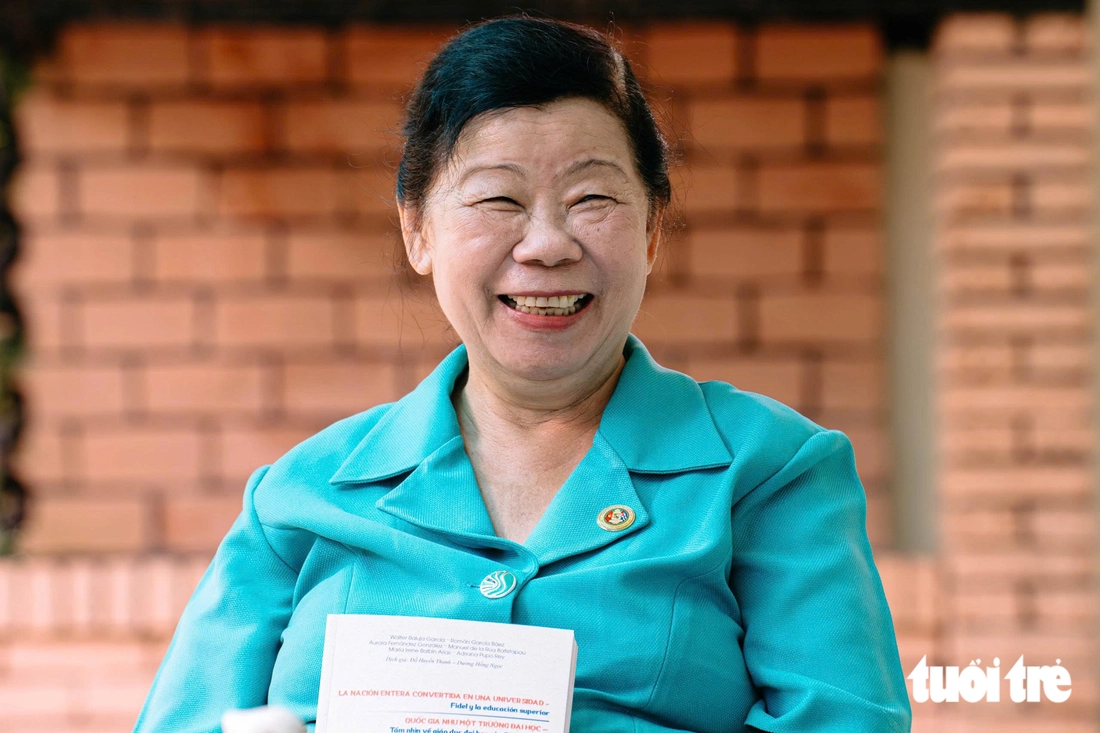
Ms. Thai Bich Anh looks younger as she recounts stories from her 18th and 20th birthdays in Cuba – Photo: THANH HIEP
Ms. Thai Bich Anh, a fellow student in the 1968 class with Mr. An, also cherishes many fond memories with her Cuban friends. She fondly remembers how the Cubans affectionately called her “Chinita” back then, and how their affection for her grew when they learned she was Vietnamese.
She smiled brightly and excitedly recounted her 18th birthday, when her Cuban friends took her to their favorite ice cream parlors and they competed to pay the bill.
“Back then, I lived in the Efeytercera dormitory, on the 11th floor. There was no electricity, so we had to carry water up from the ground floor. Every time we did that, if any Cuban friends knew, they would carry it up to our room for us. Every time we went down for a meal, the Cubans would always give us extra food when they saw us carrying our plates out. They’d give us an extra piece of fish, an extra slice of bread,” she recounted.
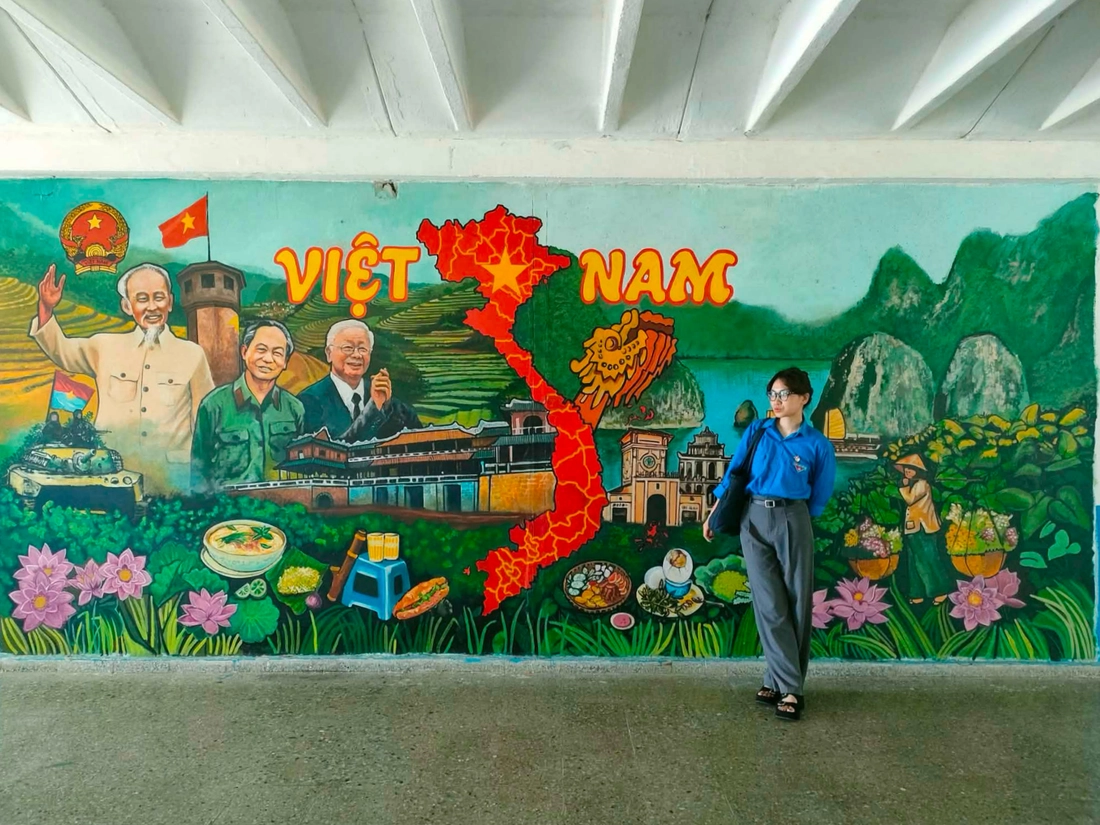
The mural depicting Vietnam was created by students from the Latin American Medical University in collaboration with Vietnamese students studying abroad – Photo: Provided by the contributor.
The immense affection Cubans have for the Vietnamese remains unchanged after 60 years. Dang Quynh Anh, who graduated from the University of Havana earlier this year, shared that she still feels a special fondness for Vietnamese people in Cuba compared to other foreign friends.
You shared: “When Cubans found out I was Vietnamese, they treated me with great respect. Although there might still be difficulties, they were always ready to help me, proactively supporting me in whatever I needed, without me having to ask or request it.”
One of Quynh Anh’s most memorable experiences was when she and other young Vietnamese people organized a voluntary blood donation program at the Latin American Medical University (ELAM). At that time, the university generously provided them with a large space to organize the event.
According to Quynh Anh, the support provided that day went far beyond the usual support given to international student communities.
“I think the intangible legacy that President Fidel left between Vietnam and Cuba is a very strong diplomatic bond,” Quynh Anh affirmed.
Giving Vietnam a great opportunity.
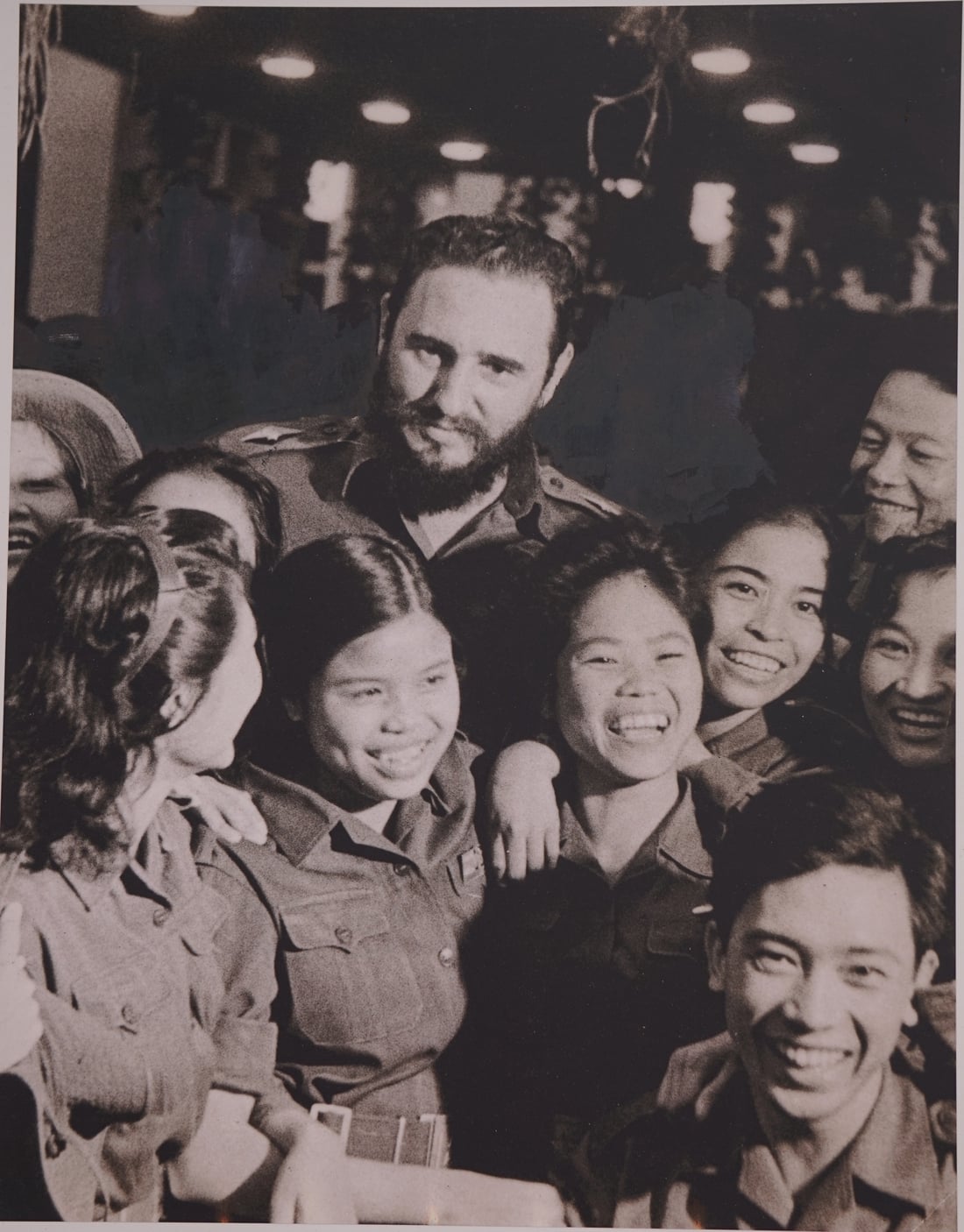
Commander-in-Chief Fidel Castro with Vietnamese youths studying in Cuba, 1967.
Beyond simply commemorating school days, the distant country of Cuba offers international students many opportunities that can be life-changing moments.
Mr. An recounted that back then, he attended school according to the standards set for the National Liberation Front of South Vietnam and the Provisional Revolutionary Government of South Vietnam, with the aim of contributing to the country’s development later on. The Cuban side asserted that South Vietnam needed agricultural development, and Cuba at that time had a very advanced agricultural sector. Therefore, many students, as many as 40, enrolled in the agricultural program that year.
Throughout his studies, he was provided with a large amount of books by the school, containing new knowledge and experiences from all over the world. Upon returning to Vietnam, he worked on a farm for three years before teaching at the Ho Chi Minh City University of Agriculture and Forestry. Thanks to this, students in the agricultural field learned a great deal.
“Back then in the South, all the pig, chicken, and cattle breeds, artificial insemination techniques, and crops were imported from Cuba. They gave them to us for free; we didn’t have to buy them. After liberation, our cattle and pig breeds were among the best in the world because Cuba provided us with the best breeds,” Mr. An shared.
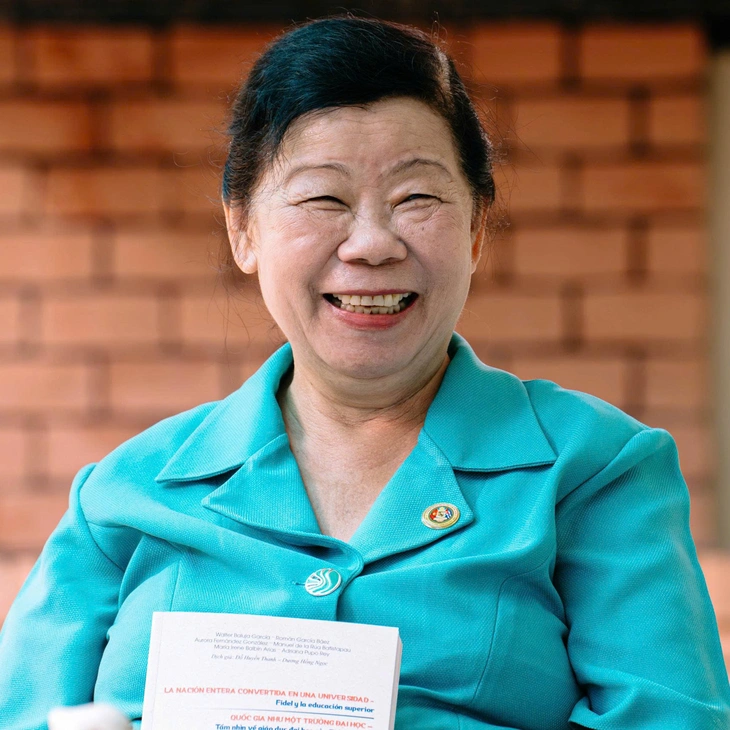
Ms. Thai Bich Anh
She studied in Cuba. Her son also studied in Cuba. She thinks her grandson might study in Cuba someday! If so, her family will have three generations who studied in Cuba!
For Ms. Bich Anh, after returning to Vietnam, she worked at the Cuban Consulate General in Ho Chi Minh City for a period of time. Later, her son also studied in Cuba, and thanks to that, he now works as a Spanish -speaking tour guide and has a stable life.
“I think my granddaughter might also go to school in Cuba someday! If so, then my family will have three generations studying in Cuba! I am very proud to have studied in Cuba, to have shared the hardships with Cuba,” she excitedly expressed.
The good fortune of Havana
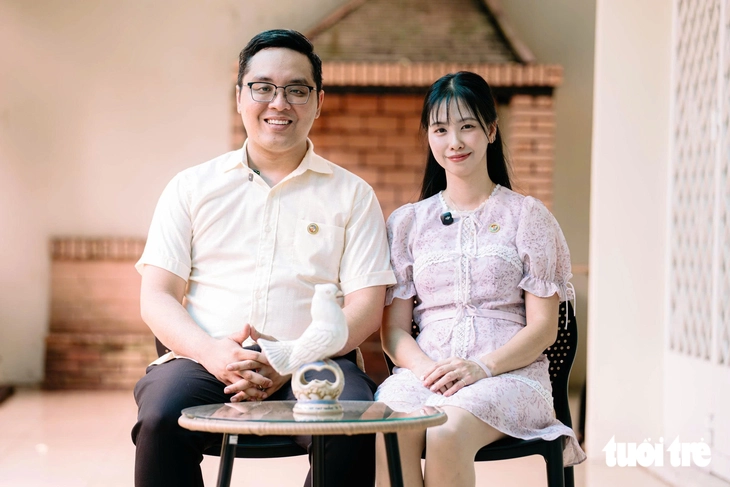
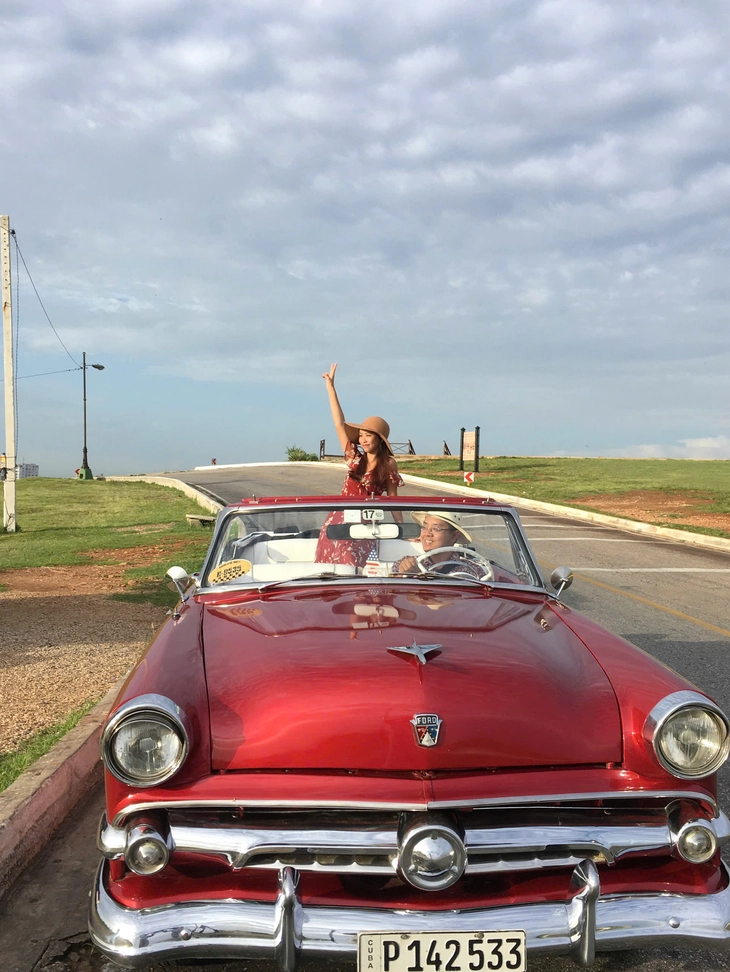
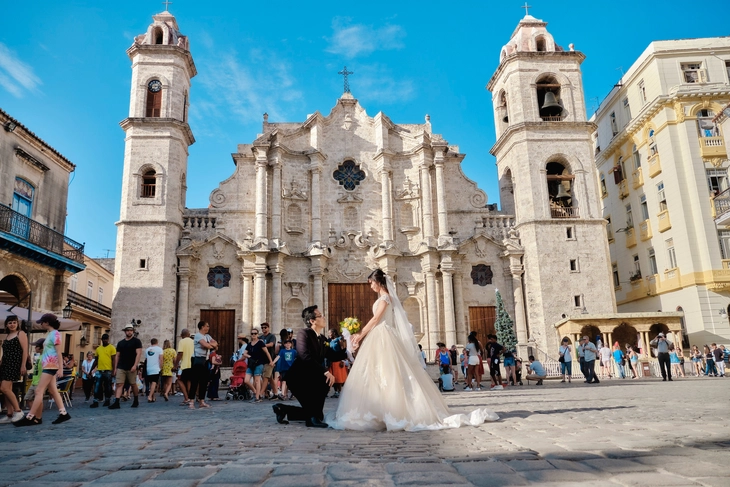
Mr. Tran Thanh Duy and Ms. Dao Ngoc Le went to Cuba to study together in 2013, met each other, and later got married – Photo: THANH HIEP, provided by the interviewee.
Beyond its academic appeal, Cuba is also a place where beautiful love stories unfold. In 2013, Dao Ngoc Le and Tran Thanh Duy crossed the ocean to study in Havana. In this foreign land, they fell in love and eventually got married.
Duy recounted: “Their meeting was truly fate, because Duy is from Saigon and Le is from Hanoi. Their first meeting was at the airport. Le arrived two months before Duy, so she and her fellow students came to welcome Duy’s group. They met in Cuba and developed feelings for each other. Now they have two children, and both work in fields related to Cuba. If it weren’t for Cuba, they certainly wouldn’t have met, so Duy feels indebted to Cuba.”
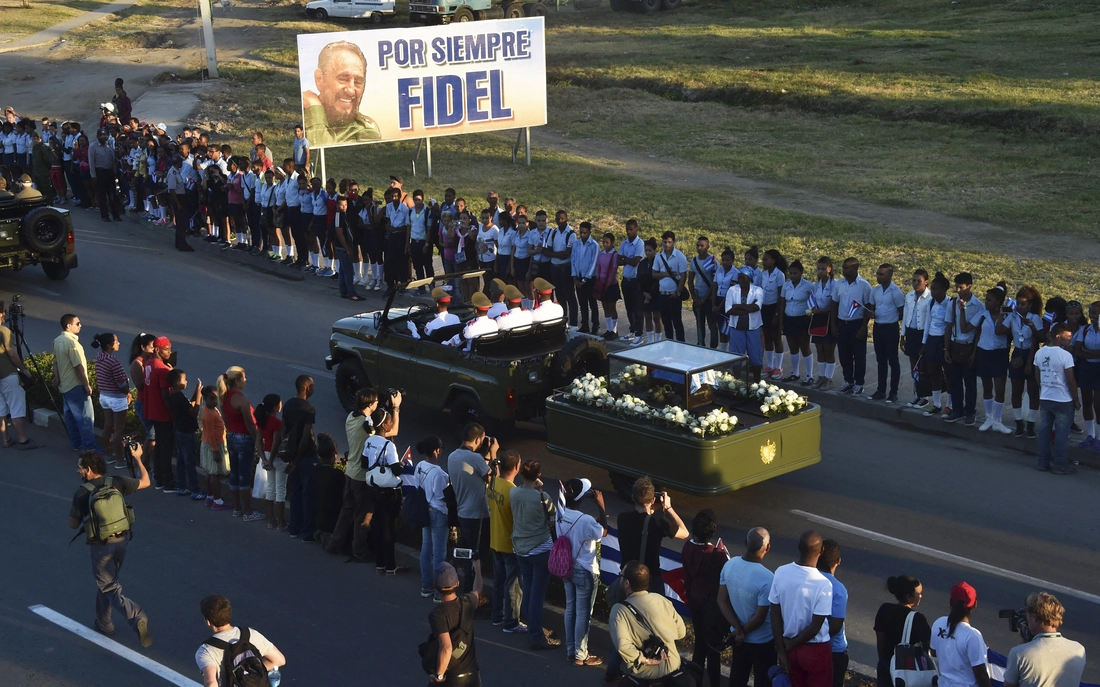
Cuban citizens took to the streets to bid farewell to leader Fidel Castro for the last time, before his ashes were taken to their final resting place in Santiago de Cuba – Photo: AFP
Duy and Le were in Cuba right around the time of Fidel Castro’s death. They vividly remember those days, when dozens of kilometers of Cuban people, regardless of the weather, lined up heading towards José Martí Revolution Square to bid farewell to their leader for the last time.
Later, Cuba decided to bring President Fidel’s ashes back along the same route the revolutionary army took in 1959, from Havana to Santiago de Cuba. Along the way, people from the provinces lined the roads to bid farewell to their leader.
Along the route recreating that historical journey, people constantly chanted “Yo soy Fidel” – “I am Fidel”.
“I think that in the minds of Cubans, President Fidel will always be a great and irreplaceable figure. His ideals will always remain in their hearts,” Ms. Le shared.
Brotherhood knows no borders.
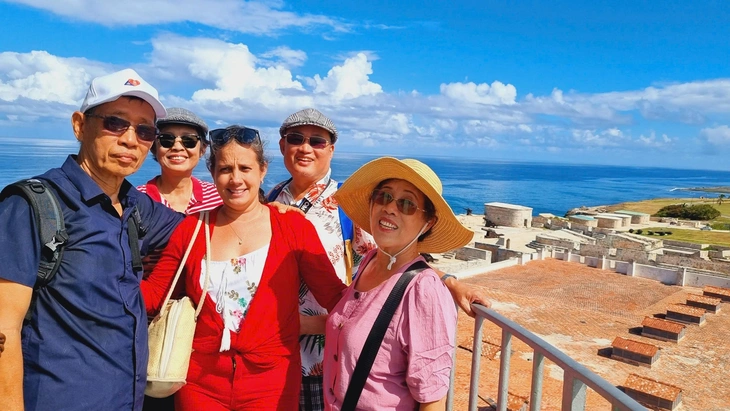
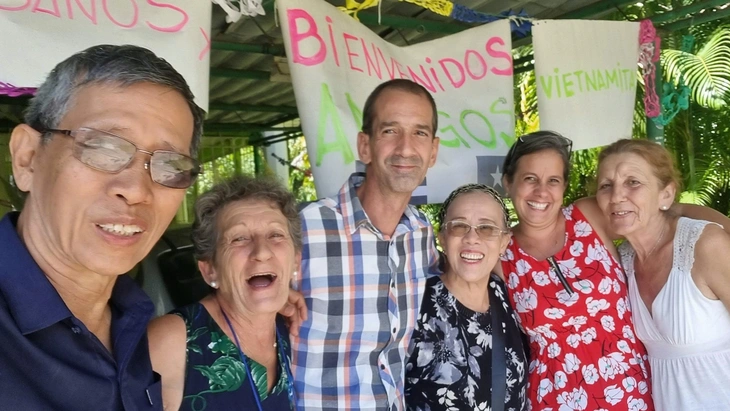
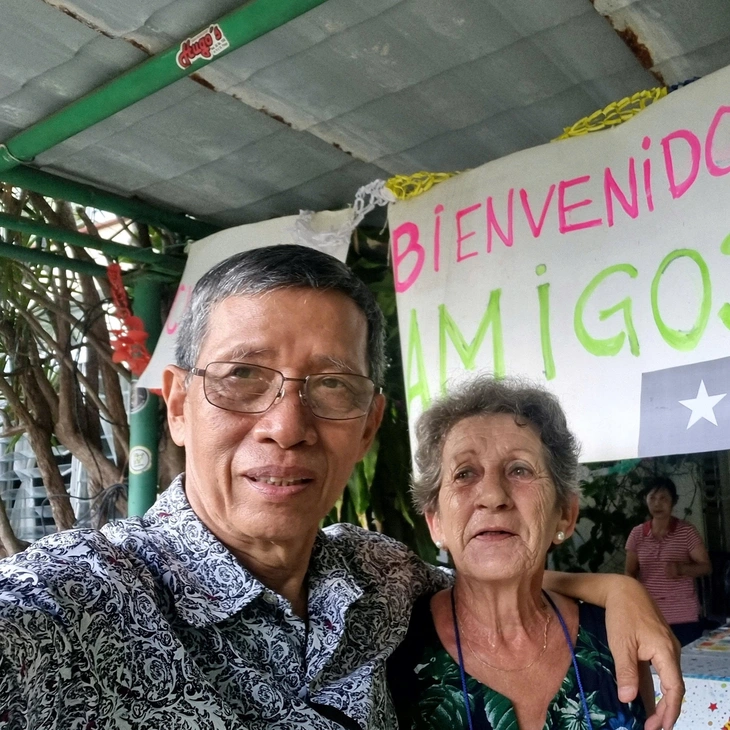
Associate Professor Bui Van An during a visit to his old friends in Cuba in 2022. There, he and his friends held a reunion party with the slogan “Welcome, Vietnamese friends” – Photo: Provided by the interviewee.
At nearly 80 years old, separated by 60 years and half the globe, Mr. An and Mrs. Bich Ha have not forgotten their Cuban friends.
Mr. An said that in 2022, he and his family flew to Cuba to visit old friends. He and his wife did not stay in a hotel but at a friend’s house.
Here, old friends organized an “encuentro”—a reunion between Vietnamese and Cuban friends after more than 60 years. Despite the difficult circumstances and their advanced age, many of his friends still traveled by bus from Matanzas to Havana to meet him and his wife, a journey that took an entire day.
Because of this sentiment, in addition to the official programs launched by the Vietnam Fatherland Front and other organizations, former Vietnamese students also have their own, more specific fundraising activities to help their Cuban friends during this difficult period.
In the past, when Vietnam was struggling during the war, Cuba readily helped us in every way, without any hesitation. Now, when Cuba is facing economic difficulties, Vietnam is also helping in return. That is a borderless sentiment, a brotherhood without limits.
Assoc. Prof. Dr. Bui Xuan An
“The relationship between Vietnam and Cuba is virtually borderless; the two countries are like one. In the past, when Vietnam faced difficulties during the war, Cuba readily helped us without any ulterior motives. Now, when Cuba is facing economic hardship, Vietnam is reciprocating. That is a borderless bond, a brotherhood without limits,” Mr. An emphasized emotionally.
Following news that Vietnamese businesses are supporting Cuba in improving rice productivity, former Vietnamese students studying abroad expressed their joy. Ms. Bich Anh shared: “I am very excited to hear that Vietnamese engineers are bringing our rice to plant in Cuba. At first, it was only 4 tons per hectare, but now I hear it’s up to 8 or 9 tons. I’m so happy. If I could go to Cuba to plant rice, I would go!”
Ms. Le’s Cuban friends were also surprised to learn that Vietnam is actively supporting its brotherly country: “Recently, Vietnam called for donations to build a solar power system for Cuba. My former classmates also messaged me to inquire. They were quite surprised, not thinking that Vietnam would support Cuba so much, and are eagerly awaiting the day those solar panels can help the Cuban people in their current situation.”
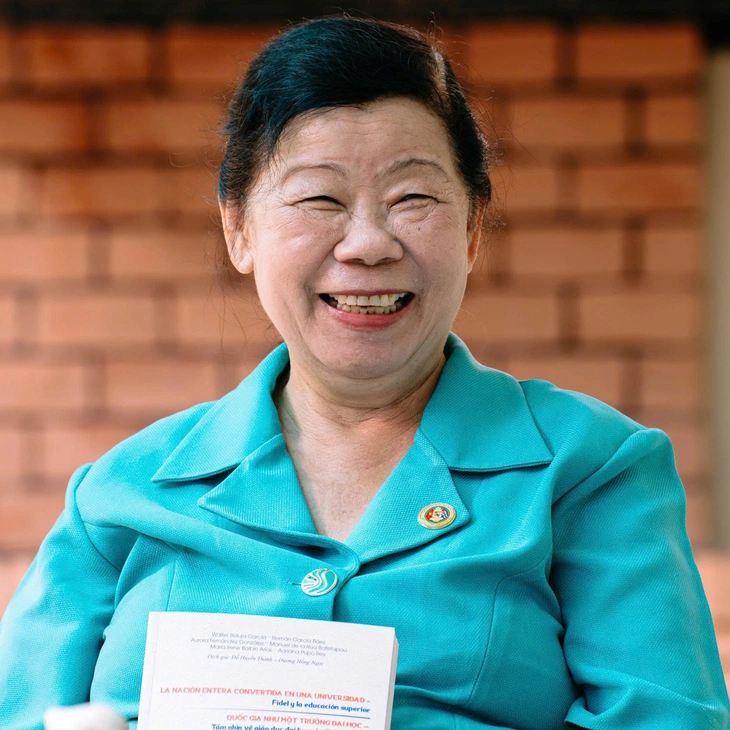
Ms. Thai Bich Anh
She was thrilled to hear that Vietnamese engineers were bringing their rice to plant in Cuba. Initially, the yield was only 4 tons per hectare, but now it’s said to be up to 8 or 9 tons. She was overjoyed. If she could go to Cuba to plant rice, she would definitely do it!
We will always remember leader Fidel Castro.
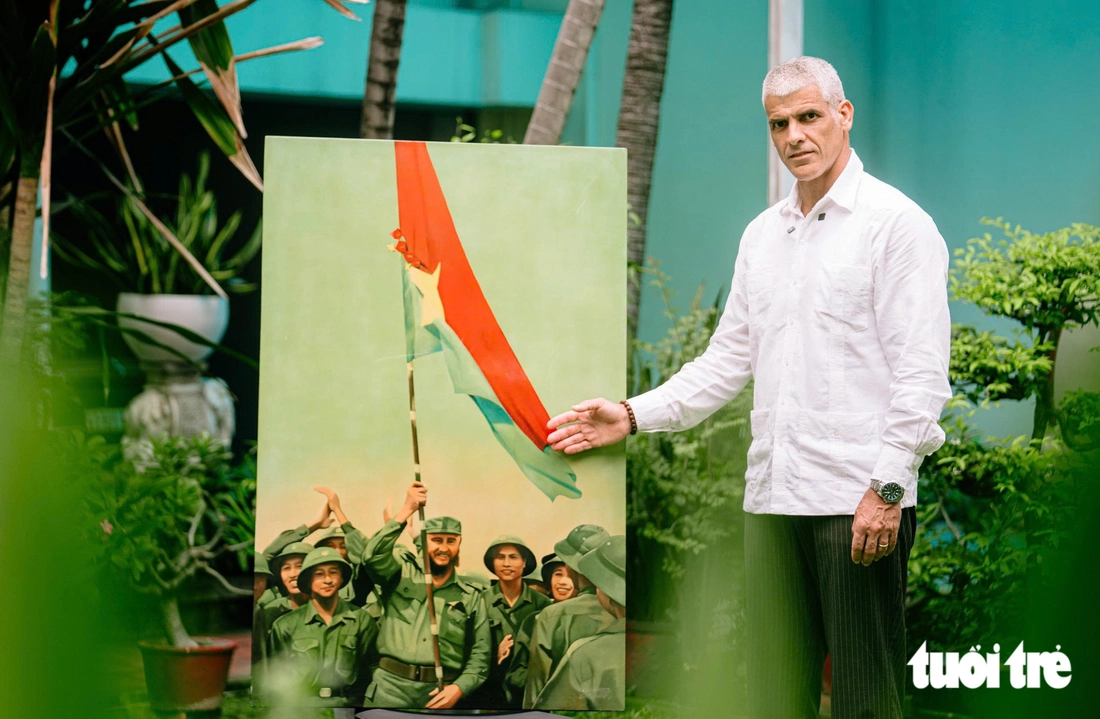
Cuban Consul General Mauricio Alejandro Martínez Duque stands beside a color-restored photograph of President Fidel Castro visiting the Quang Tri battlefield in 1973 – Photo: THANH HIEP
Recalling his leader, Cuban Consul General Mauricio Duque affirmed that President Fidel Castro Ruz has gone down in human history as an upright, revolutionary, and patriotic man, becoming an immortal figure for the Cuban people.
Speaking to Tuổi Trẻ newspaper , he recalled his last meeting with leader Fidel Castro in May 2024. On that occasion, the Cuban people were summoned to José Martí Revolution Square, where Fidel Castro delivered a historic declaration.
After the event concluded, his team waited for President Fidel in the reception room of the square. Upon emerging, Fidel approached the crowd and had a brief exchange with them.
Mr. Duque recounted: “I said to him, ‘Leader, please take care of your health.’ With the kindness and affection of a father, he placed his hand on my head and said, ‘Don’t worry, I know how to take care of my health.'”
Those were truly very important moments in my life. I will always cherish them as one of the greatest memories of Leader Fidel.”
The Cuban Consul General affirmed that for every official of the Cuban Ministry of Foreign Affairs, the legacy and influence of Leader Fidel Castro Ruz serve as a reminder to continue preserving the fraternal friendship and strong solidarity between the people of Vietnam and the people of Cuba.
NGOC DUC – THANH HIEP
Source: https://tuoitre.vn/100-nam-ngay-sinh-fidel-castro-cu-ba-mai-trong-trai-tim-cac-the-he-nguoi-viet-100260813021453338.htm