

How Fannuh Baskets Connect Liberia to the US Lowcountry
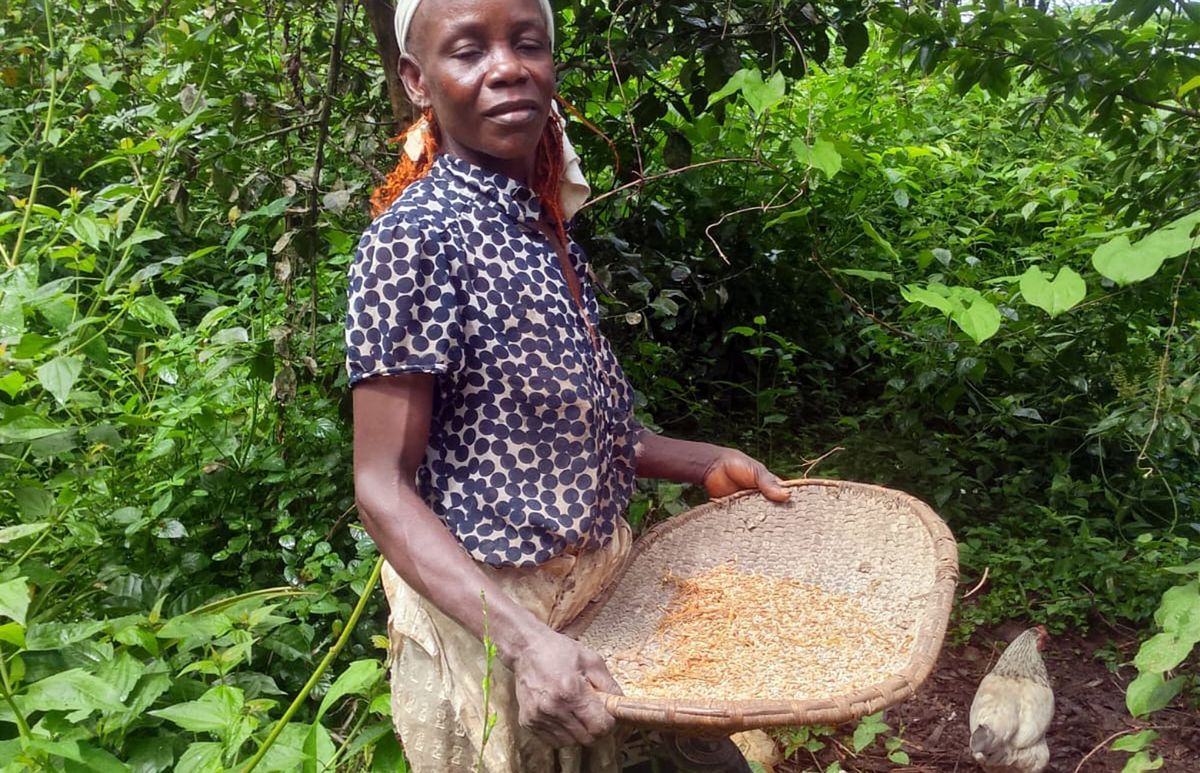
Gullah Geechee basket-weaving is rooted in an oral tradition carried by enslaved people from Liberia’s Windward Coast.
This article is part of a series focusing on underrepresented craft histories, researched and written by the 2025 Craft Archive Fellows, and organized in collaboration with the Center for Craft.
I first visited St. Helena Island off the South Carolina coast in 2021. Like Louisiana, it was one of the few places I had traveled in the United States where I could hear Liberia in the way people spoke. I do not know how to fully explain it. It was in the rhythm of Gullah speech, what my mother would call “sing-songy.” It was in the syntax and cadence. As my mother would say, “my ears could hear it.”
It was also on St. Helena Island, at the historic Penn Center, where I first saw an image of two women fanning rice. I immediately thought of so many women I had seen in Liberia, standing over harvested grain with woven baskets in hand, separating rice from chaff through sweeping motions. Woven from local grasses, palmetto, and other plant materials found across the Sea Islands off the coast of the Southeastern US, these baskets have become one of the defining craft traditions of Gullah Geechee culture in the Lowcountry, a region along South Carolina’s coast. To me, they felt like something I already knew.
Much of the conversation around lineage has centered on African Americans tracing their ancestry back to the African continent. As someone born in Liberia, with ancestry that includes Bassa people from the Grand Bassa, Montserrado and River Cess regions and those who emigrated from the Caribbean, I have long been interested in tracing those lineages in the other direction as well. I have been searching for the strangers and kin created through the ruptures of slavery — the “commoners, the unwilling and coerced migrants who created a new culture in the hostile world of the Americas and fashioned themselves again, making possibility out of dispossession,” as Saidiya Hartman writes in Lose Your Mother: A Journey Along the Atlantic Slave Route (2008).
I am drawn to the ways language, dance, food, and material traditions become reflections of cultural survival and continual refashioning.
“In Liberia,” dancer and anthropologist Pearl Primus reflected after spending two years in Monrovia as director of the Konoma Kende Performing Arts Center in the late 1950s to early ’60s, “I found the very root of … dances like the Charleston, Lindy Hop and the old plantation dances … the same used during religious services in some churches in the South.” On St. Helena Island, and throughout my travels across the US South, I have found myself looking for those same connections that Primus traced back to Liberia.
Credit: Source link