

Drug War or Political Harassment? | News
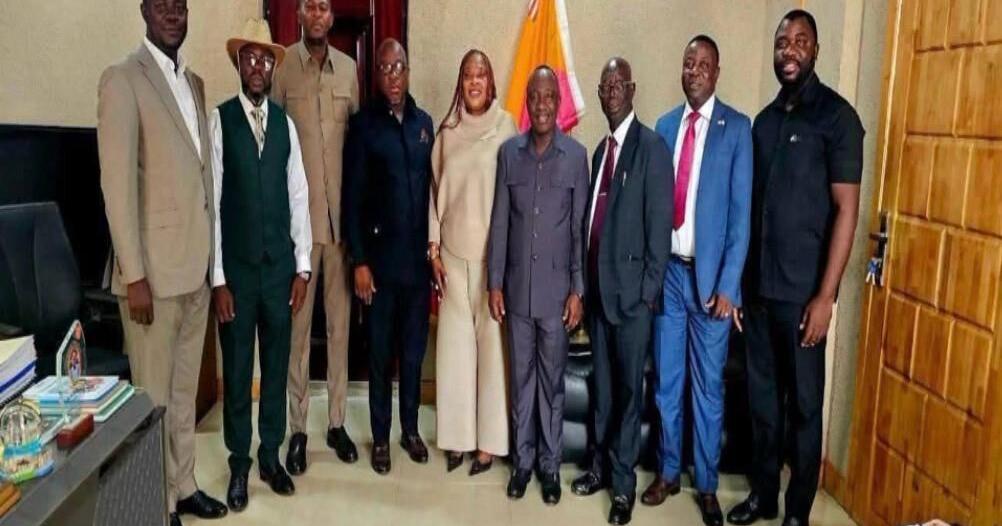
The detention of former Vice President and former Senator Jewel Howard-Taylor has moved beyond a criminal investigation and into a much larger national argument over the limits of state power, political accountability and constitutional rights.
In Bong County, where Howard-Taylor spent 12 years as a senator before becoming Liberia’s Vice President, lawmakers are demanding that the government prove its case in court rather than through public accusations.
The Bong County Legislative Caucus says it stands in solidarity with Howard-Taylor, who was arrested on August 19 and is being held at the Monrovia Central Prison pending trial on allegations including drug trafficking and money laundering.
But the caucus has stopped short of declaring her innocent.
That may be the most important distinction in the controversy.
The lawmakers say Liberia must confront illegal drugs, but the campaign cannot turn an indictment into a conviction.
The state has the right to prosecute. The accused has the right to defend herself. The court has the right to decide.
Representative Melvin Cole has meanwhile been taking the controversy directly to communities across Bong County, explaining what he says happened during Howard-Taylor’s arrest and detention.
Cole has alleged that Howard-Taylor was refused permission to use a bathroom while being transported and was taken to a police facility. He has also described her condition in detention and raised questions about how a former national leader was treated.
Those claims are politically significant but remain allegations unless established through independent evidence or judicial findings.
The caucus’s broader message is clear: Liberia cannot fight drugs by weakening the very legal institutions that give criminal prosecutions legitimacy.
The government may have compelling evidence. If so, the courtroom is where that evidence should be tested.
Howard-Taylor may have powerful supporters. That does not make her innocent.
She may face serious accusations. That does not make her guilty.
That is the essence of due process.
The caucus is therefore calling for a speedy trial rather than political intervention. It says prolonged detention serves neither the prosecution nor the accused and risks turning a judicial proceeding into a political spectacle.
For President Joseph Boakai’s government, the case presents a difficult balancing act.
The administration must show that its campaign against illicit drugs is serious enough to pursue even politically prominent figures.
But it must also demonstrate that enforcement is not selective, politically motivated or indifferent to constitutional protections.
That standard applies whether the accused is an ordinary citizen or a former Vice President.
The case has also exposed the emotional divide in Bong County.
Howard-Taylor’s supporters see a former senator and national leader facing what they regard as troubling treatment.
Government supporters may see a powerful political figure finally being subjected to the same criminal justice system as everyone else.
Both sides risk going too far.
One side cannot declare her innocent before evidence is tested.
The other cannot declare her guilty because she has been arrested or indicted.
Liberia’s courts must carry the burden of resolving that dispute.
That is precisely why the Bong County Legislative Caucus says its solidarity should not be interpreted as interference.
The caucus is demanding that the government prosecute the case, if it has a case, and prosecute it properly.
That is not a demand for special treatment.
It is a demand for a judicial determination.
The stakes extend beyond Howard-Taylor.
If Liberia’s anti-drug campaign is conducted transparently and produces convictions supported by credible evidence, it could strengthen public confidence in the country’s justice system.
If high-profile prosecutions become dominated by political accusations, counteraccusations and public declarations of guilt before trial, the same campaign could deepen political divisions and weaken confidence in the courts.
The answer is therefore neither blind loyalty to Howard-Taylor nor blind loyalty to the government.
The Bong County Legislative Caucus has asked Liberians to remain calm and reject speculation while the judicial process unfolds.
That may be easier said than done.
But in a democracy, the most powerful response to a serious criminal allegation should not be a political rally, a radio argument or a village-to-village campaign.
It should be a courtroom.
Howard-Taylor’s supporters should not be permitted to declare her innocent before trial. But the government should equally not be permitted to treat accusation as conviction.
Liberia’s justice system must do what politics cannot: establish the facts, test the evidence and deliver a lawful judgment.
Credit: Source link