

How China Picks Its Winners and Losers
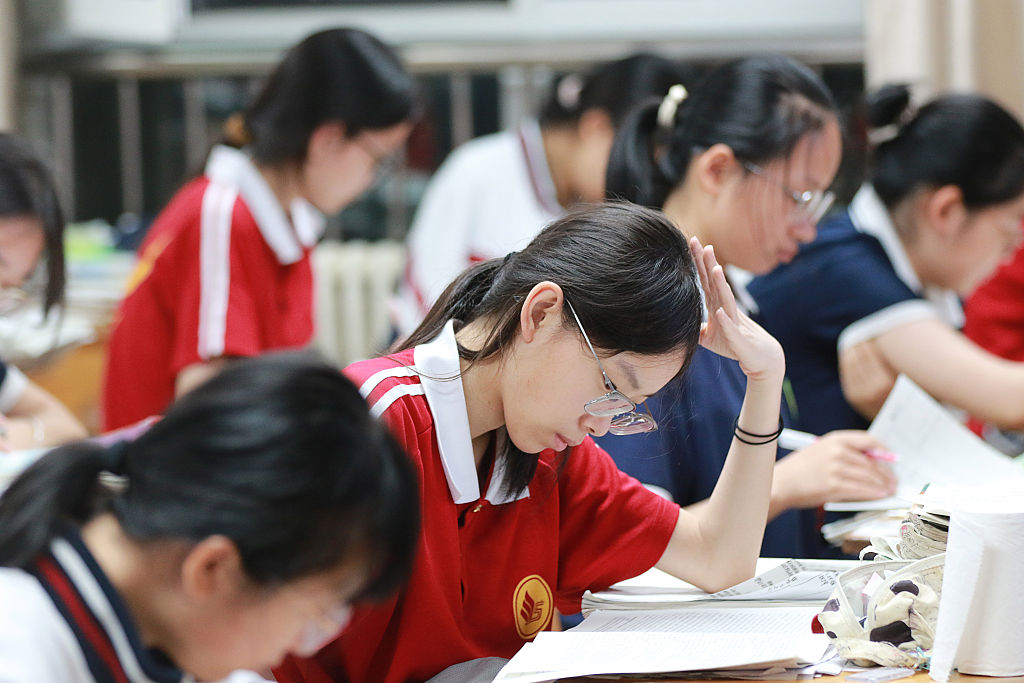
Seen from another perspective, the existence of the gaokao within a nominally communist country is quite ironic. It replicates capitalism’s zero-sum competition between workers for jobs within the education system. Securing a spot in one of China’s best colleges means kicking other students down the ranking ladder. This means that from a very early age, the gaokao instills a gladiatorial mindset into Chinese students. Instead of promoting the warmth of collectivism, China’s education system incentivizes cold individualism.
But when compared to the US system, China’s model appears less cruel than it does at first glance. Although rich Chinese families spend more money on their children than their poor counterparts, students from families in the top wealth quintile are only 2.3 times more likely to go to an elite college than those from the bottom quintile. In the United States, the wealthy are eleven times more likely to send their kids to the most prestigious universities.
For all of its faults, a univariate standardized testing system is relatively more meritocratic and allows for higher social mobility. But social mobility is not the be-all and end-all. In a society characterised by massive inequalities, meritocracy more often serves as a system for legitimizing these disparities rather than correcting them. If exams are seen to be fair, then it is much harder to take issue with the winners and losers.
What The Highest Exam implicitly reveals is that the gaokao is symptomatic of a deeper problem in China: the brutally competitive and highly unequal labor market. China’s youth unemployment rate is almost 18 percent, more than double the United States’. Within the People’s Republic there is intense competition for the best jobs, with 150 to 250 résumés per job opening in the most desirable sectors. Given the K-shaped dynamic at the top and sluggish-at-the-bottom nature of the economy of many advanced capitalist countries, not attaining a high-skilled job can often mean being thrust into the low-wage, long-hour world of gig work. The cushy government jobs allocated to top students are so desirable because they provide housing, education, and health care benefits that few others can access. The gaokao’s ruthless competition “succeeds” in preparing Chinese students for life precisely because this competition matches the post-college winner-takes-all nature of the capitalist economy. Thus, the real solution to the gaokao’s problems isn’t education reform, but dealing with the extreme inequality for which the test is just a sorting mechanism.
If China became a more equal society with a progressive tax structure that invested in universal social services, much of the gaokao’s stress would disappear, as the stakes of the tournament would be vastly lower. A poor test score wouldn’t translate into lower wages, bad educational opportunities, or a lack of health insurance. It would be much easier for families across the People’s Republic to slow down the race for educational arms proliferation.
The perception of the gaokao’s meritocracy is in practice a barrier to a more egalitarian People’s Republic. China’s social institutions are notoriously corrupt and systematically favor the wealthy and well connected. As Yuen Yuen Ang has shown, bribing officials with “access money” is a key ingredient to business success. Because the gaokao is fairer than these institutions, the distribution of jobs and security that it produces is seen as justified. This has had effects on social attitudes in the country. Surveys show that most Chinese citizens believe that poverty is due to individual failings like laziness or lack of talent. Only 25 percent of survey respondents believed there should be redistribution from the rich to the poor. If the gaokao tournament is fair, then its losers are seen as deserving of their suffering.
All of this means that the gaokao’s problems lie in the deeper ills of China’s political economy. The challenges posed by a highly bifurcated K-shaped economy cannot be easily solved by educational reform. Given China’s current economic trajectory, students and parents have little cause for optimism.