

Horn of Africa Trade Ministers Endorse Regional Action Plan in Historic Meeting Chaired by Somalia
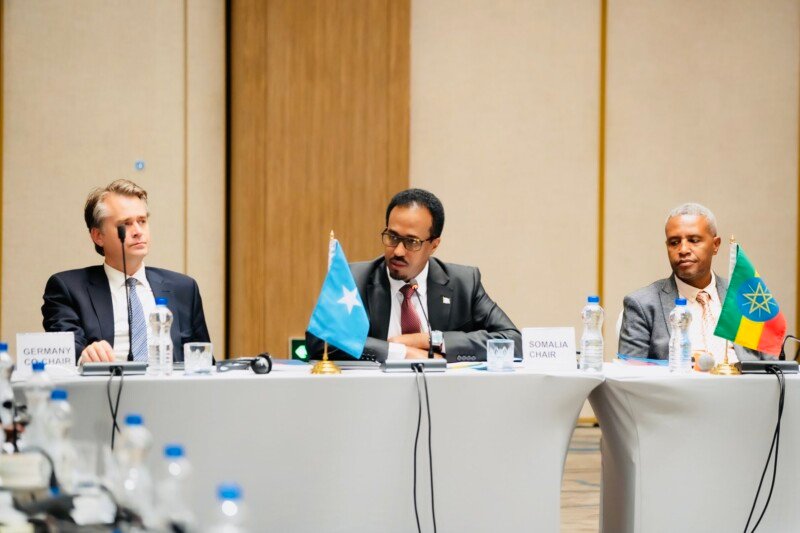
ADDIS ABABA — Somalia has chaired the first-ever meeting of trade ministers from Horn of Africa Initiative member countries, with the region’s leaders endorsing a five-year action plan to simplify cross-border trade and establish a regional trade facilitation committee.
The Minister of Commerce and Industry, Ambassador Gamal Mohamed Hassan, opened the meeting in Addis Ababa on September 3, 2026, speaking on behalf of member countries including Ethiopia, Djibouti, Kenya, South Sudan, and Sudan. He called for the region to move together towards a single shared economic space and to pass from political commitments to measures with results that traders and the public can see.
“The ambition is of a Horn of Africa whose borders connect the region economically rather than divide it, in which goods, services and opportunities move easily between the member countries,” the Minister said.
Regional Trade Facilitation Action Plan
The ministers urged the approval and implementation of the Regional Trade Facilitation Action Plan for 2026 to 2031, the establishment of a Regional Trade Facilitation Committee, and the nomination by member states of their representatives to that committee within the timeframe set. Minister Hassan also called for closer coordination between countries, adequate financing, and genuine participation by traders and the private sector, so that the regional plan becomes measurable work rather than a document.
The ministers focused on the development of trade corridors, the simplification of customs procedures, connecting ports to landlocked countries, the modernisation of border posts, digital services, and the involvement of traders. Germany, speaking on behalf of development partners, confirmed continued support for the regional trade agenda and stressed the importance of leadership by the countries themselves, coordination of technical and financial assistance, and a clear implementation framework.
Somalia’s participation in international transport forums has been part of its broader effort to modernise infrastructure and align with regional integration frameworks, complementing the trade facilitation agenda advanced at the HoAI meeting.
Somalia’s financial sector expansion, with total banking assets reaching $2.3 billion in 2025, provides the foundation for increased trade and private sector growth, supporting business financing and cross-border transactions.
Somalia’s Growing Regional Role
The meeting confirms that the countries of the Horn are moving towards organised cooperation intended to reduce the obstacles to trade between them, improve the movement of goods, and build a connected regional economy. The initiative’s work on trade rests on a roadmap endorsed in 2022 setting out reforms to bring the trade, customs, and transport policies of member states closer together, designed to be compatible with the regulatory frameworks of the regional communities the countries belong to and with the African Continental Free Trade Area.
At a ministerial meeting in Washington in April 2025, ministers endorsed an action plan of nine priority measures and laid the groundwork for a Horn of Africa simplified trade regime and for the committee whose establishment Minister Hassan has now pressed for.
That Somalia chairs the first ministerial meeting devoted specifically to trade places it at the head of the file at a point when its own position has changed substantially. The country acceded to the East African Community and has been aligning supervision and payment systems with the Community’s standards. It completed domestic ratification of the African Continental Free Trade Area agreement on 31 July, and the Council of Ministers approved a Rules of Origin Bill on 6 August under which goods with thirty percent or more Somali content qualify for exemption from duty in the markets they are sent to.
Somalia’s economy grew 3.1 percent in 2025, according to the Central Bank’s annual report, demonstrating resilience amid global headwinds and providing a stronger base for regional trade integration efforts.
Critical Note
The first-ever meeting of Horn of Africa trade ministers chaired by Somalia represents a significant diplomatic achievement for Mogadishu and a tangible step toward regional economic integration. Minister Hassan’s call for moving “from political commitments to measures with results that traders and the public can see” reflects a welcome shift from rhetoric to implementation.
However, the success of the Regional Trade Facilitation Action Plan will depend on whether the commitments made in Addis Ababa are followed by concrete action. The establishment of the Regional Trade Facilitation Committee and the nomination of representatives by member states will be the first test of whether the region is serious about reducing trade barriers. Without sustained political will, adequate financing, and genuine private sector participation, the roadmap risks becoming another document rather than the measurable work Minister Hassan has called for.
For Somalia, chairing this meeting and pushing the regional trade agenda forward strengthens its position as a growing economic player in the Horn of Africa. But the country must also ensure that its own customs systems, border procedures, and trade infrastructure are modernised to match the ambitions it is setting for the region. The Minister who chaired in Addis Ababa is the same one who presented the Rules of Origin Bill to the Cabinet, and the argument is continuous: rules of origin, customs simplification, and trade corridors are the machinery through which a country with a long coastline and landlocked neighbours turns its position into revenue.
Recommended Reading On ftlsomalia.com
Credit: Source link