

Guyana, Suriname, Brazil form regional traditional knowledge and healers network – Demerara Waves Online News- Guyana
Last Updated on Sunday, 13 September 2026, 9:40 by Written By Denis Chabrol
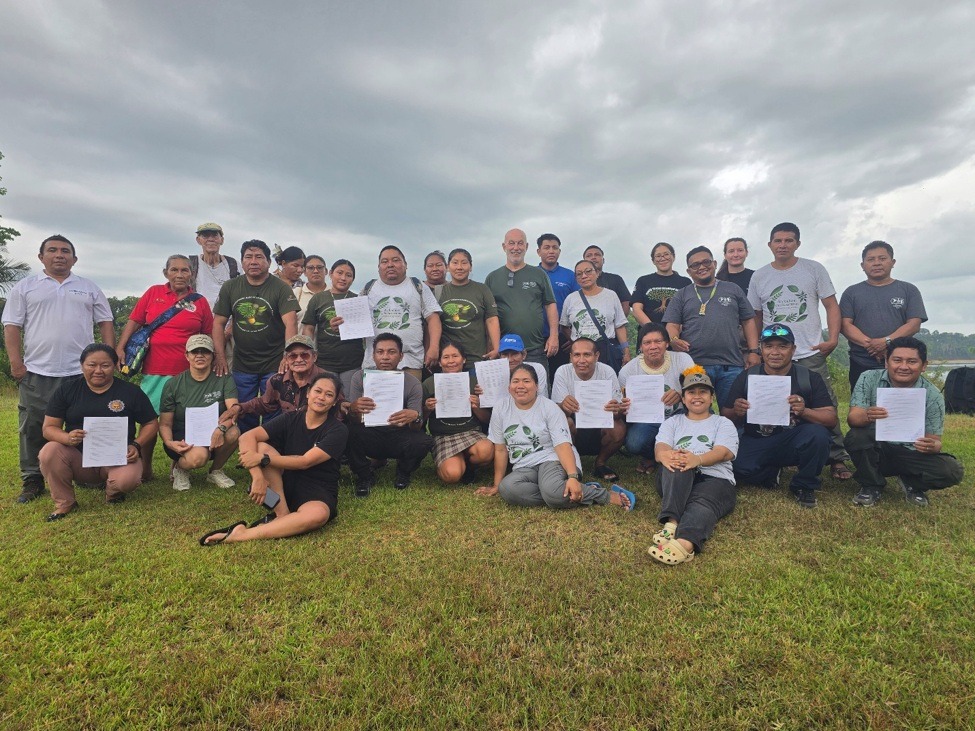
A group of traditional knowledge experts and healers from Guyana, Suriname and Brazil have launched a first of its kind, Regional Traditional Knowledge and Healers Network, at the Iwokrama Forest, the Amazon Conservation Team Guianas (ACT Guianas) and Iwokrama International Centre for Rainforest Conservation and Development (IICRCD) said in a statement.
The IICRCD said it was delighted to have hosted the ACT team and the Indigenous healers from across the Region. “We support the establishment of this network and wish them the very best as they work to build an Indigenous knowledge networking platform across the region and advocate for the integration of Indigenous medicinal knowledge in national healthcare systems,” the IICRD said.
Over the past four days, September 8-11, 2026, representatives from Indigenous communities in those three Amazon countries assembled at Iwokrama River Lodge to exchange knowledge on traditional medicines, healing and other cultural health practices.
Facilitated by the Amazon Conservation Team Guianas (ACT Guianas), the overall purpose of this meeting was to build on the two previous exchanges and establish regional organisation, credibility, advocacy, and continuity.
The Centre said the central goal of the meeting was to establish a regional networking platform of Indigenous traditional healers and knowledge holders, supported by clear principles, ethical protocols, communication mechanisms, and an advocacy agenda for respectful recognition by governments and health systems.
Other objectives accomplished during the exchange include exchange of best practices among traditional healers and Indigenous communities from the three countries, review lessons learned from exchanges over the last four years, strengthen the reliability, credibility, and ethical practice of traditional healing across the region and explore pathways for respectful government recognition and possible future integration with national health systems.
Additionally, the statement said the exchange introduced an opportunity for Guyana and Suriname to learn from Brazil’s experience. In particular, Brazil’s model public health system, Indigenous health subsystem, and integrative/complementary practices policy. Brazil’s public health system, Unified Health System (SUS), has a specific Indigenous Health Subsystem created in 1999. Moreover, Brazil also has a National Policy on Integrative and Complementary Practices in the SUS, which includes medicinal plants and phytotherapy among recognised practices.
Through its community-led Traditional Healers and Apprentices Program, the two organisations said ACT supports the intergenerational transmission of traditional medicinal and healing knowledge, exchanges among healers and apprentices, traditional health clinics, medicinal-plant initiatives, and the protection of community-owned knowledge. ACT facilitates coordination, fundraising, and dialogue with governments and formal healthcare institutions, while ensuring that authority over traditional knowledge remains with the participating healers and communities.
The proceedings over the last four days commenced with a spiritual cleansing ritual performed by a young Guyanese apprentice, Adele John of Surama Village. Following the opening ceremony, immersion activities in the forests surrounding the Iwokrama River Lodge and work group sessions aided in the development of a road map for this regional group over the next three years.
The ACT is a nonprofit organization that partners with Indigenous and local communities to protect tropical forests and strengthen traditional cultures. ACT established its presence in Suriname in 2002. After more than 20 years of work in the country, the program evolved into ACT Guianas, reflecting its expanded regional mandate.
ACT applies a biocultural approach that recognizes the close relationship between healthy forests, thriving communities, secure territories, and living cultures. With programs and offices in the Guianas, Brazil, Colombia, and Costa Rica, ACT also promotes cross-border cooperation across the Amazon and Guiana Shield regions.
ACT’s work in Guyana began during the COVID-19 pandemic through its partnership with the Waiwai community in southern Guyana. It has since expanded across the South, Central, and North Rupununi. The program focuses primarily on participatory community mapping, documenting oral histories, preserving culture, and transmitting traditional knowledge and skills between generations. Support for the community tourism initiative in Kanashen was one of the program’s starting points.
ACT works along three strategies:
- Territory and Biodiversity: Supporting communities to protect and sustainably manage ancestral territories, forests, water, wildlife, and biodiversity through mapping, ranger programs, monitoring, and cross-border cooperation.
- Livelihoods and Community Wellbeing: Improving food security, health, essential infrastructure, and sustainable incomes through agriculture, traditional medicine, community tourism, clean energy, and forest-based enterprises.
- Governance: Strengthening self-determination, collective rights, traditional leadership, Life Plans, inclusive decision-making, cultural revitalization, and community engagement with governments and other external actors.
The Iwokrama International Centre (IIC) was established in 1996 under a joint mandate from the Government of Guyana and the Commonwealth Secretariat to manage the Iwokrama forest, a unique reserve of 371,000 hectares of rainforest “in a manner that will lead to lasting ecological, economic and social benefits to the people of Guyana and to the world in general”.
The Centre, guided by an international Board of Trustees, is unique providing a dedicated well managed and researched forest environment. The forest is zoned into a Sustainable Utilization Area (SUA) and a Wilderness Preserve (WP) in which to test the concept of a truly sustainable forest where conservation, environmental balance and economic use can be mutually reinforcing. The IIC collaborates with the Government of Guyana, the Commonwealth and other international partners and donors to develop new approaches and forest management models to enable countries with rainforests to market their ecosystem services whilst carefully managing their resources through innovative and creative conservation practices. In more recent years, the Centre has received support from corporate partners such as Exxon Mobil (Guyana) Limited who has funded the development of its Science Programme and continues to provide an annual contribution to the implementation of this Programme.
Iwokrama brings together 20 local communities (approximately 7,000 people) who are shareholders and participants in the IIC’s sustainable timber, tourism, research operations and forest management activities through complex co-management and benefit sharing arrangements; scientists and researchers engaged in ground breaking research into the impacts of climate change on the forest and measuring the scope and value of its ecosystem services; and a portfolio of sustainably managed and certified business models using innovative governance systems which include participation of the private and public sectors and the local communities, earning income from the forest and its natural assets whilst employing international social, environmental and economic best practice, whilst still keeping abreast of the ever changing thinking on funding for environmental projects in the face of climate change and the perennial scarcity of international finance.
This alliance and the Centre’s work programmes are committed to showing how a rain forest can be used for real sustainability, real climate change protection and real community benefit.
Discover more from Demerara Waves Online News- Guyana
Subscribe to get the latest posts sent to your email.