

Gov’t Urged to Turn Youth Talent into Opportunity | News
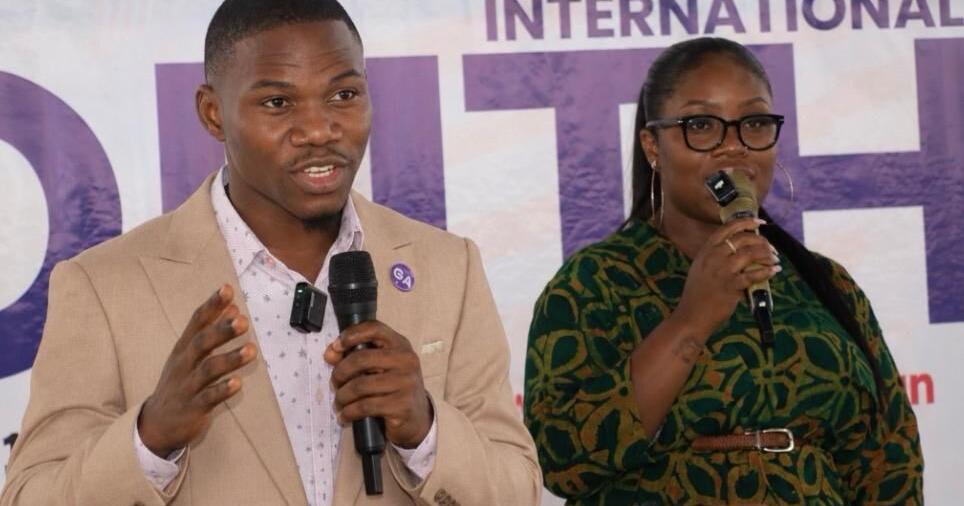
The Founder and Chief Empowerment Officer of GonetAfrica and Gonet Academy has amplified the voices of millions of young people across the nation, arguing that the country’s greatest challenge is not a shortage of talent but a shortage of pathways that connect talent to opportunity.
Speaking before hundreds of young Liberians, government officials, United Nations representatives, development partners and private-sector leaders at the Samuel Kanyon Doe Sports Complex when he served as keynote speaker at the 2026 International Youth Day, Kerkulah framed his address around a central proposition: Liberia’s youth do not need more promises—they need functioning systems that move them from learning to earning, from potential to productivity.
The event, organized by the Ministry of Youth and Sports under the theme “Unified Knowledge, Shared Futures: Liberians Innovating through Digital Partnerships,” also featured the official relaunch of YouthConnekt Liberia, signaling a renewed national effort to strengthen youth entrepreneurship, innovation, employment and digital transformation.
Kerkulah departed from the traditional practice of writing a speech based solely on his own perspectives.
Instead, he consulted young Liberians across the country before preparing his remarks, asking them what challenges they face, what opportunities they need, how technology could transform their futures, and what message they would deliver to national leaders if given the chance.
“The message I carry today is not mine alone,” he told the audience.
“I am carrying their voices with me.”
That approach fundamentally shaped both the tone and substance of the address.
Rather than positioning himself as the expert with all the answers, Kerkulah presented himself as a facilitator of a broader national conversation—one in which youth voices informed the recommendations placed before policymakers.
The speech’s most memorable line became its central argument.
“Potential is everywhere. Opportunity is not.”
With those seven words, Kerkulah summarized what many economists, educators and development practitioners have described as one of Liberia’s most persistent development challenges.
He argued that Liberian youth are not deficient in intelligence, creativity or ambition.
Instead, they encounter structural barriers that repeatedly interrupt their transition into productive adulthood.
Among those barriers, he cited graduates unable to obtain employment because employers demand experience, entrepreneurs lacking capital and mentorship, talented athletes and creatives without structured development systems, and digitally skilled youth without access to markets or professional opportunities.
The argument reflects a broader debate unfolding across Africa, where governments increasingly recognize that youth unemployment cannot be addressed solely through education.
The challenge lies in connecting education to employment, entrepreneurship and economic participation.
Perhaps the most policy-oriented section of the keynote came when Kerkulah challenged government and other stakeholders to rethink how youth empowerment is measured.
For decades, governments and development organizations have celebrated numbers of workshops conducted, certificates issued and grants distributed.
Kerkulah argued that these indicators no longer suffice.
Instead, he proposed evaluating youth programs according to tangible outcomes such as how many participants found jobs? How many started businesses? How many increased their income? How many remained economically active one year later? And how many created opportunities for others?
“That,” he argued, “is when youth empowerment becomes youth transformation.”
The proposal aligns with growing international emphasis on results-based development, where impact—not activity—is increasingly used to judge public policy.
Kerkulah also challenged young Liberians to redefine their relationship with technology.
Rather than becoming passive consumers of digital content, he urged them to become creators, innovators and exporters of knowledge.
“Our smartphones cannot only be instruments of entertainment,” he observed.
He envisioned Liberians in Ganta providing digital services internationally, designers in Buchanan serving overseas clients and data analysts in Zwedru participating in the global digital economy.
However, he also acknowledged that digital transformation cannot succeed while many communities remain without reliable internet connectivity or access to computers.
“A digital Liberia,” he argued, “must also be an inclusive Liberia.”
Another defining feature of the address was Kerkulah’s effort to broaden public understanding of innovation.
Innovation, he argued, should not be narrowly associated with software development or coding.
Instead, innovation means solving problems better.
That definition expanded opportunities for young Liberians working in agriculture, healthcare, sanitation, education, tourism, sports and environmental protection.
Rather than asking how to create more entrepreneurs, he urged policymakers to ask: “What Liberian problems can our young people solve?”
Liberia’s Youth Bulge: Opportunity or Risk?
Kerkulah’s message comes as Liberia faces one of Africa’s youngest populations.
According to the Ministry of Youth and Sports, approximately three out of every four Liberians are below the age of 35, making youth policy central to the country’s future rather than a specialized government program.
Demographers often describe such populations as possessing a “demographic dividend”—a period during which economic growth can accelerate if young people are educated, employed and productive.
Conversely, failure to create opportunities can contribute to persistent unemployment, irregular migration, crime, drug abuse and political instability.
Liberia continues to grapple with many of these pressures.
Youth unemployment and underemployment remain high, while many graduates struggle to secure formal employment. Limited access to finance constrains entrepreneurship, and disparities in internet connectivity and technical skills continue to affect young people, particularly outside Monrovia.
These realities gave additional weight to Kerkulah’s argument that structural reforms—not isolated youth projects—must become the focus of national policy.
Minister Kruah: Young People Are the Present
While Kerkulah concentrated on systems change, Minister of Youth and Sports Atty. Cornelia W. Kruah focused on changing perceptions about young people.
She challenged Liberians to reject the long-standing notion that youth represent only the country’s future.
“You are not the future of this country,” she declared. “You are the current, the present. You are Liberia.”
Her remarks reflected an emerging philosophy within the Ministry that youth participation should extend beyond symbolic consultation to meaningful involvement in governance and national decision-making.
She further urged policymakers to integrate youth priorities into national planning, legislation and public budgeting while warning that failure to invest in Liberia’s youthful majority risks wasting enormous human potential.
Since assuming office, Minister Kruah has increasingly emphasized direct engagement with young people, encouraging dialogue, participation and leadership rather than top-down policymaking.
The IYD celebration itself reflected that approach, bringing together government institutions, development partners, civil society, the private sector and youth organizations around a common agenda.
The relaunch of YouthConnekt Liberia similarly aims to create stronger connections between young people and entrepreneurship, employment, innovation, digital skills, leadership development and civic participation.
Although YouthConnekt has operated successfully in several African countries, Liberia’s relaunch represents an opportunity to adapt the model to local realities by strengthening mentorship, financing and market access.
United Nations officials used the occasion to reinforce international support for the country’s youth agenda.
UNDP Resident Representative Ambassador Aliou Mamadou Dia formally launched YouthConnekt Liberia, calling for stronger partnerships capable of transforming young people’s aspirations into practical opportunities.
Representing the UN Resident Coordinator and UNFPA, Dr. Mady Biaye delivered a message from UN Secretary-General António Guterres emphasizing young people’s desire for dignity, participation and opportunity while acknowledging continuing challenges including economic uncertainty, digital exclusion and climate change.
Representing the Executive Mansion, Deputy Minister of State for Presidential Affairs Bill McGill Jones argued that President Joseph Nyuma Boakai’s administration is increasingly entrusting young Liberians with leadership responsibilities.
He cited the government’s Pathway Program and broader youth empowerment efforts while encouraging young Liberians to prepare themselves for leadership opportunities.
“Today,” Jones declared, “we are solution finders, we are decision-makers, and we are deciding the destiny of our fate.”
Liberia Telecommunications Authority Commissioner Clarence Massaquoi outlined one of the day’s most concrete commitments.
He disclosed that 88 of 156 targeted public high schools have already been connected to high-speed internet, with nationwide school connectivity targeted by 2030.
He also announced a partnership between the LTA and the Ministry of Youth and Sports to establish digital hubs across Liberia’s fifteen counties, with approximately 750 young people expected to benefit during the first year.
If successfully implemented, those initiatives could begin addressing one of the digital inequalities highlighted in Kerkulah’s keynote.
This year’s event sought to project something more enduring.
Kerkulah challenged the country’s leadership to replace isolated youth programs with comprehensive pathways linking education, employment, entrepreneurship and innovation. He reminded the audience, the country’s challenge is not discovering talented young people, but ensuring that their potential finally has a pathway.
Credit: Source link