

Liberia Reopens Embassy in India After 35 Years | News
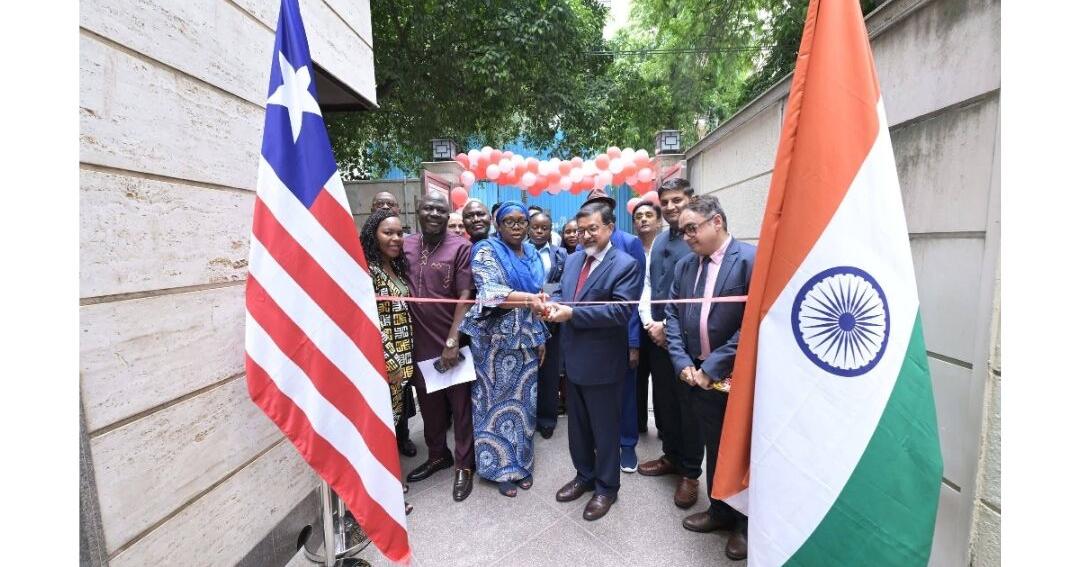
In what officials have described as one of the most significant diplomatic milestones in recent decades, the Liberian Government has formally reopened its Embassy in New Delhi after more than 35 years without a resident diplomatic mission in India, marking a renewed commitment to deepen political, economic and people-to-people relations with one of the world’s fastest-growing global powers.
Minister of Foreign Affairs, H.E. Sara Beysolow Nyanti, is leading the historic inauguration on behalf of President Joseph Nyuma Boakai, Sr., officially restoring Liberia’s permanent diplomatic presence in India and opening what the Government says will become a strategic platform for economic diplomacy, trade promotion, investment attraction, education, healthcare cooperation and technological partnerships.
The reopening represents far more than the launch of another diplomatic mission. It symbolizes the country’s renewed foreign policy orientation toward strengthening relationships with emerging global economies capable of supporting the country’s long-term development agenda.
The embassy in India ceased operations more than three decades ago during one of the country’s most turbulent periods, when civil conflict, economic decline and institutional instability forced the closure of several diplomatic missions abroad.
Since then, successive Liberian administrations have expressed interest in restoring a permanent mission in New Delhi, recognizing India’s growing global influence and its increasing engagement with Africa.
Although previous governments laid important groundwork, the reopening has now been realized under the Boakai Administration, bringing to completion a national diplomatic objective that had remained unrealized for more than 35 years.
The reopening of the embassy reflects the government’s broader effort to reposition its diplomatic missions as engines of economic development rather than institutions focused solely on political representation.
Instead of functioning primarily as ceremonial outposts, modern embassies are increasingly expected to attract foreign investment, promote exports, negotiate development partnerships and create opportunities for citizens abroad.
The Ministry of Foreign Affairs says the New Delhi Embassy will serve as Liberia’s principal diplomatic platform in India while advancing cooperation in several strategic sectors.
Officials believe the embassy will also facilitate greater engagement between Liberian and Indian businesses while promoting investment opportunities across Liberia’s mining, agriculture, tourism, manufacturing and energy sectors.
The mission aligns with President Boakai’s emphasis on using diplomacy to support economic growth and attract international partnerships capable of advancing the Government’s ARREST Agenda for Inclusive Development (AAID).
Speaking ahead of the official inauguration, Foreign Minister Sara Beysolow Nyanti described the reopening as both a diplomatic achievement and an investment in Liberia’s future.
“After more than three decades, Liberia once again has a permanent diplomatic home in India. This is a major milestone for our country and a testament to President Boakai’s commitment to strengthening Liberia’s global partnerships and ensuring that our diplomacy delivers tangible results for our people.”
She acknowledged that the reopening reflects years of work undertaken across multiple administrations.
“We acknowledge the efforts of successive administrations that worked toward this goal, and today we are proud to finally bring it to fruition.”
According to the Minister, the embassy is intended not merely as a diplomatic office but as a vehicle for expanding opportunities for Liberians while strengthening cooperation with India in areas critical to national development.
The reopening comes at a time when India has become one of Africa’s most important development and economic partners.
Over the past two decades, India has significantly expanded its engagement across the continent through investments, technical cooperation, educational exchanges, concessional financing and healthcare partnerships.
For Liberia specifically, India has become an increasingly important destination for higher education and specialized medical treatment.
Hundreds of Liberian students pursue university education and professional training in Indian institutions, while many patients travel to India annually seeking advanced medical care unavailable domestically.
Without a resident embassy, obtaining consular assistance often proved cumbersome, requiring coordination through non-resident diplomatic arrangements.
The reopening therefore promises practical benefits extending well beyond diplomacy.
Government officials believe a permanent mission will strengthen support for Liberian students, facilitate visa and consular services, assist citizens facing emergencies and expand scholarship opportunities through direct engagement with Indian institutions.
Liberia and India already enjoy cordial diplomatic relations rooted in decades of cooperation.
India has supported Liberia through technical training, educational scholarships, pharmaceutical supplies, agricultural cooperation, information technology initiatives and broader South-South development cooperation.
Indian companies have also maintained a commercial presence in Liberia, particularly in trade, manufacturing, pharmaceuticals and services.
Meanwhile, Liberia continues to view India as an important source of technical expertise, affordable technology and private-sector investment.
The reopening of the embassy institutionalizes these growing ties by creating a permanent channel through which both governments can pursue long-term strategic cooperation.
Rather than relying primarily on periodic diplomatic engagements, officials will now have a resident mission capable of identifying investment opportunities, facilitating business exchanges and maintaining continuous dialogue with Indian government agencies and private investors.
Beyond strengthening bilateral relations, the embassy is expected to produce practical development dividends.
Officials anticipate stronger collaboration in agricultural modernization, digital transformation, public health, vocational education, infrastructure development, and entrepreneurship.
The embassy will also provide a stronger platform for mobilizing technical assistance and capacity-building programs that support broader development objectives.
For Liberian businesses seeking access to Indian markets—or Indian investors exploring opportunities in Liberia—the mission is expected to become an important bridge between both economies.
During her visit, Minister Nyanti is expected to hold meetings with senior Indian government officials, diplomatic representatives and development partners to advance Liberia’s economic priorities and deepen bilateral cooperation.
The Government says these engagements will focus on expanding investment, strengthening development partnerships and identifying new areas of collaboration that support Liberia’s long-term growth agenda.
As Liberia raises its flag once again over a resident embassy in New Delhi, the occasion represents more than the reopening of a diplomatic building.
It reflects a broader shift in Liberia’s foreign policy—one that increasingly views diplomacy as a strategic instrument for national development, economic transformation and international competitiveness.
Credit: Source link
Comments are closed.