

Liberia-Egypt Ties Enter New Strategic Phase | News
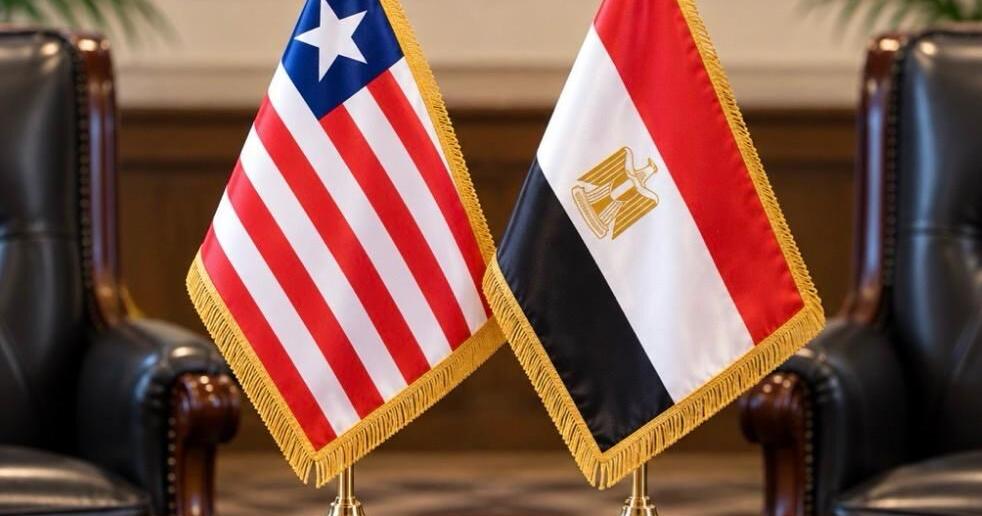
Liberia and Egypt have a longstanding diplomatic relationship but are now poised to partners turn their renewed political ties toward trade, development, capacity-building and the Joseph Nyuma Boakai administration’s role in defending African interests at the UN Security Council
Both nations are seeking to translate decades of diplomatic friendship into a broader strategic partnership, with Foreign Ministers Sara Beysolow Nyanti and Badr Abdelatty discussing expanded economic and development cooperation while coordinating positions on Sudan and Africa’s interests at the United Nations Security Council.
In a telephone conversation on Friday, September 11, the two ministers reaffirmed their commitment to strengthening bilateral relations, particularly in the areas of economy, trade, development and capacity-building. They also discussed ways Egypt could deploy its expertise and institutional capabilities to support Liberia’s development priorities.
The timing is significant. Liberia is serving as a non-permanent member of the UN Security Council for 2026–2027, giving Monrovia a more consequential voice on international peace and security issues. Egypt, meanwhile, remains one of Africa’s most influential diplomatic and security actors, with longstanding interests in regional stability, particularly in neighboring Sudan.
The latest conversation therefore points to a relationship moving beyond traditional diplomatic goodwill toward practical cooperation and strategic coordination.
Liberia-Egypt relations have deep roots. The two countries established diplomatic relations in 1957, making Egypt one of the early African and Arab states to establish formal ties with Liberia. Egypt sent its first ambassador to Monrovia in 1959, while Liberia has maintained an ambassadorial-level presence in Cairo.
The relationship emerged during a period of profound transformation across Africa. Liberia, under President William V.S. Tubman, was pursuing a foreign policy aimed at expanding the country’s international recognition and African diplomatic engagement. Egypt, under President Gamal Abdel Nasser, was simultaneously emerging as a major force in African anti-colonial politics and the broader non-aligned movement.
Historical U.S. diplomatic records show that Liberia and Egypt agreed in November 1957 to establish diplomatic missions in Cairo and Monrovia, with the missions subsequently elevated to embassy level.
The early relationship was not without geopolitical complexities. Contemporary American diplomatic correspondence reflected Washington’s concern about Egypt’s growing influence in Liberia and President Tubman’s reservations about Nasser’s regional policies. But despite those Cold War-era tensions, formal Liberia-Egypt relations endured and gradually developed across political, economic, technical and cultural spheres.
By the 1980s, the two countries had established a broader contractual framework covering commercial cooperation, economic and technical cooperation, cultural and scientific exchange, and technical assistance. A permanent committee for bilateral cooperation was agreed in 1990, while further economic cooperation initiatives followed in 1998 and 2001.
The relationship also survived Liberia’s devastating civil wars.
Egypt supported international efforts to restore peace in Liberia and welcomed the 2003 Accra Comprehensive Peace Agreement. Egypt also contributed military observers and police personnel to the United Nations Mission in Liberia (UNMIL), providing another practical dimension to its engagement with Liberia’s post-war recovery.
The current engagement suggests that both governments now want to extract greater economic value from that historical relationship.
In February 2026, Nyanti and Abdelatty signed a Memorandum of Understanding on diplomatic training and academic exchange on the margins of the African Union Summit in Addis Ababa. The agreement linked Liberia’s Gabriel L. Dennis Foreign Service Institute with Egypt’s Institute of Diplomatic Studies and provided for training, academic exchanges, joint research and professional collaboration.
Egypt also committed to sponsoring five Liberians for diplomatic training, while Liberia proposed a Liberia-Egypt Business Forum and a possible state visit by President Joseph Nyuma Boakai to Egypt.
Those developments provide important context for the latest ministerial conversation.
Rather than treating capacity-building as an isolated diplomatic initiative, the two governments appear to be building a framework in which Egyptian expertise can support Liberia’s broader development agenda.
That could have implications for infrastructure, agriculture, health, education, energy, security, public administration and trade—areas in which Egypt has substantial institutional experience.
Indeed, Egyptian engagement in Liberia has already included human-capacity development. In 2024, Egyptian authorities reported discussions on infrastructure cooperation and highlighted Egyptian training provided to members of Liberia’s Presidential Guards.
Sudan puts the relationship in a wider African context
The discussion of Sudan gives the latest engagement a particularly important geopolitical dimension.
Sudan’s war has become one of Africa’s most severe security and humanitarian crises, while Egypt has a direct strategic interest in the country’s stability because of geography, security and regional political considerations.
Cairo has repeatedly advocated for Sudan’s unity, sovereignty and territorial integrity and has participated in diplomatic efforts aimed at coordinating international and regional initiatives toward a political settlement. Egypt hosted a major consultative meeting on Sudan in January 2026 involving the African Union, United Nations, Arab League, IGAD and other international actors.
Liberia no longer sees Sudan as merely a distant regional conflict.
As a Security Council member, Monrovia will increasingly confront questions involving African conflicts, humanitarian crises, sanctions, peace operations and international diplomacy.
That makes consultation with Egypt potentially valuable.
The most strategic element of the relationship may therefore be the intersection between Egypt’s regional diplomatic influence and Liberia’s new Security Council responsibility.
When Abdelatty met Nyanti in February, he congratulated Liberia on its election to the Council and expressed confidence in Monrovia’s ability to advance African interests.
Egypt has itself strongly advocated a stronger African voice within the Security Council. In May 2026, Abdelatty reaffirmed Egypt’s support for Security Council reform and the African position embodied in the Ezulwini Consensus and Sirte Declaration, including permanent African representation with the rights and privileges of permanent members.
This creates an important area of convergence.
Liberia’s two-year Council membership gives it an opportunity to contribute directly to international decisions affecting Africa, while Egypt’s diplomatic experience can provide an important regional perspective.
The latest Nyanti-Abdelatty consultation therefore suggests that the relationship is increasingly becoming part of a wider effort to coordinate African positions on peace, security and development.
The challenge now is converting diplomatic language into measurable outcomes.
The historical record demonstrates that Liberia and Egypt have maintained friendly relations for nearly seven decades. But the latest phase will be judged less by the number of agreements signed than by whether cooperation generates trade, investment, technical skills, institutional capacity and development results for Liberians.
Liberia, for Cairo, offers an important West African partner at a time when African diplomatic coordination is becoming increasingly important, while Egypt offers access to a country with extensive experience in infrastructure, technical education, diplomacy, security cooperation, agriculture and other development fields.
The February diplomatic-training agreement and the September discussions on economic and development cooperation indicate that both sides recognize this opportunity.
The Sudan crisis and Liberia’s Security Council membership add another layer: the two countries now have reasons not only to deepen bilateral relations but also to consult more closely on Africa’s collective peace and security agenda.
After 69 years of formal diplomatic relations, Liberia-Egypt ties appear to be entering a new phase—one in which historical friendship is being tested against the demands of contemporary African diplomacy.
The central question is no longer whether Liberia and Egypt are friends. Their history answers that.
The more consequential question is whether that friendship can now be converted into a strategic partnership capable of delivering development at home and a stronger African voice abroad.
Credit: Source link