
Ghines Foundation, UNESCO launch roadmap to transform South Sudan’s music industry into an economic force
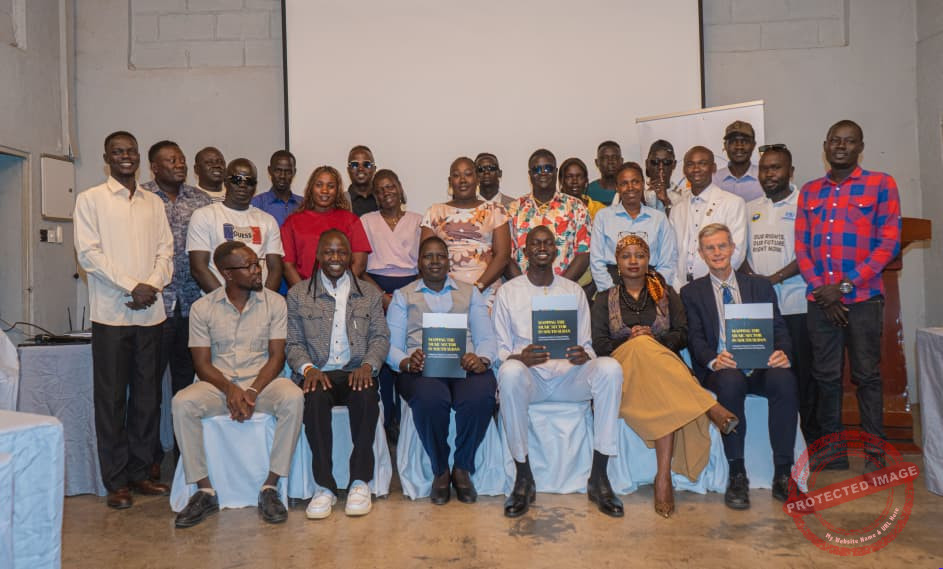

Ghines Foundation, UNESCO, CES and CES Artists’ Union representatives and officials pose during the launch of mapping in Juba.
Photo credit: Ghines Foundation.
The Ghines Foundation, in partnership with UNESCO, the European Union, AfriYAN and the Central Equatoria State Artists Association, has launched South Sudan’s first comprehensive assessment of the country’s music industry, highlighting opportunities to transform creativity into a driver of economic growth.
The Mapping the Music Sector in South Sudan Report, launched in Juba on 28 July 2026, provides an overview of the challenges facing musicians and proposes practical measures to develop a stronger creative economy.
The report shows that while South Sudan has a rich musical heritage and a growing pool of talented artists, the sector continues to face major obstacles, including the absence of a National Music Policy, limited access to finance, weak copyright systems and inadequate creative infrastructure.
For years, South Sudanese music has played a central role in weddings, cultural festivals, churches, political events and national celebrations, serving as a powerful expression of identity, unity and hope.
However, many artists continue to struggle to earn sustainable income from their work, relying mainly on live performances as revenue from streaming platforms, royalties and music licensing remains limited.
Presenting the findings, Culture Policy and Creative Economy Specialist Lucy Ilado said the research mapped 41 practitioners between September 2025 and March 2026 to better understand the country’s music ecosystem.
She said the findings demonstrate that talent is not the main challenge facing the industry.
Instead, she pointed to the lack of systems needed to support artists professionally, including copyright administration, investment opportunities and spaces for production and training.
Ilado said the report recommends the adoption of South Sudan’s first National Music Policy, establishment of an effective copyright administration system, investment in recording studios and rehearsal spaces, strengthening music education and improving access to financing for artists.
Deputy Head of the European Union Delegation to South Sudan, Lothar Jaschke, said reliable data and research are essential steps toward developing the creative sector.
“What is very important is data and research. To know the status is very important. To know who is doing what and how many we are.”
Jaschke said culture should be viewed beyond entertainment, describing it as a tool that builds trust, strengthens identity and supports diplomacy.
“Culture is an important tool of diplomacy. Political processes are important, but they do not win the minds and the hearts. This is what culture can do.”
He said South Sudan’s cultural heritage deserves greater recognition, preservation and investment.
The report received support from the Central Equatoria State Government, with State Minister of Information Nyarsuk Patrick saying artists have played a significant role in South Sudan’s history, from the liberation struggle to nation-building.
“There is nothing you can talk about in South Sudan without talking about the artists. From the liberation up to today, the voices of artists have played a very significant role, yet most of them are not recognized.”
Patrick said musicians have contributed beyond entertainment by amplifying the voices of communities and advocating for justice, accountability and services.
“You have not only been singing songs. You have been touching lives. You have been communicating the voices of marginalized people. You have been demanding justice, accountability and services for our people.”
He also announced a partnership between the Ministry of Information and the Central Equatoria State Artists Association to launch the Drug-Free Central Equatoria State Campaign, which will use music to promote awareness, peace and prevention of substance abuse among young people.
Representing UNESCO, Deborah Awut said the report should serve as a foundation for action rather than remain only a document.
“Reports do not transform nations, but people do. Good reports inspire good decisions, influence policy, attract investment and strengthen partnerships.”
She said South Sudan’s creative industry has potential to contribute to peacebuilding and national development if properly supported.
“South Sudan cannot be peaceful if we are not peaceful within ourselves. The peace of this country begins within you as an individual. We are resources within the talent we possess, and we have to make use of it.”
The health sector also welcomed the initiative, with Central Equatoria State Minister of Health Joyce Bakwa calling for greater attention to the wellbeing of artists.
She encouraged partnerships to provide artists with access to healthcare services, including regular medical check-ups, and called for stronger campaigns against substance abuse in the entertainment industry.
“Music heals the heart and health protects the body. When the Ministry of Health and the music industry work hand in hand, we do not only entertain our people, we educate them, protect them and build a healthier South Sudan.”
For artists, the report reflects challenges they have experienced for years.
Chairperson of the Central Equatoria State Artists Association, Agele Kennedy Joseph, popularly known as AKJ Africa, said musicians continue to produce quality work but lack the structures needed to benefit financially.
“We are doing good music, but we are not benefiting from it financially. We don’t have policies to protect artists’ work, we don’t have enough recording studios, we don’t have practice spaces and we don’t even have permanent offices.”
Kennedy said the next step should be turning recommendations into practical action.
“We don’t just want to talk. We want to convert everything discussed today into action.”
Musician and Executive Director of Street Beats Foundation, Francis Wani, popularly known as Yuppie J, said the report provides an important opportunity to reform the industry.
He called for the creation of a long-term government strategy, implementation of copyright laws, payment of royalties and greater support for digital music distribution.
“We really need to put this into an action plan. The government needs to create a permanent strategy for our industry. Copyright must be implemented, artists must receive royalties and our music must be monetized on digital platforms.”
Yuppie J said South Sudanese music has the potential to compete across Africa if the necessary systems are established.
The report envisions a future where artists earn royalties when their music is played locally and internationally, creative businesses attract investment, and the music sector contributes to job creation and economic growth.
Stakeholders say the completion of the mapping exercise means the country now has a clearer understanding of the challenges facing the industry.
The focus, they say, should now shift from identifying problems to implementing solutions that can transform South Sudan’s music sector into a sustainable creative economy.