

Iraq threatens confrontation with factions that refuse to restrict weapons to the state
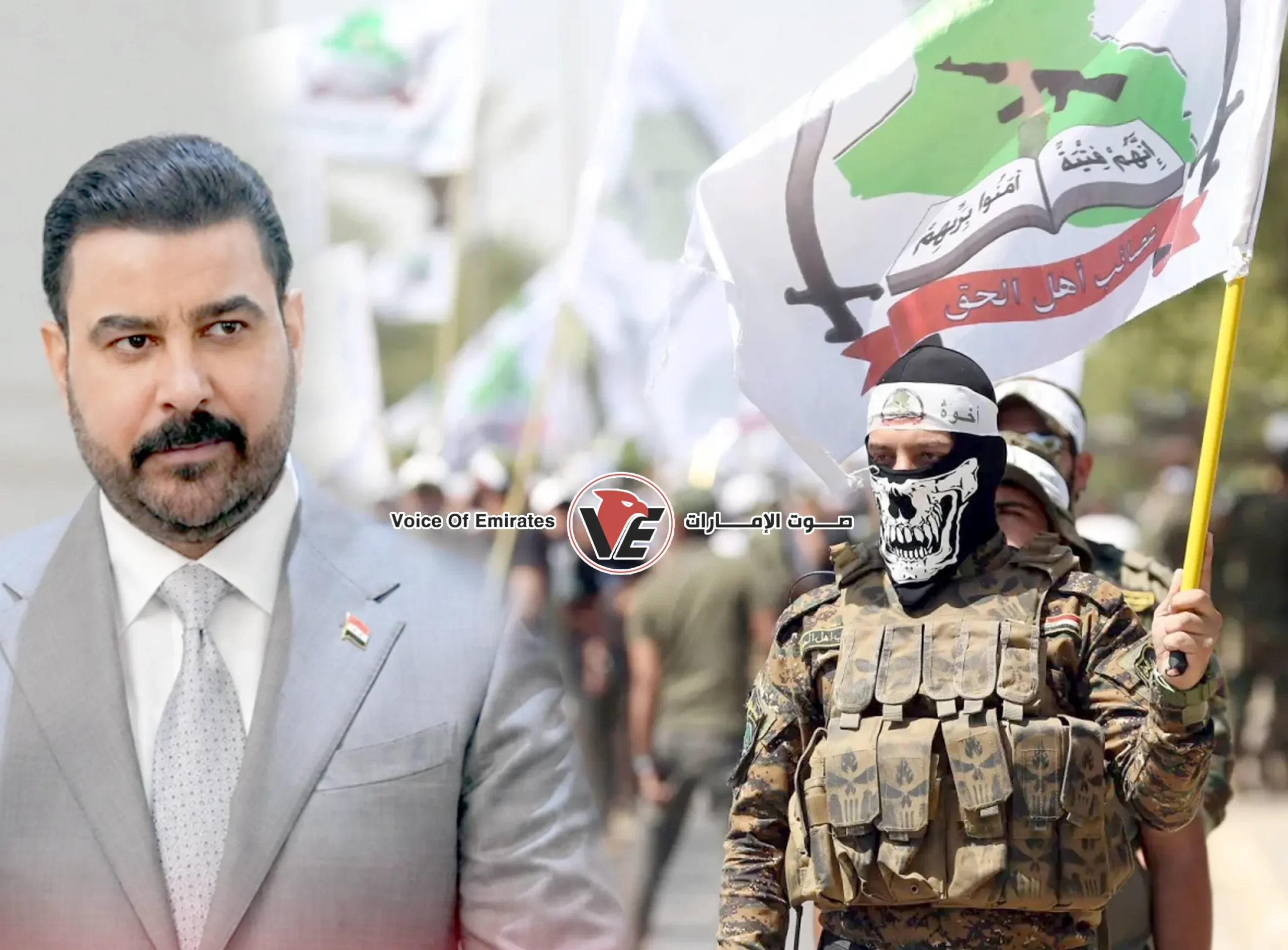
Baghdad, Iraq – Iraqi sources revealed that Prime Minister Ali Faleh al-Zaidi informed several political leaders of his readiness to deal firmly with armed factions that refuse to relinquish their weapons.
He emphasized that continued refusal after the deadline could open the door to confrontation and clashes.
The sources stated that the Iraqi government is intensifying its political efforts to address the issue of weapons outside state institutions.
It is striving to persuade the armed factions to cooperate before the deadline expires, in order to prevent the crisis from escalating from a political to a security confrontation.
Dialogue will remain the first option
The issue of weapons control is one of the most sensitive in Iraq, given the presence of armed factions with significant military capabilities.
Some of these factions are affiliated with the Popular Mobilization Forces (PMF),
while others insist on retaining their weapons, considering them an integral part of the country’s defense system.
The government seeks to enforce the principle of state monopoly on weapons as a cornerstone of political and security stability.
At the same time, it faces increasing pressure to eliminate all armed groups operating outside official institutions.
According to sources, the message conveyed by al-Zaydi to political forces emphasized that dialogue remains the preferred option.
However, the factions’ continued refusal to cooperate after the deadline may compel the government to take more stringent measures.
Fears of opening a new internal front
The prospect of clashes is raising widespread concerns within Iraqi political circles, with fears that any escalation could destabilize the country and open a new internal front.
These concerns are heightened by the intertwined interests of political forces and armed factions.
The government continues its contacts with various parties, aiming to reach an understanding
that ensures the state maintains a monopoly on the use of force without resorting to armed confrontation.
Meanwhile, political forces are anxiously awaiting the outcome of the negotiations as the deadline approaches.
This situation presents the Iraqi government with a difficult test: balancing the need to assert state authority with the need to maintain internal stability.
Any decision to engage in confrontation could have far-reaching political and security repercussions for the Iraqi landscape.