

Fighting fraud: The Cuban man who turned his criminal past into a tool against crime – NBC 6 South Florida
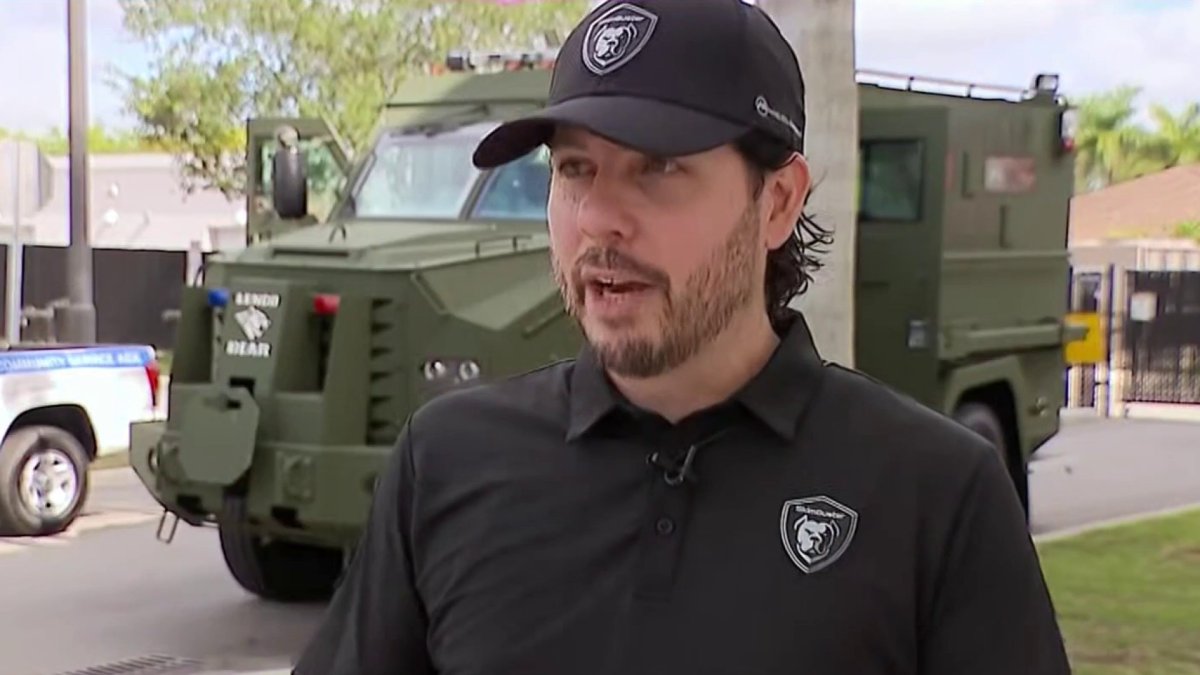
At 16, Michael Pérez began committing crimes. Decades later, the same knowledge he once used to carry out fraud became a tool to help authorities fight it.
Today, the young Cuban works alongside local and federal law enforcement agencies, including the United States Secret Service, to detect so-called skimmers—devices that can steal bank card information in seconds.
But to get here, he first had to face the consequences of his own choices.
“I started my criminal life when I was 16, selling marijuana,” Pérez recalls.
Then came Medicare fraud and a conviction that sent him to prison. After he got out, he opened a phone repair business. He was good with technology, but he was still looking for a way to make quick money.
That’s when someone told him about skimmers.
“Someone I knew told me: if you want to make money, there’s this thing called a skimmer,” he says.
Pérez began making and installing these devices in different parts of the country. With the stolen banking information, he could withdraw cash from ATMs. His operation even reached Hialeah, where he set up a lab to produce cards used in the fraud schemes.
For a while, he managed to stay off law enforcement’s radar.
Until one day, they came straight for him.
“The Secret Service and Miami-Dade showed up at my house and arrested me,” he recalls.
He spent nearly four years in prison. But beyond the sentence, there was another consequence that, he says, hurt even more: disappointing his family.
“I felt ashamed, I got sad because I hurt them… I broke their trust,” he says.
His father-in-law, who was a father figure to him and had spent 18 years as a political prisoner in Cuba, left him with a phrase that would become a kind of compass for his new life:
“A dollar isn’t worth a day in prison.”
And then something unexpected happened.
When Pérez turned himself in, one Secret Service agent saw something that could be more valuable than his punishment: the inside knowledge he had of how fraud works from the inside.
Instead of focusing only on punishing him, the agent предложed he use that experience to educate others.
“I think you can do better if you educate us instead of putting people in jail,” Pérez recalls the agent telling him.
That’s how a second chapter of his life began.
Pérez started traveling around the country to speak with police officers and federal agents. He explained how fraud operations worked, where they hid the devices, how they installed them, and what methods criminals used to avoid getting caught.
The experience he once used to outsmart law enforcement, he began using to help law enforcement.
But Pérez wanted to go one step further.
If he had learned how to hide skimmers, he thought, he could also help create technology to find them.
That’s how Skim Buster was born, a tool designed to make it easier to detect these devices.
The impact, according to agents who have used it, has been significant.
“With what he invented, he’s made our job easier. What used to take an hour to investigate now takes five minutes,” explains Josh, a sergeant with the Hialeah Police Department.
The contrast is hard to ignore.
The man who once devoted his efforts to keeping police from finding his devices now teaches agents exactly how to find them.
“Before, the goal was that the police couldn’t catch what I had. Now it’s: let’s see if I can catch what people are doing like I used to,” Pérez says.
His motivation has changed, too.
He no longer talks about quick money, but about the people who end up paying the price for fraud.
“Now they’re stealing from poor people, and they’re left without food, without anything,” he says.
Pérez isn’t trying to erase his past. He knows it’s part of his story, and that the consequences of his decisions don’t simply disappear.
“I’m never going to feel satisfied, like I erased what I did, because it stays… but I feel better knowing I’m going to help little by little,” he admits.
Maybe that’s why, when he talks about his new life, he uses a word that takes on special meaning after years behind bars: freedom.
“Now I don’t have to worry… I can speak as who I am,” he says. “I feel freer.”
His message to anyone who might feel drawn to easy money is straightforward:
“Don’t let quick money lead you. That money is borrowed. You’re going to have to pay it back with prison—or worse.”
Michael Pérez can’t change the 16-year-old who once decided to take the wrong path. He can’t erase the years he spent in prison either.
But he can decide what to do with what he learned.
And today, he uses what once made him part of the problem to become part of the solution.
Because some redemption stories aren’t about erasing the past, but about building a better future—using what you learned as a tool to do good.
This story was translated from Spanish with the help of a generative artificial intelligence tool. An NBC6 digital editor reviewed the translation.