

Eswatini’s GYAP Wants to Build Digital Opportunity Infrastructure
For young people searching for scholarships, fellowships, internships or international programmes, the problem is often not that opportunities do not exist. It is that finding the right one can require navigating university websites, foundations, government portals, social networks, newsletters and dozens of unrelated databases.
An early-stage technology company from Eswatini believes the bigger opportunity is therefore not to build yet another scholarship directory, but to create digital infrastructure around what happens before and after discovery.
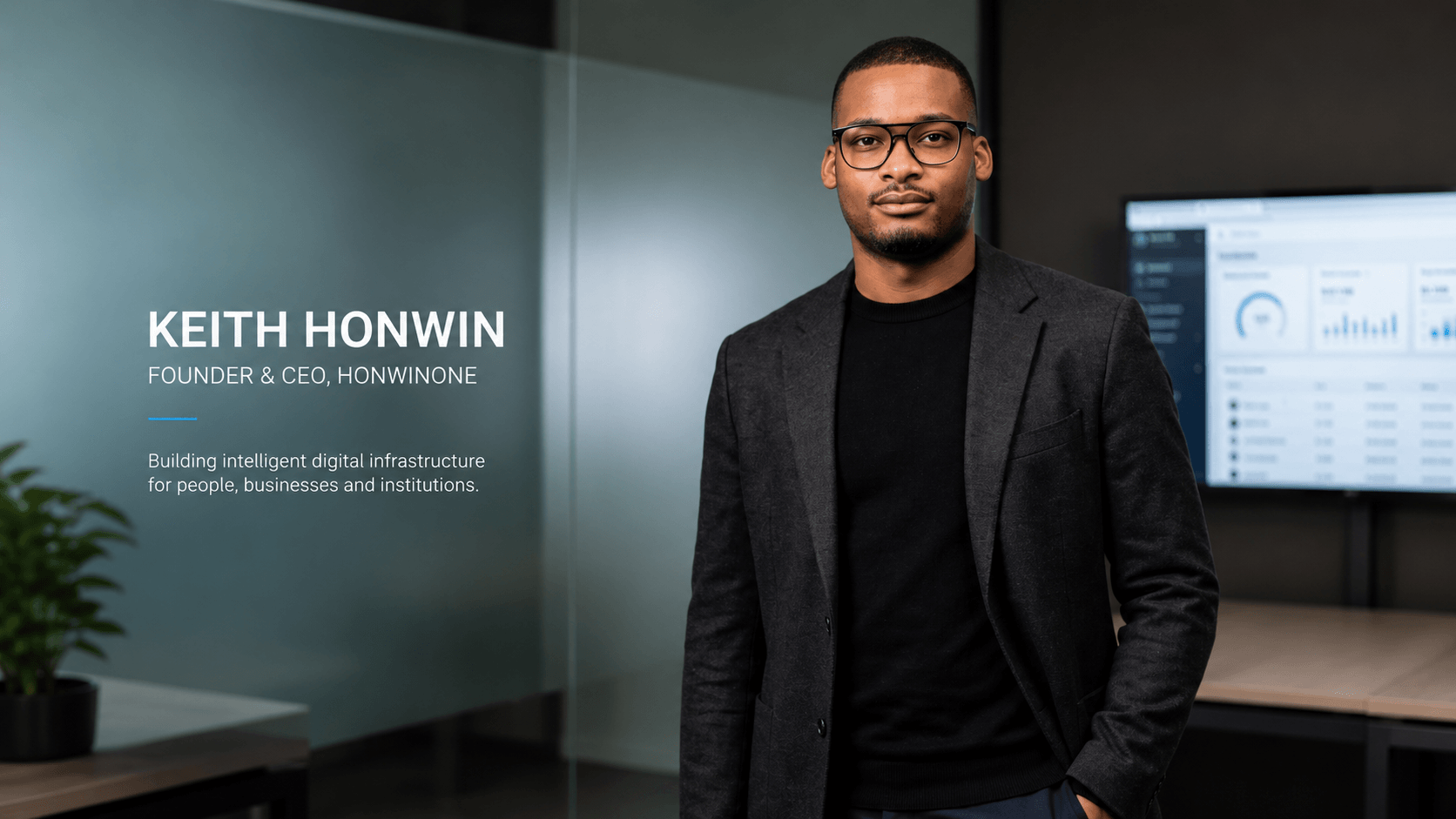
HonwinOne, founded by Eswatini-born entrepreneur Keith Honwin, says GYAP entered its public rollout phase in August 2026. The platform is being developed around a “Digital Passport” intended to connect a user’s background, skills, interests and ambitions with scholarships, fellowships, grants, internships and other development opportunities.[1]
The concept is ambitious. Instead of the conventional model of finding a listing and being redirected elsewhere, HonwinOne wants GYAP eventually to connect discovery with eligibility, preparation, application pathways and longer-term development.
But there is an important qualification: GYAP is still at an early stage. HonwinOne has not provided AfricaBusiness.com with reconciled active-user, application or commercial-traction figures and has specifically asked that historical community participation, test records or demonstration data not be presented as current production metrics.[1]
That makes the more interesting question less about how large GYAP is today and more about whether its model can solve a persistent problem in African digital services: turning scattered information into something a user can actually act on.
From finding an opportunity to understanding what comes next
Traditional opportunity platforms have already made scholarships and fellowships easier to discover. The unresolved problem begins after the link appears.
A student may still need to determine whether nationality restrictions apply, whether a qualification is recognised, which documents are required, whether language testing is necessary, what “fully funded” actually includes and whether preparation needs to begin months before the formal deadline.
HonwinOne’s proposed answer is a persistent user profile rather than a repeated search from zero.
The company describes the intended progression as a loop: profile, context, matching, opportunity, preparation, action, achievement and then a stronger profile that can improve future recommendations.[1]
HonwinOne describes GYAP as being built around a Digital Passport concept connecting user profiles with scholarships, fellowships, grants, internships and other opportunities. Broader functionality described by the company — including deeper application support, progression guidance and institutional integrations — should be understood as a combination of current product direction and future development rather than evidence that every proposed feature has already reached commercial deployment.[1]
That distinction matters because the market is crowded with digital products whose ambition develops faster than their demonstrated adoption. HonwinOne has taken a cautious position on this point, describing GYAP as being in early market activation and commercial validation rather than claiming scale that it cannot yet substantiate.
The Digital Passport is the central business thesis
The Digital Passport is potentially the most important part of the model.
If it works as intended, a young person would not need to repeatedly re-enter the same academic history, interests, qualifications, achievements and career goals every time they search for another programme. Instead, an evolving profile could provide the context for more relevant discovery and, eventually, help institutions identify candidates.
This also changes the potential business model.
HonwinOne says it wants basic opportunity access to remain as open as possible rather than building a model dependent on charging disadvantaged students simply to discover opportunities. The commercial opportunity is therefore expected to sit largely on the institutional side: universities, foundations, employers, NGOs and youth programmes could eventually pay for programme infrastructure, candidate discovery, opportunity distribution, applicant management or institutional dashboards.[1]
That creates the possibility of a two-sided platform — young people looking for pathways on one side and institutions looking for suitable participants on the other.
It also creates a much harder commercial challenge than building a directory. Institutions must trust the data, users must continue returning after registration, opportunity information must remain accurate and the platform ultimately has to demonstrate outcomes that are more valuable than page views.
Honwin describes that challenge directly: “A contained pilot can tell us more about retention and usefulness than a large number of passive registrations.”
AI without creating another gatekeeper
Artificial intelligence is part of the GYAP proposition, but HonwinOne is deliberately cautious about presenting automation itself as the product.
The company sees AI being used for information organisation, profile understanding, opportunity interpretation, matching, personalisation and decision support. That could eventually help users answer a question more useful than simply “What am I eligible for today?” — namely, “What do I need to build over the next six or twelve months to become a credible candidate?”
That approach could be useful for someone who lacks a mentor, an international office or professional networks. But automated matching introduces a different risk: a system designed to expand access can become another invisible filter determining which opportunities a person sees.
HonwinOne says AI should therefore support decisions rather than act as an admissions authority. Recommendations should be explainable, users should be able to correct profile information, official eligibility rules should remain authoritative, and uncertain or sensitive cases may still require human review.[1]
“AI is useful only if it reduces confusion without creating a new opaque gatekeeper,” Honwin told AfricaBusiness.com.
That principle will become increasingly important if the platform moves from recommending opportunities to influencing decisions about preparation, eligibility or candidate discovery.
The access problem does not disappear when the platform goes online
There is also a larger structural problem that no opportunity platform can solve through software alone.
According to the International Telecommunication Union, 63.4% of people in Eswatini were using the internet in 2024, while LTE or WiMAX coverage reached 87% of the population.[2] That is substantial digital reach, but it still leaves a meaningful part of the population outside regular internet use.
The labour-market context makes access to skills and opportunity particularly important. Eswatini’s 2025 Labour Force Survey, conducted by the Government of Eswatini with technical support from the International Labour Organization, put the national unemployment rate at 33.5%. Youth unemployment among people aged 15–24 stood at 26.8%.[3]
A digital platform therefore risks being most useful to precisely the young people who already possess reliable connectivity, confidence navigating online systems, strong language skills and access to academic support.
Honwin acknowledges this explicitly. The company says distribution will eventually have to extend beyond social media into schools, community organisations, NGOs and institutional cohorts, supported by mobile-browser access, guided onboarding, simpler interfaces and, over time, multilingual and low-bandwidth functionality.[1]
That may prove more consequential than the matching algorithm itself. A sophisticated recommendation engine has limited social value if the people facing the greatest information disadvantages never enter the system.
Building from Eswatini rather than a major technology hub
GYAP is also part of a wider experiment: whether a technology company built from one of Africa’s smaller startup ecosystems can design products for markets far beyond its domestic base.
Honwin studied International Relations at ADA University in Azerbaijan and has linked his interest in digital infrastructure to exposure to Azerbaijan’s technology and public-service innovation environment. His background and the development of HonwinOne were reported by Independent News Eswatini following his meeting with King Mswati III during the King’s visit to Azerbaijan in May 2026.[4]
StartupValley subsequently published a FounderTalk interview covering HonwinOne’s wider strategy, including the company’s ambition to develop reusable technology around discovery, identity, transactions and digital services rather than treating each new application as an isolated product.[5]
GYAP is one expression of that thesis. HonwinOne is also developing commerce and service-discovery products, including Pickly, while describing common infrastructure — identity, discovery, context, matching, transactions, verification and action — as the connecting layer between its product areas.[1]
The strategy could provide efficiencies if components can genuinely be reused. It also creates the classic early-stage startup risk of attempting too many things simultaneously.
Honwin acknowledges the danger. The company says each product must ultimately justify itself through its own users, commercial evidence and economics rather than relying on a broad infrastructure narrative.[1]
The harder phase begins after the product is built
The most useful part of the HonwinOne story may therefore be what has not yet happened.
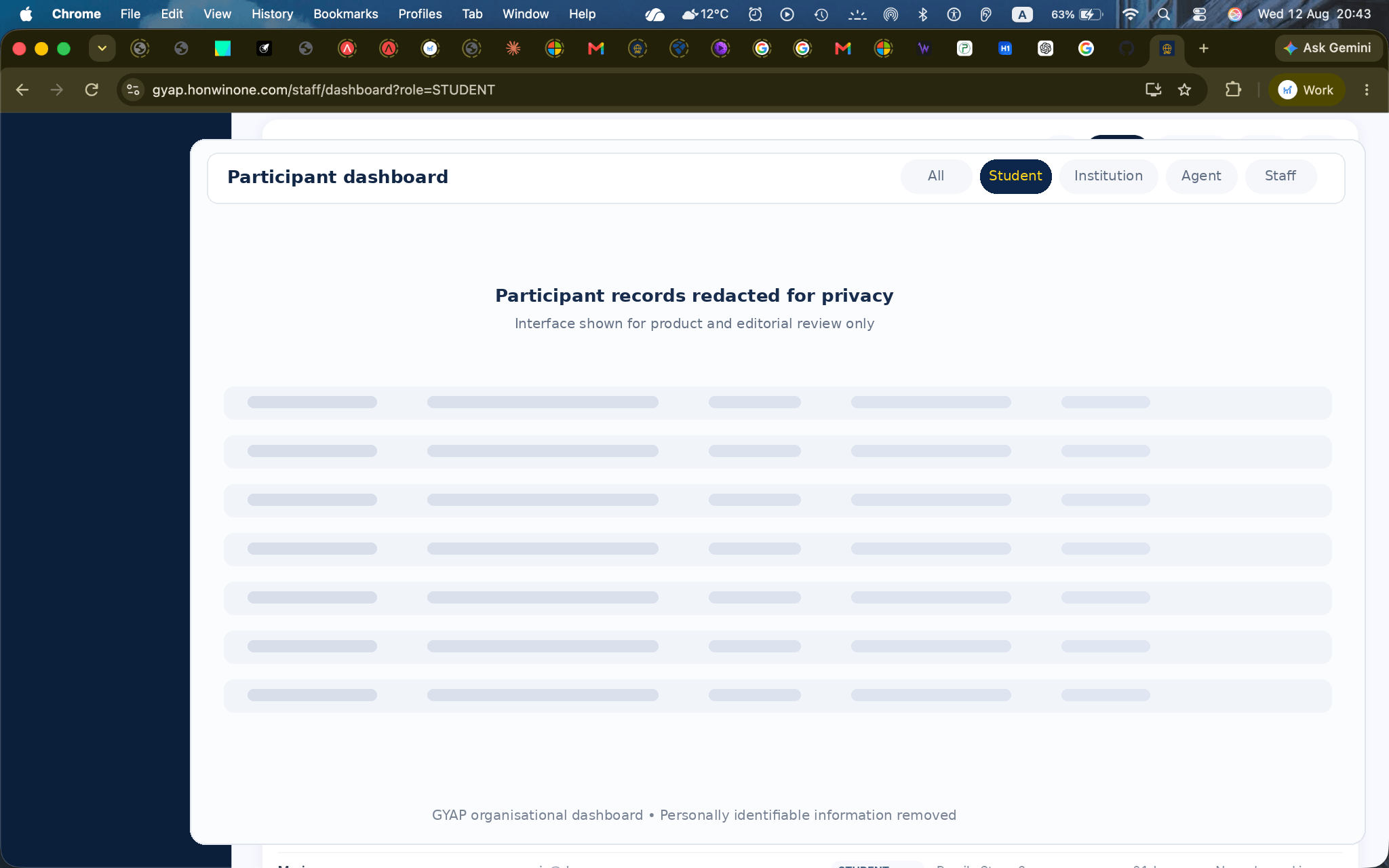
HonwinOne describes GYAP as having entered public rollout, and AfricaBusiness.com has reviewed a privacy-redacted product dashboard supplied by the company. Its founder has a clear thesis about opportunity fragmentation, persistent identity and institutional infrastructure.[1]
What has not yet been demonstrated publicly is repeatable adoption at scale, strong user retention, verified opportunity outcomes, meaningful institutional participation or a proven recurring revenue model.
Those are not minor details. They are the difference between an interesting product and sustainable digital infrastructure.
HonwinOne says it increasingly favours contained pilots and institutional cohorts because they can reveal whether users actually complete profiles, return to the platform, act on recommendations and ultimately secure opportunities.[1]
That is a more credible measurement framework than registrations alone. Over the next several years, the indicators worth watching will be active participants, completed Digital Passports, repeat usage, applications initiated, opportunities secured, institutions retained and revenue generated from demonstrated institutional value.
For investors, institutions and policymakers, those metrics will matter more than the number of opportunities aggregated on a website.
From an opportunity directory to opportunity infrastructure
Africa does not lack websites containing scholarships, courses, jobs and fellowships. The deeper challenge is converting fragmented opportunity into pathways that people can understand, prepare for and use.
GYAP’s attempt to move beyond search toward a persistent Digital Passport and development pathway is therefore worth watching. The model could potentially make opportunity discovery more useful while giving institutions a more structured way to reach candidates.
But the same concept also faces difficult tests around data accuracy, trust, inclusion, algorithmic transparency, institutional adoption and commercial sustainability.
For a company being built from Eswatini, that may be the more significant story. The technical question is no longer simply whether HonwinOne can build and demonstrate a working GYAP interface. It has done that.
The business question is whether it can turn an early-stage product into infrastructure that young people and institutions continue to use because it produces measurable outcomes.
If it can, the value will not come from having built another database of opportunities. It will come from making the journey between discovering an opportunity and being ready to pursue it less fragmented than it is today.
Sources and Information
[1] HonwinOne / Keith Honwin — product materials and written responses to AfricaBusiness.com
Company-supplied written editorial responses provided on 27 August 2026, together with subsequent product materials, a privacy-redacted GYAP dashboard and editorial accuracy notes supplied in September 2026.
[2] International Telecommunication Union — Eswatini Digital Development Dashboard
Connectivity indicators including internet use, mobile broadband and network coverage.
https://datahub.itu.int/data/?e=SWZ
[3] International Labour Organization — Eswatini Labour Force Survey 2025
Latest labour-market results covering employment, unemployment and youth unemployment.
https://www.ilo.org/resource/article/labour-force-survey-2025-shows-modest-improvement-eswatinis-labour-market
[4] Independent News Eswatini — Liswati student in Baku building a platform to serve Eswatini and the world
May 2026 reporting on Keith Honwin’s background, studies in Azerbaijan and development of HonwinOne.
https://independentnews.co.sz/43591/news/liswati-student-in-baku-building-a-platform-to-serve-eswatini-and-the-world/
[5] StartupValley — HonwinOne: How Keith Honwin Builds Global Infrastructure from Eswatini
Published FounderTalk interview covering HonwinOne’s founding story, product strategy and early-stage status.
https://startupvalley.news/uk/honwinone-technology-infrastructure/
Crédito: Link de origem