

EPA Seeks Stronger Rules to Manage Liberia’s Mineral Wealth | News
Liberia’s Environmental Protection Agency (EPA) is calling for stronger environmental governance and regulatory safeguards to ensure that the country’s mineral wealth is developed responsibly and in line with global standards, as pressure mounts on resource-rich countries to balance economic gains with environmental protection.
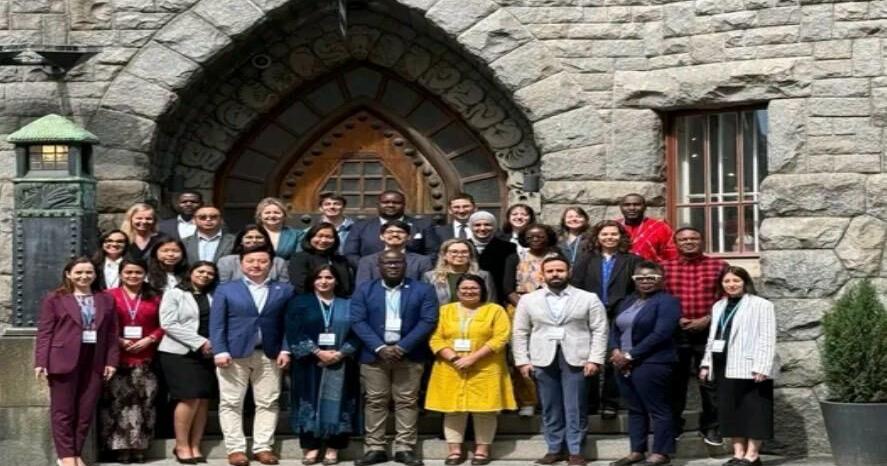
The call comes as Arthur R.M. Becker, Director of the Department of Multilateral Environmental Agreements at the EPA of Liberia, participated in the 20th University of Eastern Finland–United Nations Environment Programme (UNEP) Course on Multilateral Environmental Agreements, held in Helsinki, Finland, from June 9 to 10.
The two-week training brought together 25 delegates from different countries and focused on the growing global demand for critical minerals such as lithium, cobalt, and rare earth elements—resources central to the global clean energy transition but also associated with environmental degradation if poorly managed.
Inside the Helsinki sessions, participants examined the complex balance between accelerating clean energy development and preventing environmental destruction linked to extractive industries.
“The same minerals that cut carbon emissions can scar landscapes, poison watersheds, and destabilize communities if extracted without oversight,” said Dr. Liisa Kallio, Course Director at the University of Eastern Finland. “We cannot solve the climate crisis by creating an environmental one. Governance has to move as fast as demand, or we risk replacing one form of extraction with another.”
For Liberia, which holds deposits of iron ore, gold, and potential rare earth minerals, the discussions carried direct national relevance. The training exposed participants to global best practices in mine-site rehabilitation, fiscal management, and community consent frameworks being implemented in countries such as Chile and Indonesia.
Speaking on Liberia’s engagement, Arthur R.M. Becker emphasized the importance of ensuring that mineral development does not come at the expense of people or the environment.
“Liberia must ensure that our mineral wealth supports development without sacrificing ecosystems or people,” Becker said. “This course gave us tools to strengthen our institutions, tighten compliance with multilateral agreements, and align with global standards before investment scales up.”
The programme also reviewed major international environmental treaties, including the Minamata Convention on Mercury and the Biodiversity Beyond National Jurisdiction Agreement, highlighting how these frameworks intersect with mining and resource governance.
At the closing session, United Nations Environment Programme (UNEP) Executive Director Inger Andersen warned that weak governance could undermine the global energy transition.
“Without enforceable agreements and transparent institutions, the energy transition will repeat the mistakes of past resource booms,” Andersen said. “The difference now is we have the science and the policy frameworks. What we need is political will.”
Experts at the training stressed that resource-rich countries must prioritize strong domestic regulations, active participation in global environmental negotiations, and investment models tied to environmental and social safeguards.
Professor Tuomas Kuokkanen, Professor of International Environmental Law at the University of Eastern Finland, underscored the strategic importance of early regulatory action.
“Critical minerals are not just commodities. They are leverage in a changing climate order,” he said. “Countries that shape the rules early will protect their environment and their economies.”
For Liberia, the implications extend beyond policy discussions to practical reforms within national institutions such as the EPA. Key priorities highlighted during the course include strengthening environmental compliance systems, updating mining regulations, enhancing inspection capacity, and ensuring meaningful community consultation in extractive projects.
Becker noted that the challenge ahead is to translate international discussions into domestic action that can withstand the pressures of increased investment interest in Liberia’s mineral sector.
The training concluded on Tuesday, but officials say the work continues as Liberia prepares to integrate global environmental standards into national permitting, monitoring, and enforcement systems.
As global demand for critical minerals accelerates, the decisions made now will determine whether Liberia’s natural resources become a driver of sustainable development or a source of environmental and social tension.
Credit: Source link