

CNDH Raises Rights Concerns Over Morocco, Spain Handling of Ceuta Crossings
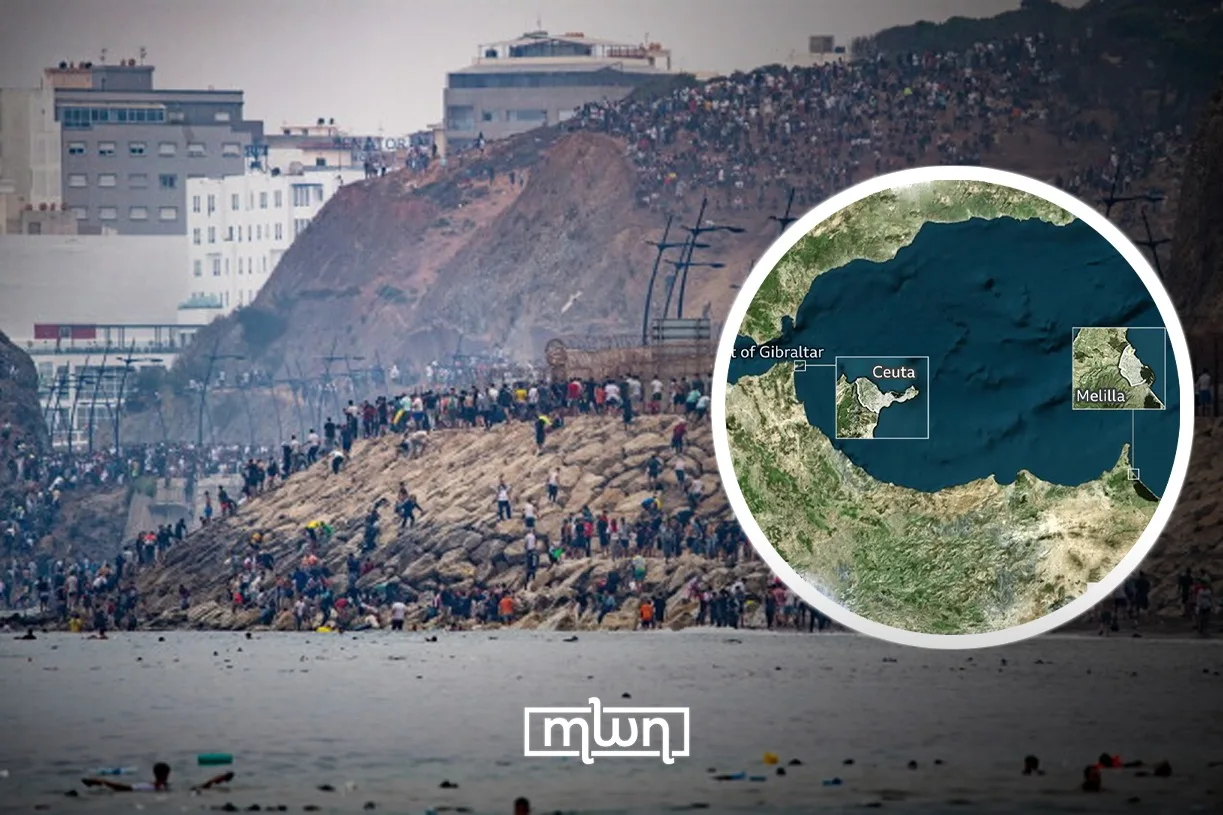
Rabat – Morocco’s National Human Rights Council (CNDH) has raised concerns over the treatment of people attempting to cross into the Spanish-occupied enclave of Ceuta, pointing to alleged rights violations involving both Moroccan and Spanish authorities during the mass crossings at the end of July.
In preliminary findings released Thursday, the council said it had documented several incidents that raised concerns about respect for human rights during the crossings, including restrictions on movement, the use of force, and the treatment of people after they reached Ceuta.
The CNDH said Moroccan authorities imposed restrictions on the movement of large numbers of young people heading toward northern Morocco as mass attempts to reach Ceuta increased. It also raised concerns over whether the use of force by Moroccan authorities complied with the principles of necessity and proportionality.
The council also documented violent confrontations between young people and Moroccan security forces as authorities attempted to prevent crossings. According to the CNDH, the clashes resulted in injuries among both civilians and members of the security forces, while some public and private property was damaged.
“The council documented cases in which the physical safety of people attempting to cross was compromised by Spanish and Moroccan authorities, while cases were also recorded in which the physical safety of Moroccan security forces was compromised,” the statement said.
Rights concerns in Ceuta
The council also criticized the treatment of people who reached Ceuta. It said it documented cases in which people were allegedly subjected to physical attacks and mistreatment, including by extremist groups inside Ceuta. The CNDH said its field teams observed marks and injuries on the bodies of some young people who returned from Ceuta.
The council also said it received several testimonies alleging mistreatment and attacks by Spanish public security forces. It noted that some people said the alleged incidents took place “in places not covered by cameras.”
The CNDH also said local authorities in Ceuta had failed to provide adequate assistance to people who had crossed.
According to the council, local authorities decided on the closure of shops, cafes, and restaurants, leaving thousands without access to food and water for two days. It said this included children, women, and other vulnerable people. The council described the situation as a deprivation of their right to water and food.
“According to multiple testimonies, security personnel intervened to remove young people from restaurants that had decided to provide assistance to some of those individuals,” CNDH said.
It also said people who entered Ceuta were exposed to racist and xenophobic attacks and that adequate protection and assistance were not provided.
Conflicting death tolls
The rights body also highlighted the sharp discrepancy between Moroccan and Spanish figures for deaths linked to the crossings.
As of August 6, Moroccan data cited by the CNDH put the death toll at 14, while authorities in Ceuta reported 80 deaths. The council called for a joint mechanism to establish the actual number of people who died and to identify the bodies so they can be returned to their families.
The CNDH said its assessment remains preliminary and that it will continue gathering information before potentially issuing a more detailed report.
It concluded that the events raised “serious concerns” over the protection of human rights during the mass crossings and said it had documented cases affecting the physical safety of people attempting to cross involving both Moroccan and Spanish authorities.
Credit: Source link