

China Deepens Capacity-Building Partnership with Liberia | News
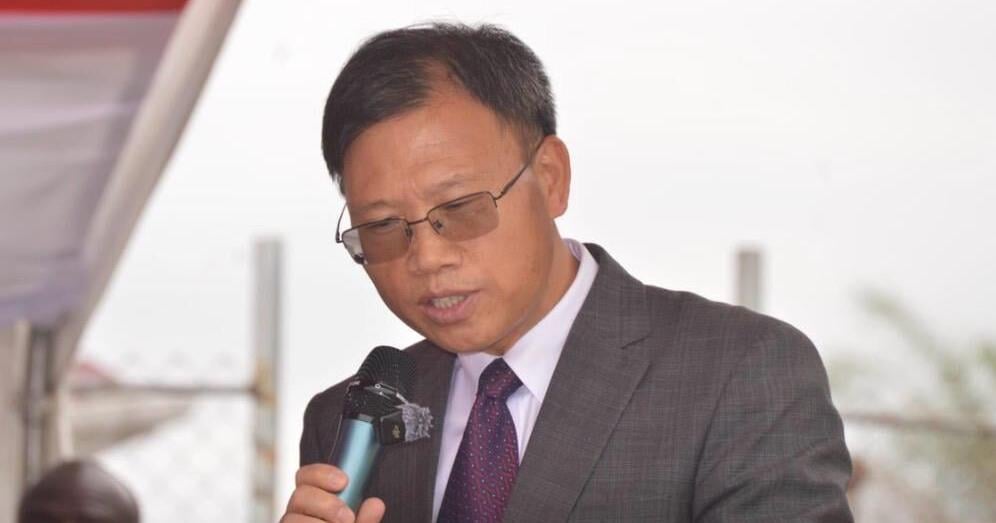
The People’s Republic of China has announced that more than 450 Liberians will benefit from specialized training and professional development programs in 2026—a 25 percent increase over the previous year.
The announcement, made by Chinese Ambassador Yin Chengwu during a reception at the Chinese Embassy in Monrovia for returning and prospective trainees, underscores Beijing’s increasing emphasis on strengthening Liberia’s institutional and technical capacity through knowledge transfer rather than infrastructure financing alone.
The reception brought together senior government officials, including Unity Party National Chairman Dr. J. Luther Tarpeh, Deputy Foreign Minister Dr. Ibrahim Nyei, former trainees, development partners, and members of the diplomatic community.
Where shortages of skilled professionals continue to constrain development across sectors ranging from agriculture and healthcare to diplomacy, technology and public administration, the expansion of China’s human resource development program represents more than another bilateral cooperation initiative. It reflects an effort to address one of the country’s most persistent development challenges—the shortage of technical expertise needed to implement national development priorities.
Speaking during the ceremony, Ambassador Yin described human resource development as one of the pillars of China’s international development cooperation.
He explained that unlike conventional aid programs that often emphasize physical infrastructure, China’s training initiatives seek to empower partner countries by strengthening their own human capacity.
“This is about equipping people with knowledge and practical skills that they can use to contribute to sustainable development,” Ambassador Yin said.
According to the Ambassador, the programs have been specifically tailored to support Liberia’s ARREST Agenda for Inclusive Development (AAID) and cover a broad range of strategic sectors, including diplomacy and international relations, agriculture and food security, public health, education, political party governance, and poverty reduction. Others are media and communications, fiscal regulation, artificial intelligence, environmental protection, and women’s entrepreneurship. The rest are wetland conservation, infant nutrition, and e-commerce.
The diversity of the training reflects an understanding that national development depends not only on engineers and economists but also on competent administrators, policy makers, educators, health professionals and digital innovators.
China has become one of Liberia’s largest bilateral development partners over the past two decades.
Its assistance has traditionally been associated with high-profile infrastructure projects, including roads, government buildings, educational facilities and healthcare investments.
Increasingly, however, Beijing appears to be complementing those physical investments with investments in people.
Development economists often argue that infrastructure without skilled professionals limits long-term growth. Roads require engineers. Hospitals require trained doctors and nurses. Digital transformation requires software specialists and cybersecurity professionals. Public institutions require capable administrators.
Without adequate human capital, physical infrastructure alone cannot generate sustained economic transformation.
The expansion of China’s training initiative therefore suggests recognition that developing countries require both physical infrastructure and skilled professionals if development gains are to become sustainable.
Liberia has historically struggled with shortages of specialized professionals.
Years of civil conflict significantly weakened educational institutions and disrupted the country’s professional pipeline.
Although considerable progress has been made since the end of the conflict, skills shortages remain evident across many sectors.
Government ministries continue to face shortages of technical experts capable of designing and implementing complex public policies.
Healthcare institutions require additional specialists.
Agriculture demands modern extension services.
The financial sector increasingly needs professionals skilled in digital finance and regulation.
Meanwhile, emerging technologies such as artificial intelligence and e-commerce are creating entirely new demands for expertise.
Ambassador Yin indicated that the latest training opportunities were intentionally designed around these evolving national needs rather than generic academic exchanges.
He encouraged trainees to apply newly acquired knowledge within their workplaces, institutions and communities.
“Knowledge must translate into impact,” he suggested, urging participants to strengthen public institutions and contribute to national development.
He further encouraged returning participants to share their experiences with colleagues and prospective trainees, thereby multiplying the benefits beyond individual beneficiaries.
Beyond technical skills, Ambassador Yin described the initiative as an important instrument for strengthening people-to-people diplomacy.
Participants, he argued, serve not only as professionals but also as ambassadors of friendship between Liberia and China.
Through exposure to Chinese society, governance systems and development experience, trainees gain deeper appreciation of another culture while Chinese institutions likewise develop stronger understanding of Liberia.
The Ambassador noted that 2026 has been designated the China-Africa Year of People-to-People Exchanges, making educational cooperation particularly significant this year.
Such exchanges have increasingly become a cornerstone of China’s engagement with African countries.
Credit: Source link