

Brazil Marks Independence Day at 204 Years Amid Tightest Election in a Generation: Key Numbers to Know
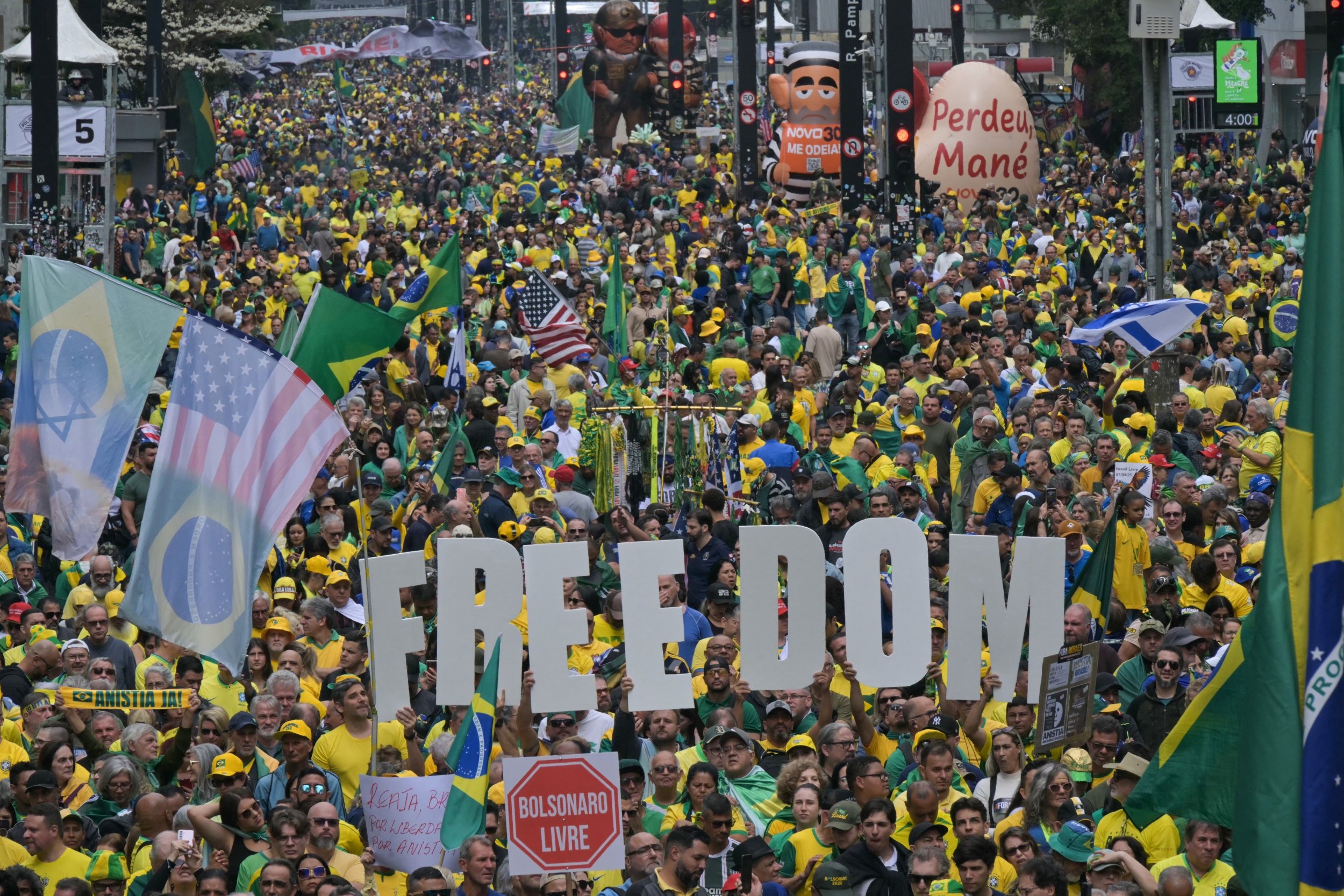
Photo by NELSON ALMEIDA / AFP) (Photo by NELSON ALMEIDA/AFP via Getty Images-
Brazil marks 204 years of independence today, but this year the flag-waving is competing for attention with a presidential race that, for the first time in the campaign, has flipped in the challenger’s favor. As Brasília readies its annual military parade, a survey published just four days ago showed Senator Flávio Bolsonaro numerically ahead of President Lula in a head-to-head matchup — a shift that arrived right after the central bank’s own numbers on rates and growth had already set the economic backdrop for October’s vote.
Key Takeaways
- A PoderData/Aya survey released September 3 put Flávio Bolsonaro at 45% against President Lula’s 44% in a simulated runoff — the first time in the campaign that Bolsonaro’s son has moved ahead, though a same-day Datafolha poll still gave Lula the edge, 46% to 44%.
- Brazil celebrates its 204th Independence Day on Monday, September 7, with the flagship civic-military parade expected to draw a large crowd to Brasília’s Esplanada dos Ministérios, a tradition the capital has hosted since 1960.
- Brazil’s central bank cut its benchmark Selic rate a fourth straight time on August 5, bringing it to 14.00%, even as second-quarter GDP beat forecasts with 0.5% growth.
- Brazil opens the United Nations’ 81st General Assembly session on September 8 and is set to deliver the first address of the general debate on September 22, continuing a speaking-order custom that traces back to the late 1940s.
A Peaceful Break From an Empire
Portugal’s hold on Brazil didn’t end with years of armed rebellion, as happened across most of Spanish America. It ended with one declaration beside a stream known as the Ipiranga, near São Paulo. There, on September 7, 1822, Prince Pedro cut ties with Lisbon in what is remembered as the Grito do Ipiranga, or Cry of Ipiranga. Lisbon didn’t accept the split on paper until three years later, through the 1825 Treaty of Rio de Janeiro. Pedro took the throne as Brazil’s first emperor, and the country stayed the only monarchy in the Americas until the republic replaced it in 1889 — a far calmer handover than most of its neighbors managed.
None of that history got much airtime this year. Politics did.

by Evaristo SA / AFP via Getty Images
A Historic First Complicates Lula’s Fourth Bid
Lula opened his campaign for an unprecedented fourth presidential term at a Workers’ Party gathering in São Paulo on August 2, casting the election as a fight for Brazilian sovereignty against tariff pressure from Washington. His opponent shares a well-known last name: Flávio Bolsonaro, a senator and the eldest son of the former president, has become the right’s standard-bearer now that his father is barred from running.
The elder Bolsonaro isn’t just barred — he’s imprisoned. Brazil’s Supreme Court convicted him of orchestrating a coup attempt after his 2022 defeat and ordered him to serve more than 27 years; he began that sentence at federal police headquarters in Brasília in late November 2025. He addressed his son’s campaign launch only by phone.
The runoff simulation has gone from a comfortable Lula lead to a genuine coin flip. A Quaest poll for Globo published September 2 had Lula at 42% to Bolsonaro’s 41% — a gap already inside the margin of error and down from a three-point Lula lead two weeks before. Then, on September 3, the PoderData/Aya survey found Bolsonaro numerically ahead for the first time since May, 45% to 44%, though Datafolha’s same-day poll kept Lula on top, 46% to 44%. Both differences sit inside their respective margins of error, but the direction of travel — a race Lula led comfortably in the spring now trading the lead back and forth week to week — is itself the story heading into the October 4 first round. Psychiatrist and author Augusto Cury has also emerged as a notable third option, polling near 10% in first-round scenarios, ahead of Minas Gerais Governor Romeu Zema and Goiás Governor Ronaldo Caiado, who round out the major candidates.
The Economy Lula Is Running On
Lula’s argument to voters leans on what Brazil’s statistics agency has been reporting. IBGE clocked 0.5% quarter-on-quarter GDP growth for April through June, ahead of the 0.4% median forecast, with agriculture — up 2.8% in the quarter — doing most of the lifting while household spending actually fell. Annual growth came in at 2%.
That resilience hasn’t stopped the central bank from keeping money expensive. Copom, the bank’s rate-setting committee, trimmed borrowing costs a quarter point at its August 5 meeting, marking a fourth straight reduction that left the benchmark at 14.00% — not a pause, as the timing might suggest, but continued easing from a 15% peak reached in 2025. Policymakers left the door open for either another cut or a hold in September. Meanwhile, the central bank’s own Focus survey of economists has inflation for 2026 hovering just above 5%, well past the official 3% target, and has trimmed 2026 growth expectations toward 2%. Gross public debt was on track to approach 82% of GDP in the government’s July figures, a number investors are watching closely as the election nears, while the same weekly survey has the real ending the year near R$5.20 to the dollar.
Brazil’s September on the World Stage
Independence Day this year falls a day before Brazil resumes a diplomatic ritual older than its current constitution. The UN’s General Assembly begins its 81st session in New York on September 8, and Brazil is again positioned to give the first address when the general debate begins September 22. The custom’s origin story, as often told, traces to 1947, when a Brazilian diplomat is said to have volunteered to open proceedings rather than let the question of who spoke first stall the assembly — though the United Nations’ own documentation dates the unbroken run of Brazil-first, U.S.-second openings to the 1955 session.
September also holds two globally observed dates that bookend Brazil’s own calendar this year: International Literacy Day on September 8, marking a UNESCO campaign against illiteracy that dates to 1967, and the International Day of Democracy on September 15, established by the UN in 2007 — both falling in the same month Brazilians will settle on their next president.
© {{Year}} Latin Times. All rights reserved. Do not reproduce without permission.