

Bomb tests and dead scorpions: New evidence exposes Al Burhan forces’ chemical programme in Sudan
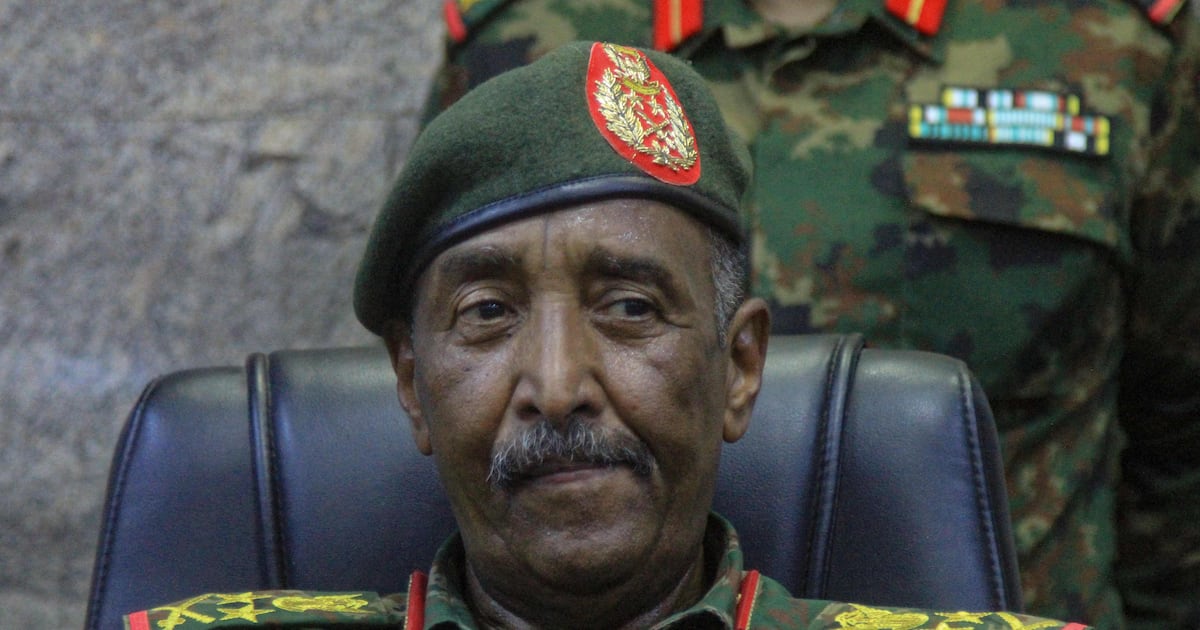
The Sudanese Armed Forces (SAF), led by sanctioned General Abdel Fattah Al Burhan, not only used chemical weapons in the devastating war but also built a secret stockpile that it later sought to conceal, new evidence has revealed.
A dossier of evidence published by The New York Times and The Washington Post details how the SAF tested bombs in Sudan’s desert and built up its chemical weapons operation piece by piece before attempting to cover its tracks.
The dossier, which includes videos and photographs and other evidence, provides the most detailed account yet of the secret operation that led the US to sanction SAF-aligned authorities, including last July.
The war that erupted in April 2023 over the country’s future after the overthrow of a civilian government has killed tens of thousands of people, displaced millions, and created one of the world’s largest humanitarian crises, with an estimated 20 million people suffering from hunger.
Yet, Gen Al Burhan has vowed to continue fighting until the RSF are defeated, rejecting repeated attempts by the US and regional powers to broker a ceasefire. Both forces have been accused of grave abuse during the war.
The new dossier contains bomb blueprints, details of an apparent effort to cover up the project after its discovery by the US, and a suggestion that some of the chlorine used to make the bombs was sourced at a civilian water treatment centre that received the chemical from international aid groups.
Many of the nearly 150 documents, images, videos, and voice notes, as well as several thousand text messages, obtained from sources that requested anonymity, appear to come from the cellphones of senior Sudanese officers.
Voice and text messages involving Gen Al Burhan suggest he had direct knowledge of the alleged chemical weapons effort — a key factor in the US decision to sanction him in January 2025, The New York Times wrote.
It added that some of the visuals included in the dossier were shared with US intelligence and were used by American officials in January 2025 to assess whether Sudan had chemical weapons, according to two foreign officials and a former US official.
Building the programme
The Washington Post said the images and documents, which have not been previously reported, go well beyond the limited information made available by the US government when it imposed economic sanctions on Sudan following a pair of suspected chlorine gas attacks in September 2024.
“In vetting the files, The Post consulted more than two dozen Western intelligence officials, chemical weapons inspectors and experts at human rights organisations. All described the material as credible evidence of a chemical weapons program but emphasised that a conclusive assessment would require access to suspected weapons sites and witnesses,” it added.
One video appears to show a makeshift system for filling munitions with liquefied chlorine from large storage cylinders, while other images show a conveyor-like bomb rack fitted inside a Sudanese Air Force Antonov An-32 to drop bombs through its cargo door, according to the two reports.
The dossier suggests Sudan’s military developed a chlorine weapons programme in 2024 as it struggled to dislodge the RSF from Khartoum. A military commander, Brig Gen Tariq Hussain, led the project, designing munitions combining explosives with about 15kg of chlorine gas, which could kill through shrapnel or poisoning while the blast helped destroy chemical traces.
The military reportedly tested the weapons in Sudan’s desert in July 2024 and then expanded production despite repeated chlorine leaks, including one incident in which insects and scorpions were found dead inside a hangar. Chlorine was allegedly sourced from a water-treatment plant in Omdurman that had received supplies from international aid organisations for civilian purposes.
“In one video, the hum of an approaching aircraft can be heard before projectiles strike the sand, sending up tall plumes of yellow vapor — a color associated with chlorine, experts said. Unseen observers can be heard cheering the explosions,” said The Washington Post‘s report.
By October 2024, the military commander claimed nearly 300 chemical munitions had been produced, with most stored at Merowe airport in the north. The dossier also points to alleged chemical attacks, including at the RSF-controlled Al Jaili oil refinery in September 2024.
After the US sanctioned Sudan in May 2025 over chemical weapons use, intercepted communications cited in the dossier indicate Gen Al Burhan ordered Mr Hussain to “remove all traces” of the programme.
Yet Mr Hussain was later reportedly included among advisers to a Sudanese committee investigating the US allegations. The committee subsequently said it had found no evidence of chemical weapons.
Mounting pressure
Gen Al Burhan, who is scheduled to address the UN General Assembly on behalf of Sudan later this month, has sought to portray himself as the country’s legitimate leader despite opposition from civilian political forces, many of which insist that neither he nor the RSF leadership should have a role in a future civilian government.
The latest evidence that his forces built a secret chemical weapons programme adds to Gen Al Burhan’s recent troubles, after several of his generals acknowledged co-ordinating with Islamist fighters and seeking to include them in future rule, drawing criticism from the UN, the US and others.
Reports have also pointed to his forces’ collaboration with Yemen’s Houthi rebels to smuggle weapons components. Last September, Moammar Eryani, Yemen’s Minister of Information, accused Houthi rebels of manufacturing chemical weapons from smuggled components. He said that his assessment was based on recent intelligence from several sources, marking the first direct accusation of its kind from a Yemeni government official.
They also come after a UN fact-finding report this week said that the SAF used foreign-supplied drones in operations that harmed civilians. While it repeated accusations that external players have supported the RSF by facilitating weapons transfers, the report cast a harsher light on Gen Al Burhan’s actions.
The Independent International Fact-Finding Mission for Sudan, established by the UN Human Rights Council, said that “available evidence indicates that, since late 2023, the Sudanese Armed Forces has significantly expanded its drone capabilities through foreign-supplied systems”.
Hours after the report was released, the US said it was stepping up pressure for a UN arms embargo covering all of Sudan, adding that cutting off weapons and foreign support to the country’s warring parties is essential to ending the war.
Michael Waltz, the US ambassador to the UN, and Massad Boulos, senior adviser to President Donald Trump for Arab and African affairs, made the case for the measure in an opinion piece published on Thursday in Foreign Policy, saying the Security Council has an opportunity to curb the flow of weapons that has helped sustain Sudan’s civil war.
The US last month submitted a draft UN Security Council resolution seeking to expand an existing UN arms embargo on Darfur to cover the entire country, and explicitly include drones and related systems and technology. The proposal has faced opposition from Sudan’s SAF-backed government.
Credit: Source link