

A Million Falcons Went Missing From Eastern Europe. Here’s How They Were Found
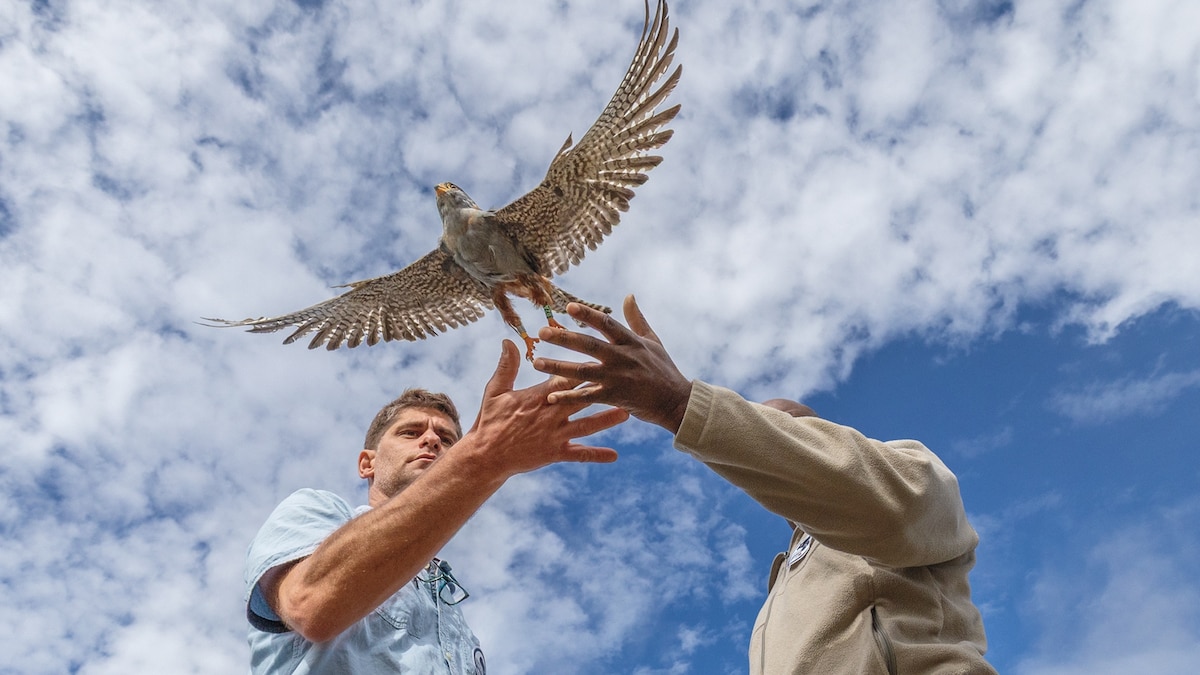
Palatitz hopes to use GPS data from tagged falcons to study their hunting behavior and migration patterns.
Conversely, Falcopolis’s small size also means that a small number of communities will determine the birds’ fate, and that Palatitz’s team knows where to concentrate its efforts. Agostinho, who coordinates with national authorities and now leads a conservation nonprofit called Orbis Angola, has been raising awareness about the falcons at surrounding schools and churches, and with the local soba—influential traditional leaders. The teams have set up a research camp to document the locals’ knowledge about the birds and enlist their help with banding and conservation measures. They’re also talking with donors about supplying people with gas stoves or solar cookers to reduce their need for firewood.
Meanwhile, news of Falcopolis is spreading quickly. At a recent conference, Angola’s president described it as a national treasure. The Ministry of the Environment went to the site, marking the first high-level governmental visit to the area in decades. A six-foot-tall falcon statue now stands in the main square of the nearest municipality, Mungo. And Palatitz’s team has started bringing international volunteers to Falcopolis, where Agostinho is training locals to guide future tourists.
These efforts are already paying off. When Agostinho first visited Mungo, he found falcons on sale in the market. “That’s gone completely,” he says. Perhaps more important, locals are increasingly venturing out of their homes at night to see the birds for themselves. And as they become invested, they’re coming up with their own ways of protecting the birds.
Earlier this year, five 12-year-old boys told Agostinho that they had formed a soccer team, the Mungo Falcons. They would use their matches as opportunities to educate similarly aged kids—the demographic most likely to hunt the birds—about protecting the raptors. They’d play for the falcons; they just needed a ball. So Agostinho bought this new generation of ambassadors their first one.
Red-footed falcons, like other spectacular migrants, show how connected our planet is—and needs to be. Their success depends on wild resources as disparate as rook nests in Europe and termite swarms in Africa. And their future will hinge upon equally far-flung feats of human grace, from nest boxes in Hungary to soccer balls in Angola.
Credit: Source link