

Zimbabwe’s constitutional debates: Lessons from Mugabe, Nkomo and Tsvangirai
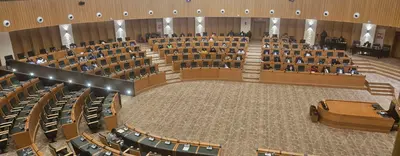
Once again, Zimbabwe is debating how leaders should win, keep and hand over power. Zimbabwe, through the ruling party, Zanu-PF, is proposing constitutional amendments that would extend presidential and parliamentary terms from five to seven years and remove direct presidential elections.
Simply put, ordinary citizens would no longer directly elect the president. The selection of the president would be done on their behalf by members of parliament. These changes are more than legal amendments. They also touch the heart of political power.
The changes raise a bigger question: why do leaders and ruling parties often struggle to let go of power? Looking at the lives of Robert Mugabe, Joshua Nkomo, and Morgan Tsvangirai can help answer this question. Their lives show that fear, ambition, identity and unresolved or unfinished personal struggles can shape national politics.
What leadership psychology helps us see
Studying a leader’s life through a psychological lens is sometimes called a psychobiography. In simple terms, this means looking at how a person’s life story, fears and experiences shape their leadership. In Mugabe’s case, it seems that fears and anxieties about becoming irrelevant marked his late-life politics. It matters today because these proposed amendments seem to protect the president from uncertainty.
The Constitution stops looking like a shield for citizens when rules are changed to make it easier for those already in power to remain in control. Instead, it begins to look like a safety net for leaders. Think of a long-serving chief executive who keeps changing company rules so that retirement never comes. The company may survive or collapse but either way, fresh ideas are blocked.
In Nkomo’s case, there is a different lesson. Many people remember him as a leader who believed in dialogue and compromise and as a unifier. These qualities matter because no country can build peace without them.
However, compromising when the other side does not see politics as a conversation but as a battlefield is risky. Nkomo’s story shows that goodwill is not enough when one side controls the rules. It is like a football match where one team controls the referee, the rulebook and the stadium gates. In that situation, fair play is impossible.
This matters because it is also the opposition’s challenge today. More often than not, the opposition has underestimated Zanu-PF’s ability to survive through the use of law, institutions and procedures.
The opposition also remains fragmented. Yes, different groups are opposing the amendments. But they are not speaking with one voice or acting with one strategy. The ruling party is therefore exploiting these vulnerabilities and outmanoeuvring critics.
Tsvangirai’s life offers a third lesson. His leadership was shaped by service, courage and a strong desire for a more inclusive Zimbabwe. Many Zimbabweans saw him as a servant and moral leader, speaking to the suffering of ordinary people. He, however, operated in a militarised, factional and resistant-to-change system. His life shows that moral courage is important but it must be supported by strategy, organisation and institutions.
What this means for the current debate
First, the constitutional amendments are more than a technical reform. They are also about succession. Succession is about who takes over when a leader leaves office. In many political parties, this is a normal process.
In Zimbabwe, it often becomes a source of fear. Leaders may worry about losing influence, protection, wealth or historical status. When those fears are not dealt with openly, they can be written into the Constitution itself. The changes will make it easier for the ruling party to hold onto power and elect the candidate it wants as president.
Secondly, these amendments may heighten factional tensions within Zanu-PF. The passing of the amendments will not remove succession politics but will intensify it, as some factions may feel excluded and forced to compete aggressively.
History shows that when people are unable to compete for power through official channels, they often resort to unconstitutional methods.
Thirdly, the opposition and civil society should not only respond to the political amendments themselves. They also need to understand the underlying psychological motives driving these amendments. These may include fear of losing identity and power, concerns about legacy and insecurity and anxiety about succession.
These are powerful emotions that can shape the country’s trajectory. Failure to recognise them may cause citizens to treat the amendments as ordinary legal changes when they are really part of a deeper struggle over identity and survival.
Where should Zimbabwe go from here?
History has shown that Zimbabwe needs leaders who can imagine life after office. Many people retire and find new purpose in different roles, such as grandparents, mentors and community builders. Politicians should be no different. Public office should be a time of service, not a permanent identity.
When leaders cannot separate themselves from power, they may bend institutions to protect themselves. That is dangerous for citizens and the country’s future. The Constitution should not become a hiding place for leaders’ fears and anxieties. It should protect ordinary people, limit power and make peaceful change possible.
The lives of Mugabe, Nkomo and Tsvangirai offer a mirror. They show the cost of fear, the limits of compromise and the importance of courage. The question now is whether Zimbabweans will look into that mirror and choose to break the pattern.
Tinashe Harry is a senior lecturer and psychologist in the Department of Psychology at Wits University, with research interests in the study of lives through psychological lenses.
Credit: Source link