

Floods forced Zimbabwean women to leave their homes. They rebuilt their lives but here’s what they still need
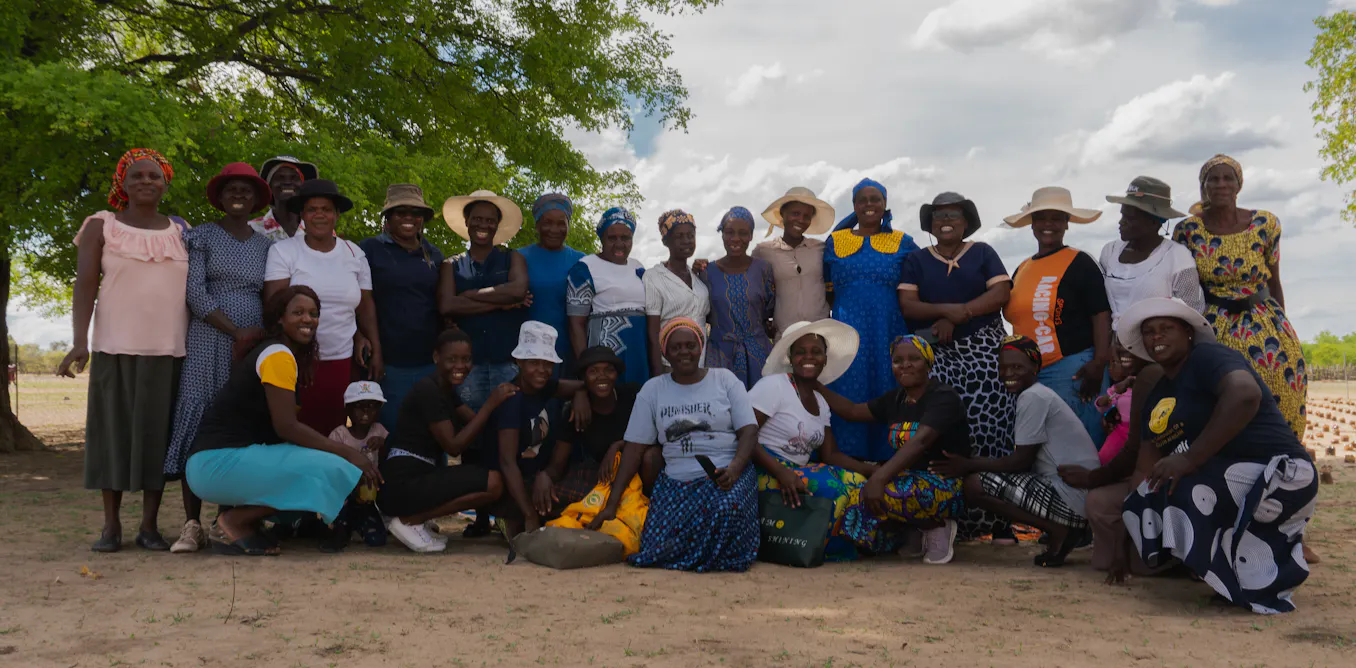
Tsholotsho, in western Zimbabwe’s Matabeleland North province, is a remote rural district where families depend on small-scale farming in a harsh landscape marked by recurring droughts and seasonal floods.
Courtesy Thea Kirstine Synnestvedt.
In 2017, Cyclone Dineo hit southern Africa, killing more than 250 people in Zimbabwe and several in Mozambique, destroying over 20,000 homes and sparking floods in Botswana and a wave of cholera cases in Mozambique and Malawi.
In Tsholotsho, the cyclone caused the area’s Gwayi River to burst its banks, washing away homes, fields and belongings. Around 300 households were forced to relocate to a neighbouring area.
As researchers in climate mobility, displacement and gender, we wanted to find out how women experienced being made to move because of this climate disaster. Together with our co-author Giulia Caroli, we asked: how do women rebuild their lives after flooding forces them from their homes?
Women smallholder farmers in Zimbabwe might lose their homes, farmland and livelihoods but they still need to look after their families in the aftermath of disaster.
Read more:
Climate change is hitting women the hardest. What to do about it – economists
We were particularly interested in how women adjusted to the loss of homes and livelihoods, and how they managed the challenges of securing food, water, income and safety while continuing to provide care.
We interviewed 18 displaced women to document their losses, coping strategies and resilience. Our aim is to use the insights and knowledge provided by this group to inform and shape policies that offer much better support to women affected by climate shocks.
Our research found that climate-induced shocks are forcing people to move within their own country. The disruption to their lives is not the same for everyone. Our study found that in rural Zimbabwe, women are most exposed, compared with men, when floods or droughts disrupt everyday life, because they are the primary caregivers and providers of food, water and household resources.

Saviour Kasukuwere/Twitter
Climate disasters, and losing everything, make it harder for women to support their families and can put them at greater risk of violence and other forms of harm.
Yet, their experiences are not only about hardship. Our research found that women
worked to rebuild their lives after displacement. They developed new ways to support their families while adapting to unfamiliar conditions. Their stories show their coping strategies.
Read more:
Extreme weather is disrupting lives in southern Africa: new policies are needed to keep the peace
Local and national governments should work with affected communities to ensure recovery efforts are shaped by local knowledge, priorities and solutions, rather than imposed from above. This will ensure that communities get to shape their own recovery from climate disasters.
Gender inequality doesn’t end when families are displaced
For many women, the flooding caused by Cyclone Dineo in 2017 in Tsholotsho deepened existing inequalities. Women already had fewer economic opportunities because of their limited access to resources (land, income). Yet they carried much responsibility for providing food, water and care for their families. Their lives were already challenging before they were forced to move, and only got harder afterwards.

Courtesy Thea Kirstine Synnestvedt.
After their community was flooded, families were evacuated by helicopters and placed in temporary shelters. The Zimbabwean government and its partners later built houses for them 6km-20km away and then told the community to relocate.
From our discussions with the displaced women, we gathered that no other option was offered. Decisions on relocation were made with traditional leaders (chiefs and village heads), who are men. One woman put it this way:
When the floods hit, they didn’t just wash away our homes; they also took away our voices. We had no say in our relocation. We just had to comply.
Even after moving, women continued to feel sidelined. Another person we interviewed explained:
We are not just victims of climate change; we are victims of a system … They plan without us and forget us when it matters most.
Some women served on local committees, but men still made most of the important decisions. Cultural norms discouraged women from challenging men in public, so women had little real influence over what happened and whether plans made after the flood met their needs. One woman aptly described it:
… we don’t want pity, we want power.
How women fought to feed their families after displacement
When they were moved, the women farmers of Tsholotsho lost access to land, markets, customers and community support systems. As one woman said:
Displacement didn’t just take my home; it took my livelihood too.
Another woman said:
They gave us houses but not land. How are we supposed to rebuild our lives without land?

Courtesy Gracsious Maviza
The women had to walk over 12km per day to their former homes to farm, and “be back in time to prepare food for the children”, they told us. The land could still be cultivated, but repeated flooding meant they could no longer live there permanently.
Water shortages at the new location also placed an extra burden on women, who were mainly responsible for collecting water for their families. They spent hours queuing at the few working boreholes.
Sometimes we are sent home without water because the host community men tell us … it is now time for the livestock.
These water shortages fuelled tensions.
How women refused to give up
Still, our research found that women in Tsholotsho were not passive victims. They told us they found ways to earn a living:
We started a small vegetable garden near the borehole … we get some income from selling.
We formed a small group to save money … and used the money to start small businesses. It’s not much, but it’s at least ours.
Collectively, these efforts reflected their agency:
… we are workers, farmers, traders and caregivers. All we need are opportunities.
What needs to happen next
Our research shows that displaced women are not simply victims. After the flood and being forced to move, they continued to find ways to keep their families going. However, they still need long term support to rebuild their lives.
Read more:
Climate change hits South African women unevenly: why race, class, age and power matter
Local and national governments should partner with affected communities to design recovery and adaptation programmes together, based on local knowledge and priorities. Women must be actively involved in decision-making so that recovery initiatives respond to their needs and experiences.
Giulia Caroli also co-authored the research that this article is based on.
Credit: Source link