

Zaidi Raises Stakes in Confrontation with Iraq’s Armed Factions
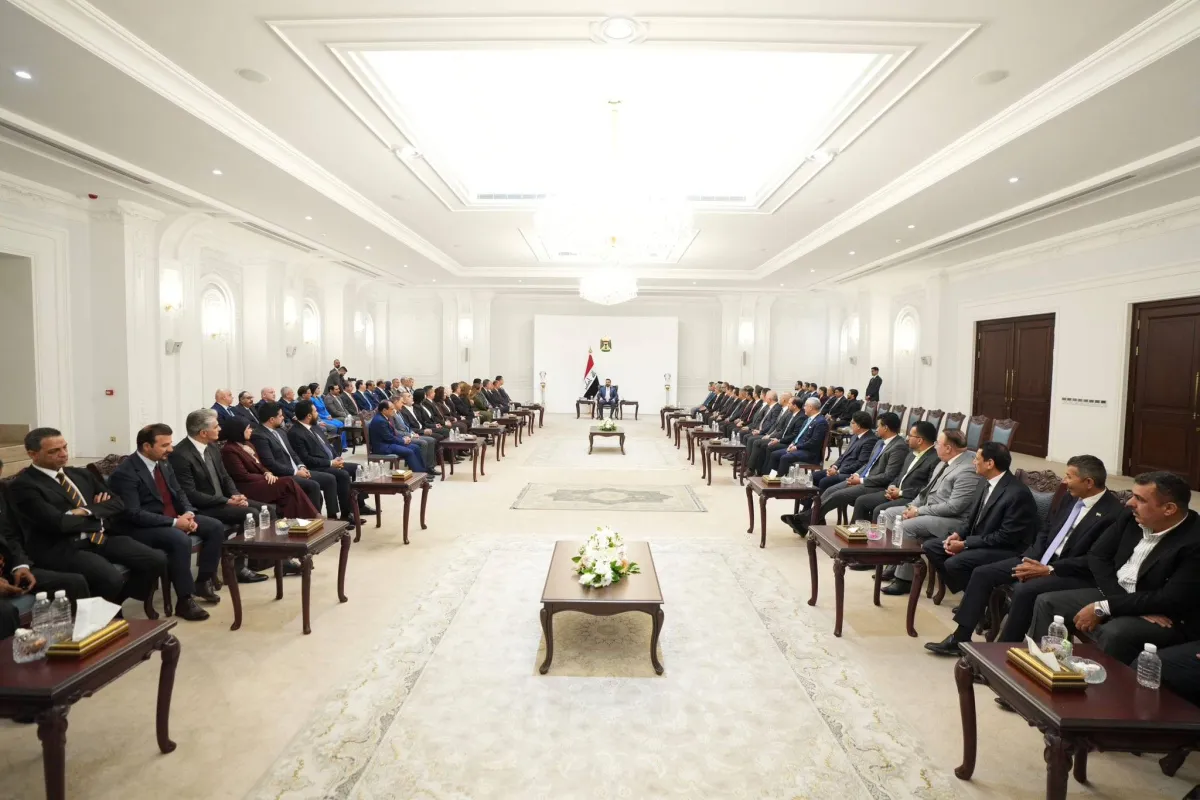
Iraqi Prime Minister Ali al-Zaidi has intensified his campaign against armed groups operating outside state control, emboldened by public backing from influential Shiite cleric Moqtada al-Sadr and renewed support from Iraq’s top religious establishment in Najaf.
Although Zaidi reportedly intended to keep his recent visit to Najaf private, cameras captured him among worshippers at the shrine of Imam Ali ibn Abi Talib, fueling speculation that he also met senior religious and political figures in the city, home to Iraq’s highest Shiite authority.
The prime minister’s latest moves reflect growing confidence after receiving support from Sadr, whose Saraya al-Salam faction has agreed to begin voluntarily surrendering its weapons. Zaidi has also revived long-standing calls by top Shiite authority Ali al-Sistani for tighter state control over arms and stronger action against corruption.
Previous attempts to disarm armed factions failed under former Prime Minister Mohammed Shia al-Sudani, particularly after tensions between the United States and Iran escalated in 2025 and Iraqi groups aligned themselves militarily with Tehran.
Speaking Saturday at the government palace before a group of journalists attended by Asharq Al-Awsat, Zaidi declared that Iraq faced “a zero-sum equation: either the state or the absence of a state.”
He said his government was determined to eliminate all weapons outside official authority despite mounting pressure from powerful political actors.
According to Zaidi, the disarmament process will unfold in stages, beginning with Saraya al-Salam.
A joint committee formed with Sadr’s movement has been tasked with completing the process within a week.
He added that tribal weapons outside state control would also be targeted.
“There can be no parallel armed force under any pretext,” Zaidi declared, acknowledging the intense political pressure surrounding the initiative.
He also announced that the Asaib Ahl al-Haq faction would begin surrendering weapons this week, while five other groups are preparing to hand over heavy arms to the government.
The campaign, however, has triggered growing unease within the ruling pro-Iran Shiite Coordination Framework, the coalition that helped bring Zaidi to power.
A government said the coalition leaders plan to meet the prime minister for discussions on the disarmament drive and Sadr’s role in the process.
Another meeting involving security officials and faction leaders is expected to address implementation mechanisms, integration of fighters into state institutions, dismantling faction facilities, and guarantees offered to participating groups.
Political sources told Asharq Al-Awsat that some factions fear the campaign could eventually expand into broader investigations and legal accountability measures targeting armed groups and their leadership.