

Youth Day: King Mohammed VI Grants Royal Pardon to 667 People
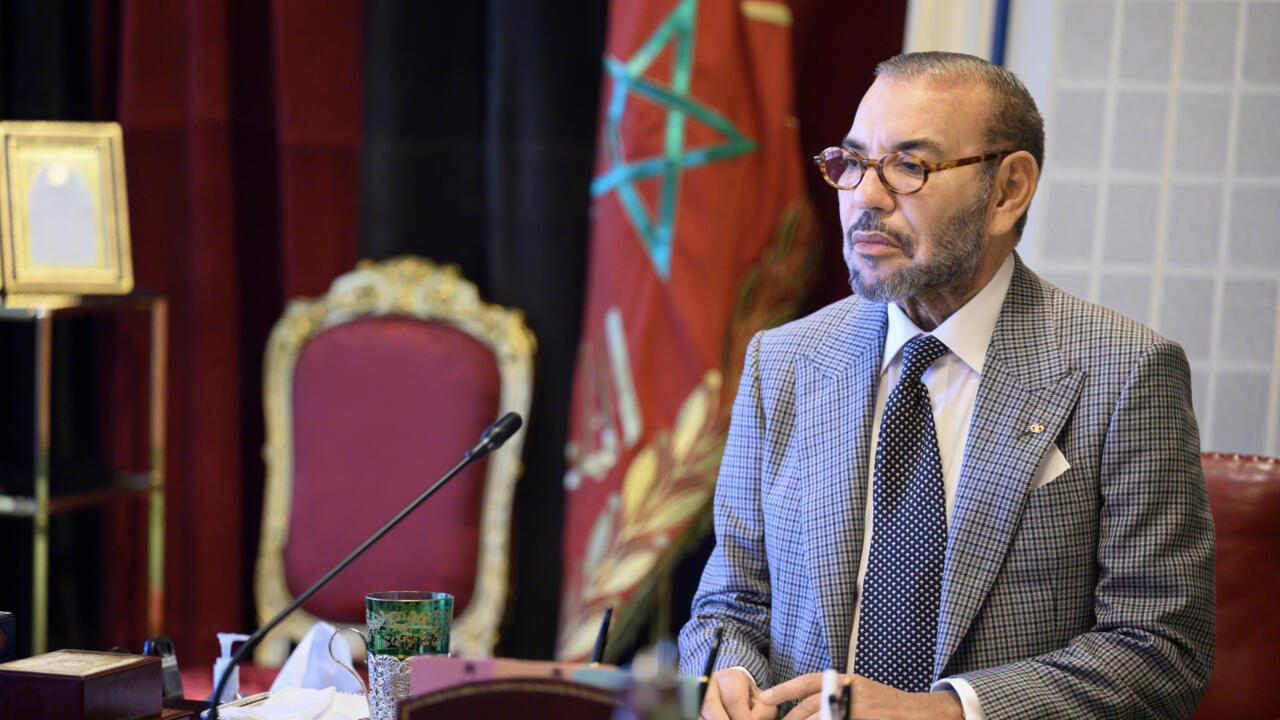
Marrakech – Following the 935 pardons he granted for the 73rd anniversary of the Revolution of the King and the People, King Mohammed VI has now pardoned 667 more people convicted by various courts of the kingdom, on the occasion of Youth Day, according to a statement from the Ministry of Justice.
Of those pardoned, 526 are in detention, and 141 are at liberty. Among the 526 detainees, 517 received a remission of their prison or detention sentence, and seven had the remainder of their term pardoned. Two others had life sentences commuted to fixed terms.
Among the 141 people at liberty, 62 had their prison sentence or its remainder waived, while 59 received relief from fines. Seven received clemency on both a prison sentence and a fine, while 13 were pardoned on a prison sentence but kept their fine.
The pardon coincides with Youth Day, which Morocco celebrates on August 21. The holiday dates back to 1956, when King Mohammed V created it and tied it to the birthday of the then-Crown Prince Moulay Hassan.
King Mohammed VI later described his grandfather’s reasoning: Mohammed V saw the young prince as a model of youth eager to take up the fight for development and against backwardness, and wanted the occasion to connect with rising generations and their concerns. The same year, 1956, also saw the founding of the National Union of Moroccan Students.
In 2026, August 21 remains on the official calendar of national holidays, and this year marks 70 years since the occasion was created. When King Mohammed VI took the throne in 1999, Youth Day moved to August 21, his own birthday, without changing its original purpose. This year it coincides with his 63rd birthday.
A national priority in education, employment, and health
Official messaging around the day frames youth, who make up close to a third of the population, as a national priority in education, employment, and health. The King has called them the country’s real wealth. In a speech on August 20, 2018, he argued that asking young people to play their role means little without opportunities and qualifications, pointing to concrete needs in education, employment, and health, and before that to trust and hope.
He called for reforming youth employment programs, revising vocational training, and encouraging entrepreneurship and self-employment tied to the labor market.
The state points to a range of structures built for youth: training, qualification, and job-insertion centers, socio-educational centers, socio-sports complexes, facilities for young people with addictive behaviors, spaces for new information technologies, and programs supporting income-generating activities and access to financing for young project holders.
Political participation has also moved onto the agenda. At a Council of Ministers held on October 19, 2025, and chaired by the monarch, the government adopted a draft organic law on the House of Representatives designed to draw citizens under 35 into politics.
It proposes simpler candidacy conditions, whether or not a candidate has party backing, along with financial support covering 75% of their campaign costs. The same council adopted a draft organic law on political parties, meant to modernize the legal framework, strengthen the role of women and youth in founding parties, improve governance, and regulate party financing and accounting.
Youth Day also carries a longer history of mobilization. On July 5, 1957, Mohammed V launched the Road of Unity, with Crown Prince Moulay Hassan overseeing the effort. About 12,000 young Moroccans, split into three monthly waves of roughly 4,000, built the roughly 60-kilometer stretch linking Taounate and Ketama – some accounts put it nearer 80 – which was ready by early October.
The road connected zones once divided between the French and Spanish protectorates and opened a land link between Fez and the Rif toward Al Hoceima. Eighteen years later, in 1975, some 350,000 volunteers joined the Green March toward the southern provinces on November 6, accompanied by 70,000 civilians and military personnel.
By the early 1990s, youth unemployment had become a central concern, and in 1991 the state created the National Council for Youth and the Future. More recent years brought new forms of youth expression.
The February 20 movement of 2011 drew heavily on young people and social networks to demand political and constitutional reform, judicial independence, and action against corruption and unemployment; a March 9 speech that year opened the constitutional revision that produced a new constitution.
The Rif protests of 2016 and 2017 and the Jerada protests of 2018 pressed demands over jobs, services, and regional development.
In late September 2025, a decentralized movement known as Gen Z, or “Jil Zid,” mobilized through Discord, TikTok, and Instagram around health, education, employment, social justice, and corruption.
Protests spread to several cities, some peaceful and others marked by clashes, casualties, and arrests. The government voiced understanding of the demands, and in his October 10, 2025 speech opening parliament, the King placed youth employment, education, and health at the top of his priorities.
In the summer of 2026, another episode drew attention. In late July, tens of thousands headed toward the occupied city of Ceuta in a wave of mass crossings that included many young people and minors. The attempts ended in humanitarian tragedy.
Most crossers returned to Morocco, while thousands stayed in the city, among them more than 2,000 unaccompanied minors, according to Spanish authorities and reports.
Credit: Source link