

Yemen’s Houthis impose ‘maritime embargo’ against Saudi Arabia
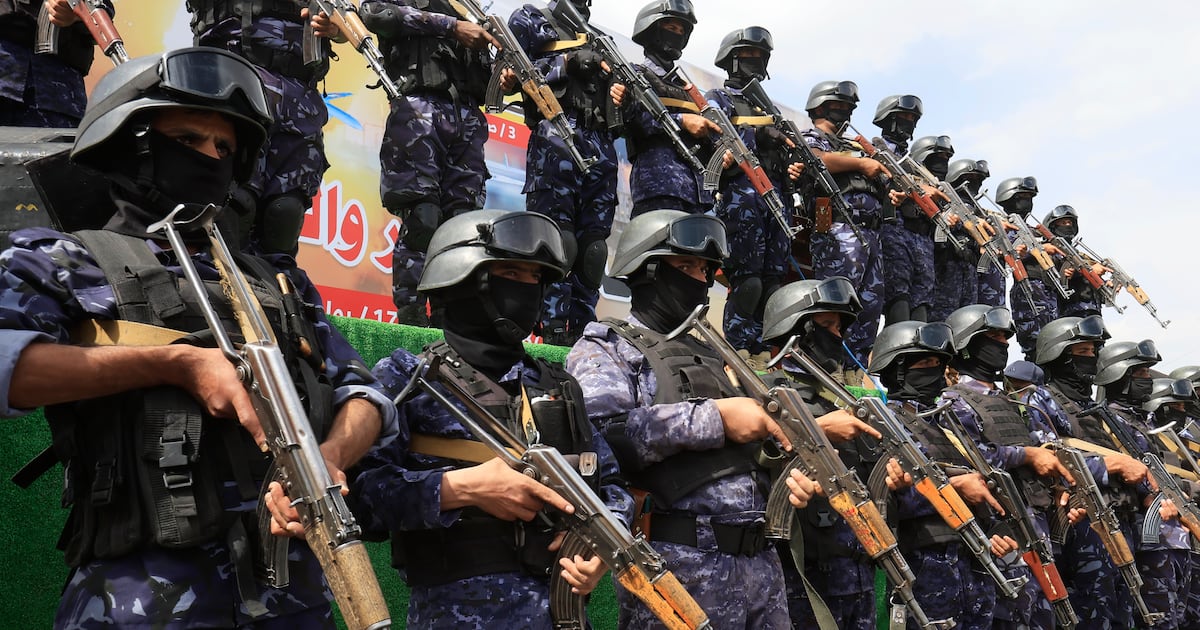
The Houthi rebels have announced a “maritime embargo” against Saudi Arabia, sparking fears of further chaos for Gulf trade.
The move, which the Houthis described as a response to a Saudi blockade of Yemen, threatens to worsen the regional conflict and shut off a critical route that bypasses the Strait of Hormuz.
In a televised speech, Houthi military spokesman Yahya Saree accused Saudi Arabia of maintaining an “unjust siege” on Yemen through restrictions on ports and airports, claiming the measures had worsened humanitarian suffering.
The Iran-backed group said the maritime ban would take effect immediately, declaring it a “siege for a siege” response. It did not specify what the ban meant or the area where it would apply. There was no immediate response from Saudi Arabia.
Two attacks on tankers were reported near the Strait of Hormuz on Monday, after the US and Iran traded strikes for a ninth night.
Analysts told The National that any blockade could be damaging for Saudi Arabia as it reroutes its oil exports via the Red Sea. The Houthis have previously attacked Red Sea shipping as part of the regional conflict, forcing ships into costly detours.
A closure of the Bab El Mandeb strait, the southern gateway to the Red Sea, would halt Saudi oil exports to Asia and compound the disruption.
Saudi Arabia’s Red Sea terminal at Yanbu has become a “vital artery” for oil since the closure of the Strait of Hormuz, said Kate Dourian, an analyst at the Energy Institute in the UK. “Any disruption there would send immediate shockwaves through the market,” she said.
“The East-West Pipeline and Yanbu were never designed to replace [Saudi Arabia’s] entire export system indefinitely, but they have allowed Saudi Aramco to export a record 4.77 million barrels per day in June through Yanbu, volumes that would be extremely difficult to replace.”
Bjorn Vang Jensen, an adviser at freight pricing company Xeneta, told The National that Saudi Arabia “cannot afford to let this blockade stand” as its Red Sea ports have “become the kingdom’s maritime lifeline” during the Strait of Hormuz blockade.
“This is an interesting development. Not because it is unexpected that the Houthis would sooner or later play a part in the regional conflict, but because it seems the Houthis are seeking to decouple their threatened action from their dependency on Iran,” he said.
“It could be seen either as a sign that the actions against the Houthis are putting them under increasing pressure, or as a “disclaimer” aimed at shielding them from retaliation from Israel or the US, by painting this as a separate conflict.”
Noam Raydan of the Washington Institute for Near East Policy said it remained to be seen whether ships would begin rerouting before the scope of the Houthi blockade becomes clear. “With the Houthis, it has never been clear how they target ships or what they include in their maritime campaign,” he said.
“It’s still very unclear how the so-called maritime embargo will be imposed.”
The Houthis also warned that any further escalation by Saudi Arabia would be met with a broader response, saying their forces were prepared for “all options”.
“We affirm the right of our great people to respond to the blockade with a blockade, and to respond to all escalation with all escalation,” Mr Saree said.
“The Yemeni armed forces affirm their complete readiness for all options, and any foolish act committed by the reckless Saudi enemy through all escalation will be met with a comprehensive and decisive escalation, by Allah’s will and power,” he said.
Rising tensions
Monday’s development comes amid heightened tensions in the Yemen conflict. Saudi Arabia came under a missile attack by the Houthis last week, hours after an explosion at a rebel-held airport in Sanaa.
The Saudi-led coalition against the Houthis said air defences “dealt with a threat from ballistic missiles” launched by the rebels against the south of the kingdom.
Air strikes had hit the international airport in Sanaa, the Houthi-held capital of Yemen. While the Yemeni government claimed responsibility, the rebels pointed the finger at Saudi Arabia.
At the time, Houthi rebels said the attack on the Saudi Abha International Airport – which included the use of ballistic missiles and unmanned aerial vehicles – was in response to “criminal Saudi aggression”.
The Iran-backed Houthis took over Sanaa in 2014, prompting intervention by a Saudi-led coalition the following year, at the request of the Yemeni government.
On July 3, the Houthi rebels said their forces confronted Saudi “warplanes” that they said attempted to prevent an Iranian civilian aircraft from landing at the airport.
Flights between Sanaa and Tehran will continue despite any “possible consequences”, Mr Saree added.
An informal truce between Saudi Arabia and the Houthis took effect in April 2022, following Houthi attacks on Saudi infrastructure.
The relative calm continued as Oman-led mediation and dialogue efforts, alongside UN Special Envoy for Yemen Hans Grundberg’s work to advance the peace process.