

Yemen Could Be Sucked Into the US War on Iran
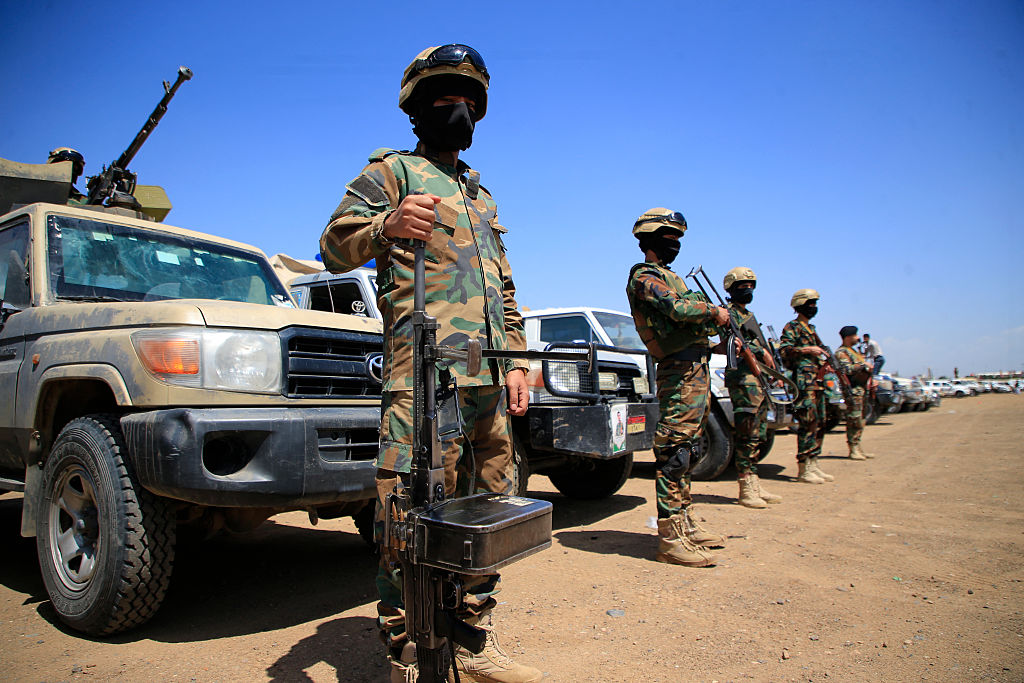
Saudi-Huthi negotiations were close to reaching agreement in late 2023. An agreement would have ensured a secure border and an end to Huthi attacks on the kingdom, whose Red Sea coast is the site of many of its more grandiose vanity projects. It would have required Saudi financing for Huthi military and civilian personnel and for the reconstruction of infrastructure damaged during the war.
Israel’s genocidal assault on Gaza interrupted those discussions. The Huthis maintained a regular flow of attacks on Israel, with 125 air strikes in 2025 alone. Although few of those attacks caused death and destruction, they sent Israelis to their shelters and were widely appreciated throughout the Arab world as a unique case of practical support for the Palestinian people. Following the formal declaration of a Gaza ceasefire in October 2025, there have been renewed efforts to revive these negotiations and the related United Nations–mediated “road map” toward an internal Yemeni peace agreement.
However, the Huthis have been weakened by the damage caused by US and Israeli strikes in 2025. The renewed US branding of Ansar Allah as a Foreign Terrorist Organization has compounded the disastrous economic and financial position of the territory it rules, which contains two-thirds of all Yemeni citizens. There has been an almost complete cessation of humanitarian support to the Huthi-ruled part of the country. Iran is also less able to provide assistance than before, with the 2026 semiclosure of the Hormuz strait and the destruction caused by US, Israeli, and Emirati air strikes.
These factors have increased popular resentment of Ansar Allah. But the Huthis are battle hardened, with a tightly controlled military, and they have the added asset of a geographical position that enables them to threaten Saudi shipping and investments in the Red Sea. The movement can also continue to rely on the deep pro-Palestinian commitment of the overwhelming majority of Yemenis, who see action in support of Palestine in a positive light while taking a different view of action in support of Iran.
This has been demonstrated by the Huthis’ earlier, limited intervention in March–April, targeting Israel directly, and by the launching of missiles against Israel in the past few days, to coincide with Iran’s offensive. Both clearly demonstrated coordination and commitment to the idea of including Hezbollah and Lebanon in any deal with the United States.
The two partners share an ideological commitment against Israel, and Iran has provided important military and economic support to the Huthis over the past decade, including parts for advanced weaponry and petroleum products. Supporting Ansar Allah has been a highly cost-effective operation for the Iranians, costing about $300 million annually or less. Following Israeli attacks on Hezbollah in Lebanon and the collapse of the Assad regime in Syria, the Huthis are now the least damaged operational entity of the Iranian-backed Axis of Resistance.
In the current Gulf war, the Huthis have threatened Red Sea shipping but carried out no attacks to date, only taking preparatory measures in anticipation. Getting involved militarily is a major risk as it could jeopardize the incipient renewed negotiations with the Saudis, at a time when Saudi control over the IRG is stronger and might lead to an offensive against Ansar Allah. It might also provoke the United States, as it would break the May 2025 ceasefire agreement that ended fifty-two days of intense US bombing of Yemen.