

Why Paraguay’s Chaco Is the New Frontier for Brazilian Farmers
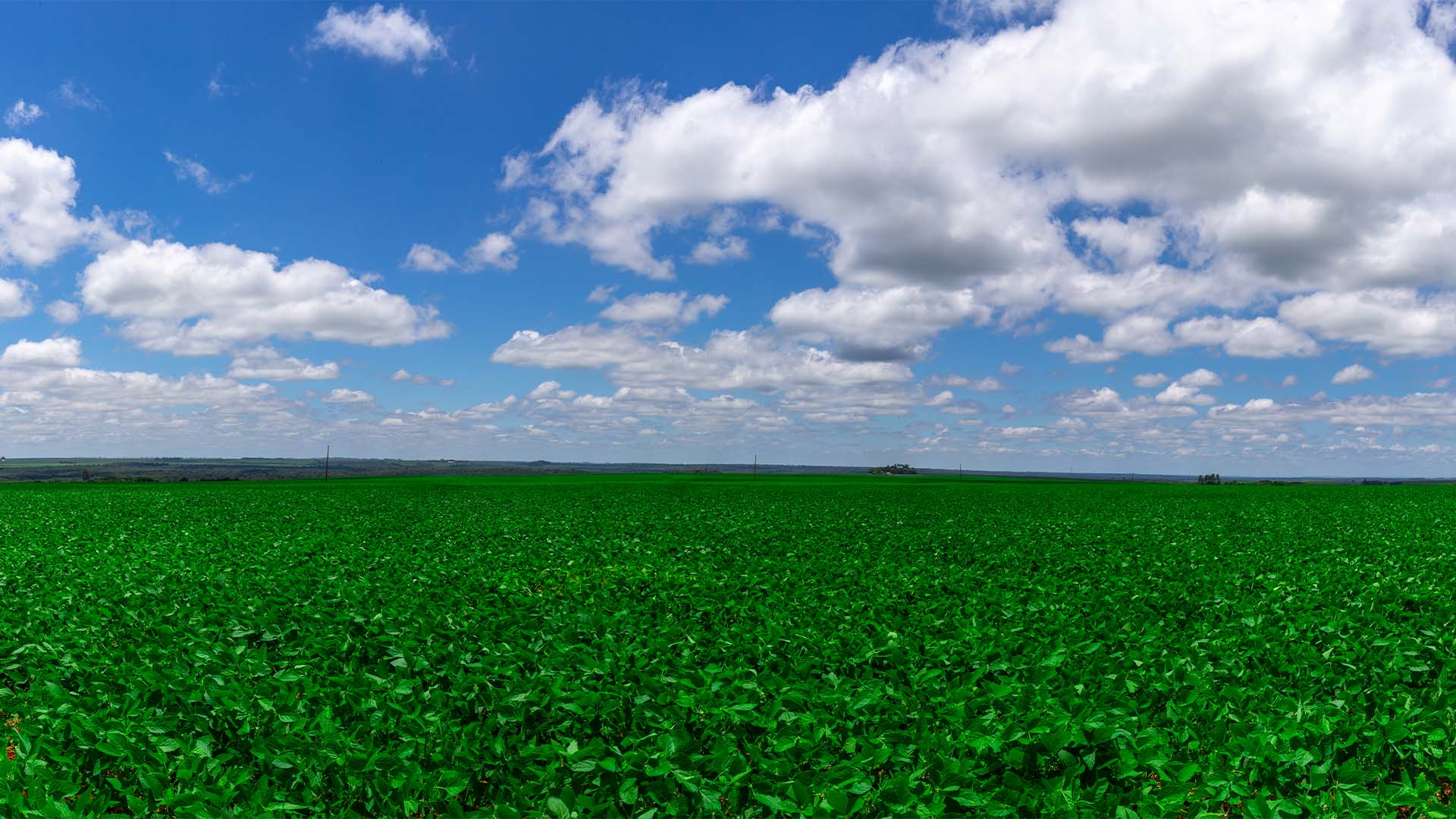
Fertile soils are turning the semi-arid Chaco region in northwestern Paraguay into what many investors and farmers compare to Brazil’s Center-West in the 1970s — South America’s last major agricultural frontier.
The vast Chaco region in northwestern Paraguay is emerging as South America’s last major agricultural frontier, attracting a growing wave of Brazilian farmers and agribusiness companies seeking lower production costs and cheaper farmland than in Brazil.
The movement marks a geographic shift for the so-called “Brasiguaios” — Brazilian farmers long concentrated in eastern Paraguay’s Alto Paraná region — toward the country’s sparsely populated northern half, where fertile soils and relatively inexpensive land are opening new opportunities for soybean, cattle and cotton production.
Companies ranging from farmland developer BrasilAgro to agricultural inputs supplier Agrihold, as well as meatpackers including JBS and Minerva, have expanded operations in Paraguay over the past decade. More recently, Brazilian biological inputs companies such as Agrivalle and Gênica have also entered the market.
From Pioneers to Early Movers
BrasilAgro entered Paraguay in 2012 through its local subsidiary Palmeiras, based in Asunción. Julio Piza, who was the company’s chief executive during the expansion, said the investment reflected BrasilAgro’s strategy of developing new agricultural frontiers.
“The situation wasn’t much different from what Brazil’s Piauí state looked like twenty years ago when we first arrived,” Piza said. “There was no established production model. We had to learn everything—from the optimal planting window to grain logistics.”
Interest from Brazilian producers has accelerated in recent years, according to Eduardo Marrey, BrasilAgro’s commercial director.
“We’ve been receiving growing interest from Brazilian farmers wanting to understand our operation there,” Marrey said. “We evaluate Paraguay over the long term rather than judging individual crop years. There are good seasons and difficult ones, but the overall returns have been positive.”
Fertile Soil, Lower Costs
Unlike previous waves of Brazilian investment concentrated in Alto Paraná, recent expansion has focused on the Chaco.
“The soil has very high natural fertility, which is critical because fertilizers account for roughly 40% of soybean production costs,” Marrey said. “Production costs are less than half of those in Brazil.”
BrasilAgro owns nearly 60,000 hectares (about 148,000 acres) at its Morotí farm in Boquerón department, with around 20,000 hectares (49,000 acres) currently under cultivation.
“In the beginning, people thought we were crazy,” Marrey said. “Later, they started calling us visionaries.”
In May, the company sold 921 hectares for $1.5 million, or about $3,062 per hectare.
Low land prices remain one of the Chaco’s biggest attractions. According to Daniel Meireles, a partner at farmland consultancy Acres, farmland in Alto Paraná typically sells for between $8,000 and $15,000 per hectare, while comparable land in the Chaco ranges from roughly $300 to $800 per hectare.
“What we’ve been seeing is investors buying land in the Chaco as a long-term strategic reserve,” Meireles said.
Soybean Expansion
Crop yields have also improved. StoneX said in a recent report that soybean yields in the Chaco reached 2.4 metric tons per hectare in May, exceeding previous expectations. By comparison, Brazil’s average soybean yield reached 3.7 metric tons per hectare in the 2025/26 season, according to Conab, Brazil’s food supply agency.
StoneX expects Paraguay to harvest 12.3 million metric tons of soybeans this season, including 1.4 million metric tons from the second crop.
Unlike Brazil, Paraguay does not require a mandatory sanitary fallow period between soybean crops to help control pests. As a result, many farmers plant soybeans during the second growing season instead of corn, seeking higher returns.
“We’re seeing total soybean output of 7 to 8 metric tons per hectare across the summer and second crop combined,” said Paulo Alves, chief executive of Agrihold.
Agrihold has operated in Paraguay since 1990 through Agrotec, initially providing technical assistance before expanding into agricultural input distribution. The company now serves the entire country, including the Chaco.
According to Alves, fertilizer use in the Chaco ranges between 200 and 250 kilograms per hectare—well below the 400 to 450 kilograms commonly applied in Brazil’s Mato Grosso state—while yields can reach up to 4 metric tons per hectare under favorable conditions.
Production costs are also lower. Total production expenses amount to the equivalent of 25 to 30 soybean bags per hectare in the Chaco, compared with 45 to 50 bags in Mato Grosso, he said.
“The region still needs crop varieties that perform better under its water conditions,” Alves said. “But just as moving to Mato Grosso seemed like madness for southern Brazilian farmers in the 1970s, the Chaco will likely become mainstream within the next two decades.”
Today, Paraguay accounts for between 25% and 30% of Agrihold’s revenue, while Brazil represents 70% to 75%.
Water and Infrastructure Remain Obstacles
Despite its potential, the Chaco still faces significant constraints.
Water availability remains a challenge because rainfall is relatively limited and underground water reserves tend to be saline, Marrey said.
Logistics also remain underdeveloped. Although access to agricultural inputs has improved, grain transportation continues to rely on river ports in Asunción and Concepción.
“There are important infrastructure investments under way, including the Bioceanic Route connecting the Atlantic and Pacific oceans, and the Paraguayan section is already well advanced,” Marrey said. “But grain storage capacity is still limited.”
Some of those logistical bottlenecks are offset by growing domestic processing capacity, including slaughterhouses as well as soybean crushing and cotton processing facilities.
JBS recently announced a $70 million investment in a poultry complex in Paraguay that is expected to process 50,000 birds per day by September, doubling to 100,000 birds per day at full capacity.
“Our strategy is very clear: geographic diversification, and our investments in Paraguay are part of that strategy,” JBS Global Chief Executive Gilberto Tomazoni said. “The country’s grain production, combined with policies aimed at attracting investment and promoting regional development, makes Paraguay highly competitive for our operations.”
This story was translated from the original Portuguese with the assistance of artificial intelligence and reviewed by The AgriBiz editorial staff.