

Why China Is Suddenly Buying Record Amounts of Brazilian Crude: REPORT
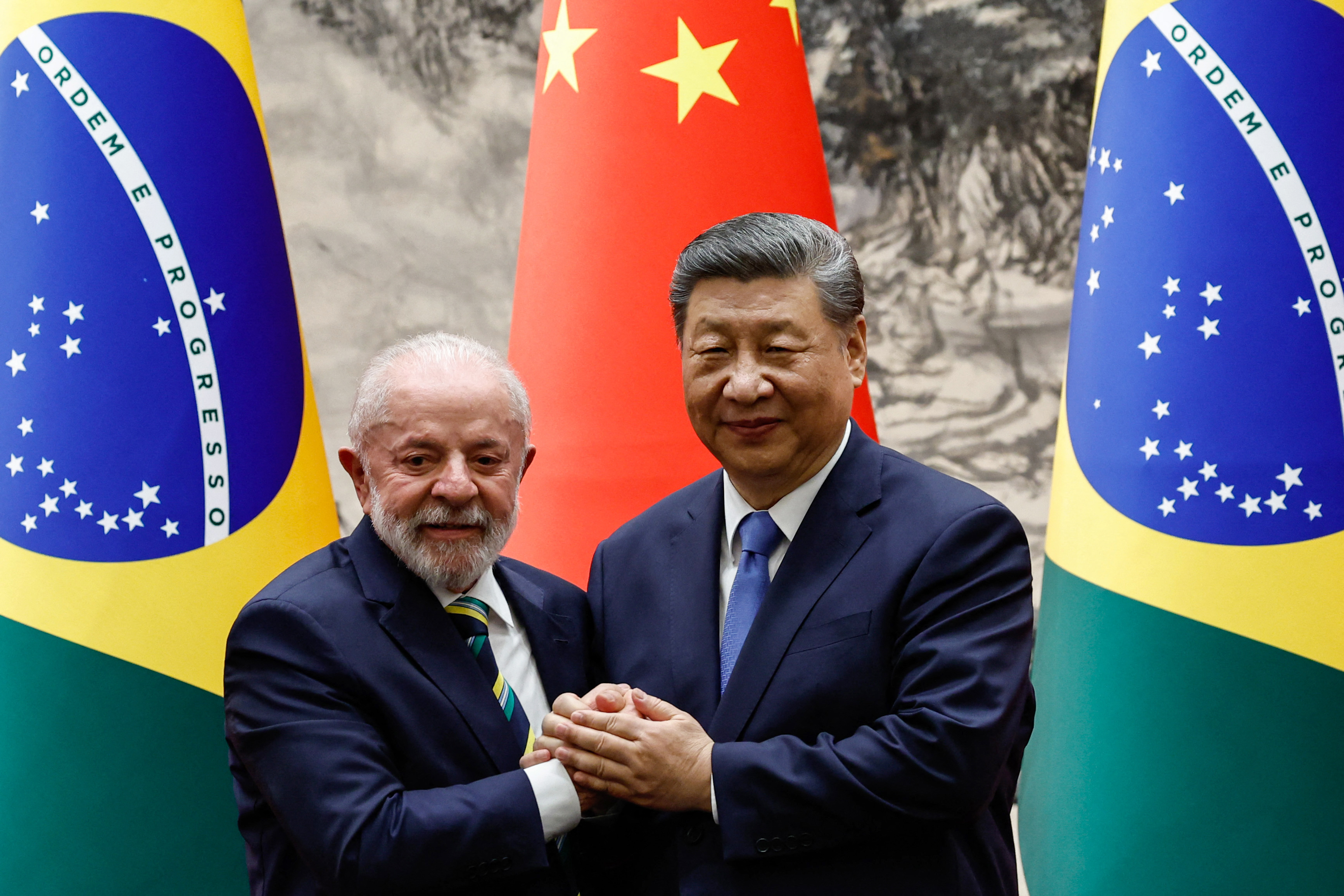
Photo by TINGSHU WANG / POOL / AFP) (Photo by TINGSHU WANG/POOL/AFP via Getty Images
- Brazil pumped a record 4.475 million barrels of crude per day in June — a 19.1% jump from a year earlier — as pre-salt fields ramp up output just as China hunts for oil outside the Middle East.
- Chinese refiners bought 54% of all Brazilian crude exports during 2026’s first six months — nearly seven times what second-place India took — after the Strait of Hormuz became a flashpoint in the US-Iran war.
- Brazil’s next prospect — an offshore find close to where the Amazon reaches the sea — could hold as much as 10 billion barrels, and it’s already tangled in lawsuits after a drilling-related leak earlier this year drew a government fine.
Brazil’s oil boom is reshaping who controls the taps that keep the global economy running. As the war between the United States, Israel and Iran keeps a critical Middle East shipping lane bottled up, Brazil has moved from a secondary player to one of China’s most reliable sources of crude — a shift that is helping determine what drivers, manufacturers and households worldwide pay for fuel while the region’s supply crunch continues.
How a Middle East War Rerouted the Oil Map
The chain of events traces back to late February, when the United States and Israel struck Iran and triggered a war that shut down traffic through a passage once responsible for roughly one-fifth of global oil shipments. Sailings through the channel have picked back up somewhat in recent months, but the initial shock forced refiners in China to scramble for alternatives for months on end.
According to Kathryn Rooney Vera, chief market strategist at the financial firm StoneX, China’s total crude imports sank by close to 40% across February through May as the Hormuz bottleneck took hold, pushing buyers to look beyond the Middle East. She called Brazil “the winner of the trade wars,” she told CNN, “and now of this actual war.”
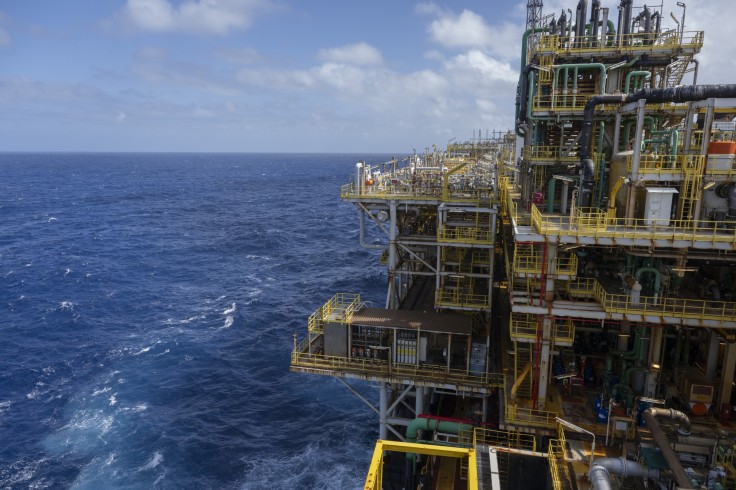
Photo by Pablo PORCIUNCULA / AFP) (Photo by PABLO PORCIUNCULA/AFP via Getty Images
Brasília Leans Into Its New Role — But the Math Gets Fuzzy
Brazil’s government is playing up the moment. Mines and Energy Minister Alexandre Silveira has been telling reporters that mounting instability along major shipping routes gives Brazilian crude “greater strategic relevance,” and he described Brazil to CNN as a “stable, safe and predictable energy provider.”
Trade figures back up the broader trend, though outlets do not describe the jump in exactly the same way. The Brazil-China Business Council puts Brazil’s oil sales to China at $15.1 billion for the year’s first six months — a record for the period and a 62% increase over the same stretch in 2025, driven by a 41% rise in shipped volume and a 15.7% increase in price. CNN’s report on the same underlying data describes the jump as having “more than doubled,” which would put the increase closer to 100%.
Either way, oil has become Brazil’s single most important export to China. Chinese buyers absorbed 54% of all Brazilian crude exports over that same six-month stretch — nearly seven times the 8% share that went to India, Brazil’s second-largest customer, according to the council’s data.
Photo by TINGSHU WANG / POOL / AFP) (Photo by TINGSHU WANG/POOL/AFP via Getty Images
A Two-Decade Bet Beneath the Salt
None of this momentum would exist without a wager Brazil made two decades ago. Explorers found massive offshore reserves in 2006, buried under a dense layer of salt that made them notoriously hard and costly to reach — earning the fields their nickname, “pre-salt.” Better drilling technology, paired with war-inflated prices, has finally made large-scale pre-salt extraction pay off.
June’s production record shows exactly where the growth is coming from: pre-salt fields alone pumped 3.699 million of the month’s 4.475 million barrels a day, according to Brazil’s oil regulator, the ANP, which also confirmed the overall total marked a 19.1% jump from June of last year. Energy analytics firm Enverus projects that momentum could push pre-salt output alone to around 4 million barrels a day by 2030 — nearly matching everything Brazil produces across all its fields combined today.
The Amazon’s New Oil Frontier — And a Fight Already Underway
Brazil is not stopping at pre-salt. In mid-August, state-controlled Petrobras confirmed it had struck hydrocarbons at an ultra-deepwater well roughly 175 kilometers off Amapá’s shoreline, in the offshore stretch geologists call the Equatorial Margin, close to the point where the Amazon drains into the Atlantic. Preliminary estimates put the basin’s potential as high as 10 billion barrels, worth an estimated $720 billion if it pans out. President Luiz Inácio Lula da Silva, visiting the drilling vessel, called the discovery “a passport to this country’s future.”
Commercial output, if it ever happens, is still years off. Petrobras says it needs to drill several more wells just to gauge how much oil actually sits beneath the seabed.
The find is already contentious. Environmental and Indigenous rights groups have sued to halt further exploration, arguing regulators rushed the licensing process without properly consulting local communities or fully weighing the risk of spills and climate damage. Their case is not purely hypothetical: Brazil’s environmental agency, Ibama, fined Petrobras roughly $480,000 in January after a fluid leak occurred during drilling in the same stretch of coastline. Petrobras maintains that none of its drilling has ever caused a spill.
Why Petrobras Is Selling Distance as an Advantage
For now, Petrobras is turning its geography into a selling point. In a statement, the company said its supply routes offer “alternative routes from the area of conflict, which gives security and competitive pricing” — a way of telling buyers they can lock in steady prices without the risk premium tied to the Middle East. With no clear end to the war in sight, that pitch looks likely to keep landing in Beijing.
© {{Year}} Latin Times. All rights reserved. Do not reproduce without permission.