

Who Is Lev Shlosber, Sentenced to the Gulag by Russian Court for Opposing Putin’s War?
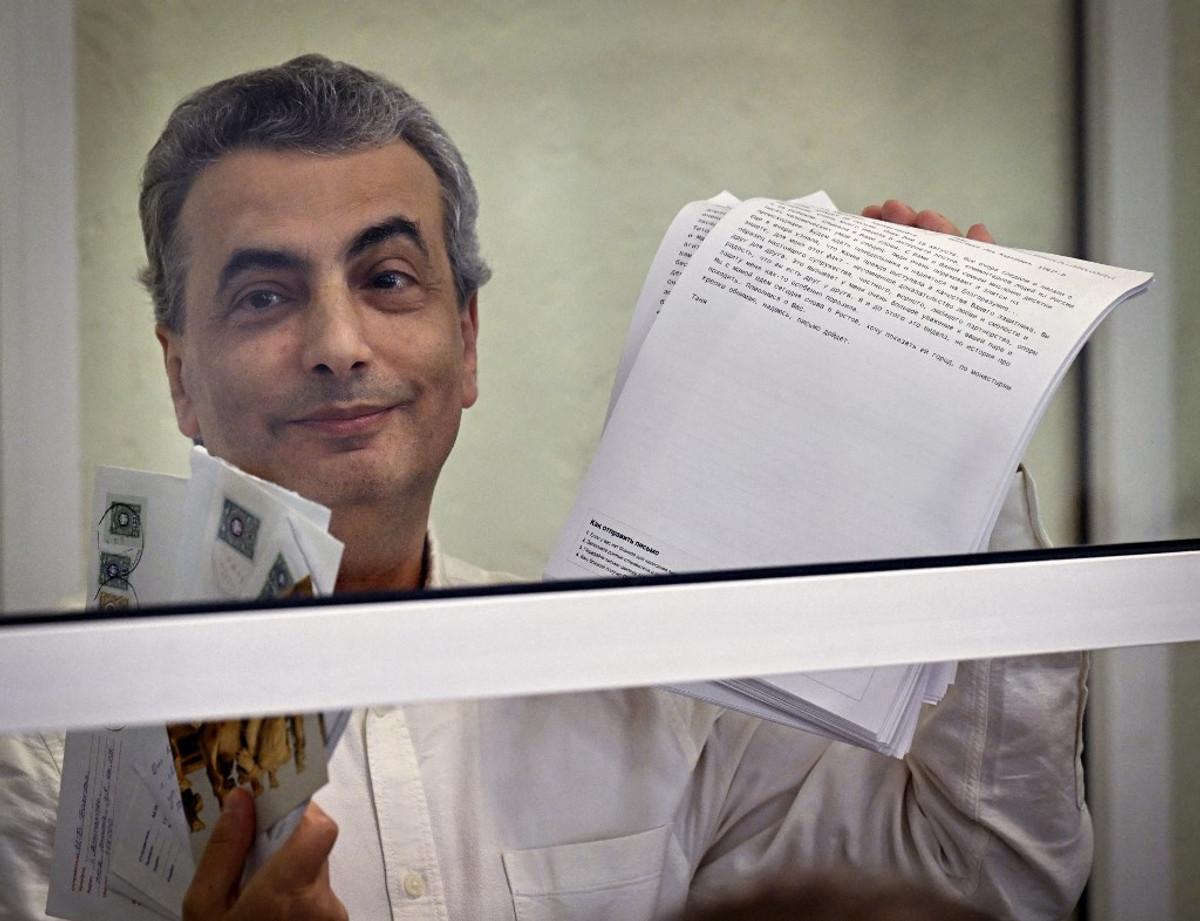
Russia has sentenced Lev Shlosberg, the 63-year-old deputy chairman of the liberal Yabloko party – and one of the few prominent opponents of Russia’s war against Ukraine who chose to remain in the country – to 11 years and one month in a penal colony for participating in a debate and reposting a newspaper cover.
On Aug. 17, a court in the northwestern city of Pskov found him guilty of repeatedly “discrediting” the Russian military and spreading “false information” about it. The court also prohibited him from administering websites for six years,Reuters reported.
JOIN US ON TELEGRAM
Follow our coverage of the war on the @Kyivpost_official.
On the same day, Russia’s Supreme Court rejected Yabloko’s appeal against its exclusion from the Sept. 18-20 parliamentary election. Yabloko was the only registered Russian party openly campaigning for an end to the war.
The two rulings removed both an anti-war party from the ballot and one of its best-known politicians from public life. Dozens of people who gathered near the Supreme Court were detained.
Eleven years for a debate and a repost
One part of the case concerned Shlosberg’s January 2025 online debate with historian Yuri Pivovarov.
Shlosberg argued that Russia and Ukraine should agree to an immediate ceasefire. Pivovarov warned that a premature settlement could produce another war and supported Ukraine fighting until victory.
Investigators claimed that a recording of the debate posted on the Russian social network Odnoklassniki “discredited” the military. Shlosberg said he did not control the account and had not uploaded the recording.
Other Topics of Interest
Russian Emigration Interest Doubles Amid Fears of Mobilization This Fall
Interest in emigrating from Russia has nearly doubled since July as citizens seek relocation advice ahead of a potential military mobilization in the fall.
The second charge concerned a repost from Feb. 25, 2022 – the day after Russia launched its full-scale invasion. It showed a Daily Mirror front page featuring an injured Ukrainian woman alongside Russian leader Vladimir Putin.
The law criminalizing “false information” about the Russian military was signed on March 4, after the repost had already appeared. The court nevertheless used the publication to help impose a sentence of more than 11 years.
The proceedings were troubling even by the standards of a Russian political trial. According to Deutsche Welle, closing arguments began without any of Shlosberg’s three lawyers present. The court refused to postpone the hearing and imposed a state-appointed lawyer whom he had rejected.
The sentence incorporated an earlier punishment of 420 hours of compulsory labor for allegedly failing to comply with the requirements imposed on a so-called “foreign agent.”
Amnesty International called the prosecution retaliation for exercising freedom of expression. Human Rights Watch demanded his release and noted that the offending “false information” included the image of a wounded Ukrainian civilian.
Pskov politician who investigated Russia’s secret war
Shlosberg was born in Pskov in 1963 into a family of teachers. He studied history at the Pskov Pedagogical Institute, later worked as a teacher and social worker, and helped establish the non-state Pskov Free Institute in the early 1990s, according to a biographical account published while he was in pretrial detention.
He joined Yabloko in 1994 and led its Pskov branch from 1996 until 2023, when he became one of the party’s deputy chairs.
Unlike opposition figures whose careers were made in Moscow, Shlosberg built his reputation through local politics, journalism and civic work. He was twice elected to the Pskov Regional Assembly, first serving from 2011 to 2015 and then from 2016 to 2021.
He was also the publisher and editor of Pskovskaya Guberniya, a regional newspaper whose reporting brought him national attention, and nearly cost him his life.
In August 2014, while the Kremlin denied that regular Russian troops were fighting in eastern Ukraine, the newspaper investigated the funerals of service members from Pskov’s 76th Guards Air Assault Division.
The soldiers had officially died in unclear circumstances. The evidence indicated that they had been killed during Russia’s undeclared intervention in the Donbas.
The issue was particularly sensitive in Pskov. The division was one of the region’s most important military institutions, and reporting on its losses punctured Moscow’s claim that the war was a purely Ukrainian conflict involving local “separatists” and Russian volunteers.
On Aug. 29, 2014, unknown assailants attacked Shlosberg near his home. He was hospitalized with a concussion, facial injuries and temporary memory loss. The assault followed a wider series of threats and attacks on journalists trying to establish how Russian soldiers had died in Ukraine, according to the Committee to Protect Journalists.
No one was held accountable for the attack.
In 2015, fellow regional deputies stripped Shlosberg of his mandate after he represented a civic organization contesting its designation as a “foreign agent.” He considered the decision political retaliation. The following year, he received the inaugural Boris Nemtsov Prize for his defense of democratic values and returned to the regional assembly in an election.
Opposition to Crimea seizure
Shlosberg opposed Russia’s seizure of Crimea from the beginning. In a 2016 essay titled “The Crimean Dead End,” he described how Russian troops blockaded Ukrainian military facilities before a referendum held under occupation.
Yabloko’s subsequent election platform stated that Crimea belonged to Ukraine, that its annexation was illegal and that it should be reversed. This was an unusually direct position for a party still permitted to operate legally in Russia.
After the full-scale invasion began, Shlosberg continued to oppose the war publicly. He described the war as a game of “bloody chess” and argued that peace had to precede political change.
“We must first stop killing people,” he said in the debate that later became part of his criminal case. “If we achieve peace, we will regain freedom.”
The repression accumulated gradually.
Russian courts repeatedly fined Shlosberg and his wife, Zhanna, for allegedly “discrediting” the military. In June 2023, the Justice Ministry designated him a “foreign agent,” a label used to stigmatize critics and exclude them from political life.
In 2024, he was fined for reposting Arnold Schwarzenegger’s March 2022 appeal to Russians about the war. Authorities searched his home and the home of his elderly father.
In June 2025, he was detained over the debate with Pivovarov and placed under house arrest. When investigators opened the separate “false information” case in December, he was transferred to pretrial detention, where he remained until his conviction.
Despite other prominent anti-Putin figures like Maxim Katz, Shlosberg refused to leave Russia and compared himself to Antaeus, the figure from Greek mythology who lost his strength when separated from the earth.
Anti-war position that Ukrainians strongly disputed
Despite Shlosberg’s opposition to some of the Kremlin’s actions, his stance toward Russia’s war on Ukraine still raises an eyebrow.
His position after the full-scale invasion centered on a form of radical pacifism and an immediate, unconditional ceasefire. In a December 2024 Yabloko essay, he argued that shooting should stop first and questions of territory, borders, sanctions and European security should be negotiated afterward.
For Ukrainians, the problem is obvious. A ceasefire that does not require Russian withdrawal may freeze an occupation achieved through aggression, give Moscow time to rearm and leave millions of Ukrainians under Russian rule.
That year he also made another controversial statement. He argued that Ukraine ceased to be a victim when it began resisting, saying that the “myth that Ukraine remains a victim” did not correspond to history.
After Ukraine’s operation in Russia’s Kursk region, he attacked exiled Russian opposition figures who supported Kyiv and called them the “party of other people’s blood.” Critics accused him of focusing on Ukrainian military action while failing to recognize Ukraine’s right to strike the forces and infrastructure used to attack it.
Why the Kremlin chose this moment
Four and a half year into the full-scale war, the Kremlin has tightened its grip on all opposition. Even parties without wide support like Yabloko.
Shlosberg’s Fellow Yabloko deputy chair Maxim Kruglov was also sentenced to seven years in June for allegedly spreading “false information” about the military. Other party members have been imprisoned, declared “foreign agents” or excluded from elections.
On Aug. 10, the Supreme Court removed Yabloko from the ballot following a complaint by the ultranationalist Rodina party. A week later, the court rejected Yabloko’s appeal while Shlosberg was being sentenced in Pskov.
In his final statement, Shlosberg called the war a catastrophe and warned that Russia would eventually have to confront the full list of its dead. He said military cemeteries were expanding faster than maternity wards, kindergartens and schools.
The judge repeatedly interrupted him, and in the end granted the 11 year sentence that epitomizes modern Russia’s zeitgeist: that of a state edging on totalitarianism as the Russian authorities continue to ban social media, interfere with the private lives of its citizens, and silence all criticism.