

When the state negotiates with al-Qaeda
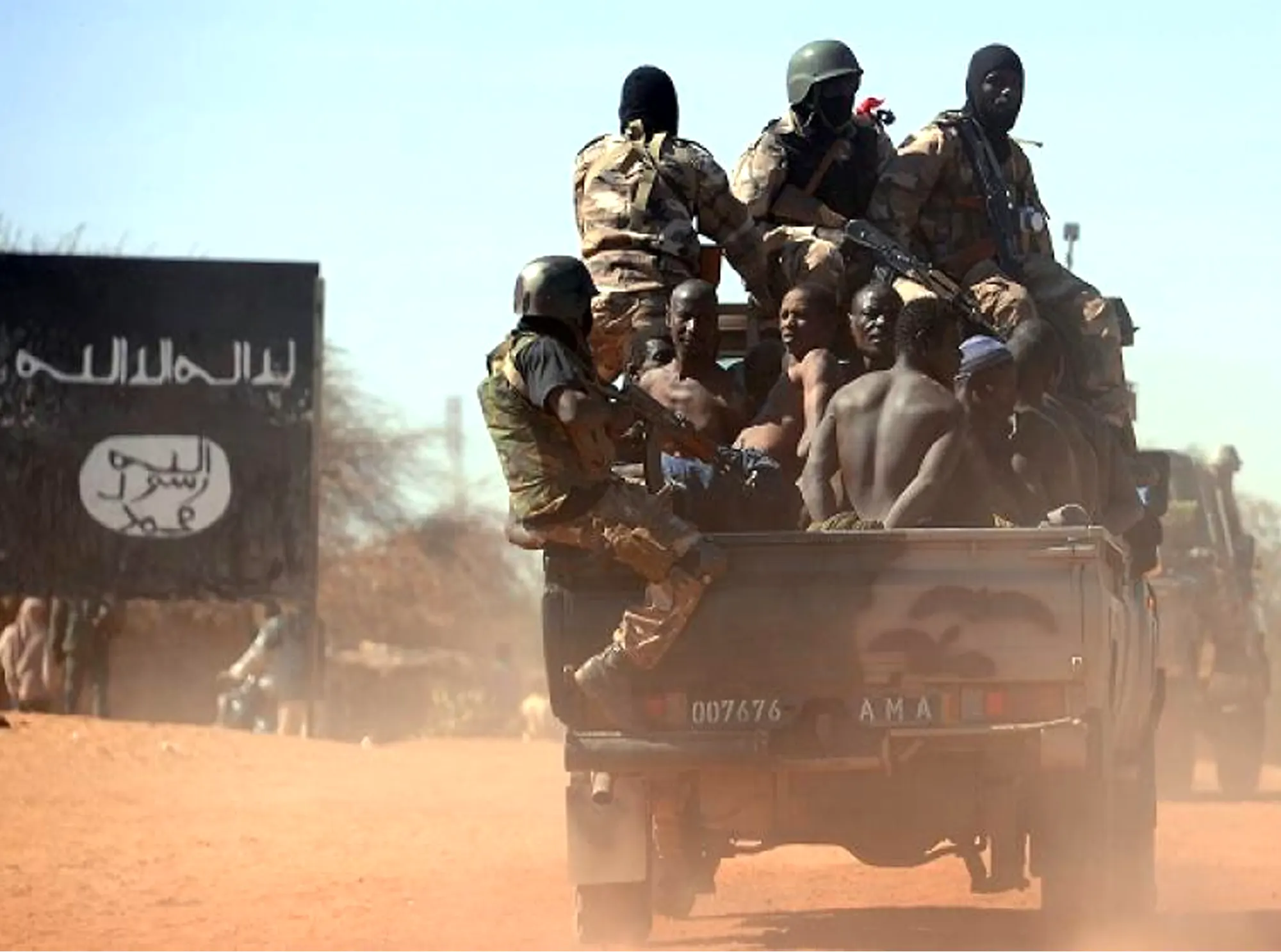
Bamako, Mali – In a significant sign of the faltering government military operations, the al-Qaeda-linked group Jama’at Nusrat al-Islam wal-Muslimin (JNIM) agreed to lift its nearly 11-month siege of the northern Malian city of Léré, near the Mauritanian border.
This followed negotiations led by local elders, with the participation of the city’s army commander and local officials.
Securing a city containing an official government military garrison shook the new order
The local agreement culminated mediation efforts led by local dignitaries
to end the suffocating humanitarian crisis that had plagued the population for months.
Despite reaching an agreement to lift the siege, traffic and the flow of supplies will not fully return to normal.
This will only happen after the
armed group removes the mines and improvised explosive devices (IEDs)
it planted extensively on the main roads leading into the city.
This development on the ground clearly reveals the inability of the Malian military establishment,
supported by elements of the Russian “African Legion,” to secure a city that houses an official government military garrison.
In contrast to direct control, the extremist group imposed its grip from outside the city walls.
It thus besieged the perimeter of vital roads and controlled the decision
to allow the entry of food and fuel and the exit of civilians. In doing so, it solidified the regime forces’ precarious position.
The strategy of siege and repeated local agreements
What happened in Léré is not an isolated incident, but rather reflects similar patterns in several regions of Mali.
In the central city of Boni, local authorities were forced in 2025 to accept a reduction in
their military presence in exchange for lifting a siege that had lasted nearly two years.
In other towns, such as Farabougou, the group imposes its own taxes and rules in place of the state.
Meanwhile, several villages and towns in the Ségou, Mopti, and Timbuktu regions have entered
into direct local agreements with the organization to ensure the opening of roads and the cessation of attacks.
Specialized security studies confirm that the deployment of the army
and its Russian allies remains restricted to fortified bases and major cities.
At the same time, the group’s members move freely through the countryside in small cells targeting supply lines and transportation routes.
This military dilemma is exacerbated by the dispersal of government forces across multiple fronts
and ongoing conflicts with al-Qaeda, ISIS, and the Tuareg separatist movements.
Human rights violations amid field incapacity
While government forces and their allies proved utterly incapable of lifting the siege of Léré militarily,
international organizations, most notably Human Rights Watch,
documented serious violations committed by these forces on the ground.
For example, nine civilians, including four children, were killed in the village of Boumbouri
last July by members of the African Legion, accompanied by Malian soldiers.
This occurred after the militants withdrew from the village.
Additionally, a Russian airstrike killed eight civilians, including three children, in the village of Kernia in the Mopti region.
These incidents further compound the tragedy for civilians trapped
between the hammer of armed groups and the anvil of faltering military operations.
Credit: Source link